The Faial, with an area of about 172 km², was our last stop in the Azores Triangle. Located in the central group, this island has earned the nickname of Blue Island because of the color of the hydrangeas that line the sides of its roads.
Although it is one of the smallest islands in the archipelago, it is one of the best known and most visited. One reason for this is, of course, that it has one of only three airports in the Azores where commercial flights from the mainland land.
In our case, since it was our last stop before heading home, we only stayed on the island for about a day and a half. Even so, we managed to visit and see the main sights!
Horta
The beautiful city of Horta, considered the capital of Faial. It is undoubtedly where most of the island’s residents live and where you’ll find the widest selection of accommodations and businesses.
Here you'll find an impressive marina full of sailboats and offering a stunning view of Pico Mountain. Next to the marina, take a look at the Santa Cruz da Horta Fort, which has now been converted into a guesthouse.
Next, take a stroll through the streets and visit the main church of Horta, the Church of the Holy Savior. While you're still in town, you'll find the Horta Museum, focused on the history of the island; the Florêncio Terra Garden overlooking the imposing Clock Tower; the Carmo Church (and the Museum of Sacred Art) and the former Convent of St. Francis, where the Santa Casa da Misericórdia is now located.
Now that we’ve explored the city of Horta, it’s time to tour the island. In our case, we started in the north, but you can obviously go the other way around.
East Side of Faial Island
Almoxarife Beach, St. Matthew’s Church, and the Ponta da Ribeirinha Lighthouse
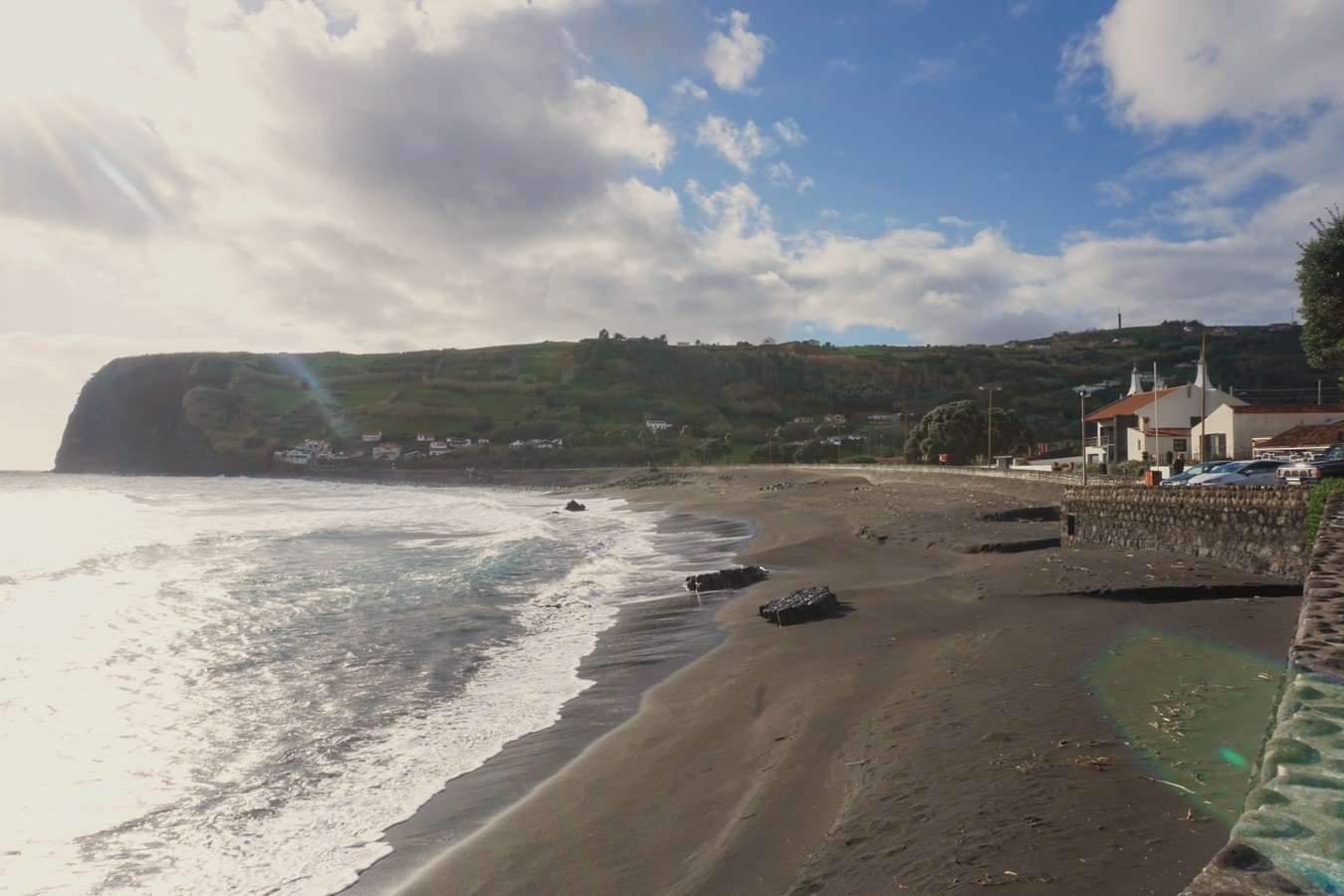
Heading toward the east coast, you’ll come to the town of Almoxarife Beach. It shares its name with its most striking feature: the black-sand beach. With a camping site nearby (Bearsu Nature Almoxarife) and being a beautiful, sheltered beach, it is one of the most popular beaches on the island.
Since it was January and the weather wasn’t suitable for the beach, we continued on our way. 10 minutes later, you’ll come across the imposing São Mateus Church. It’s impossible to miss it: a church that has been completely destroyed, with little more than the façade and its tower remaining (which is unusually located in the center). This church was destroyed during the 1998 earthquake, and although there are plans to rebuild it, it still lies in ruins.
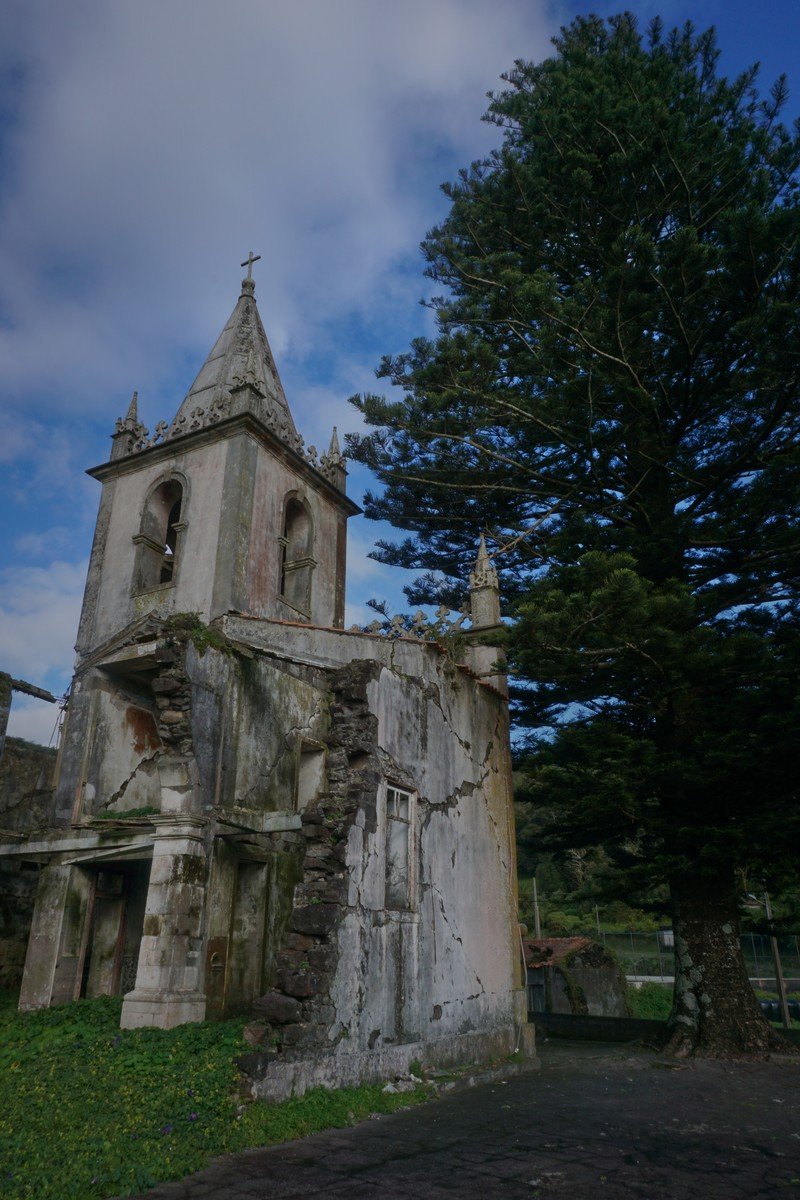
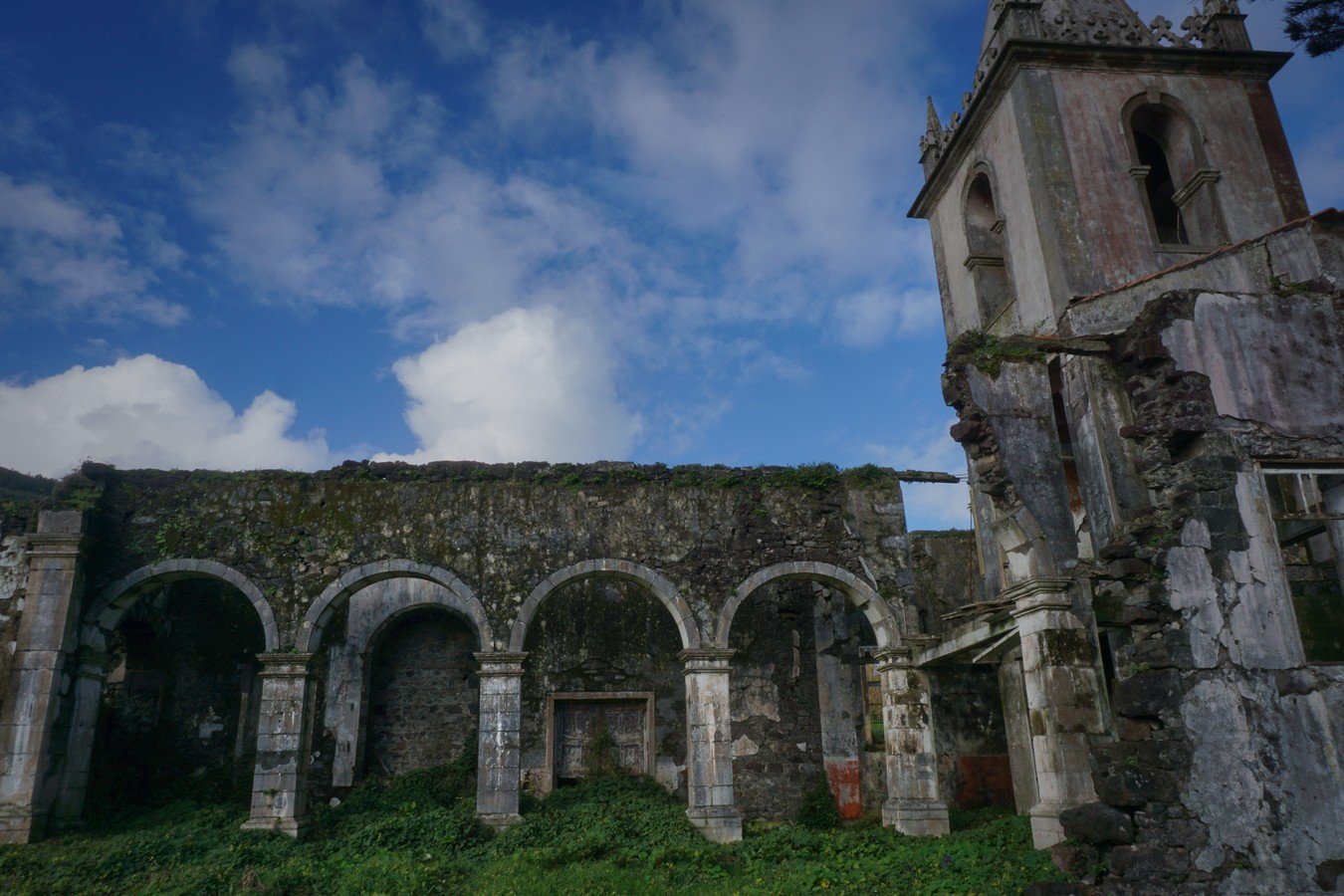
From here, you’ll need to head further away from the main road, toward the Ponta da Ribeirinha Lighthouse. The road, which is made of dirt and stones, is passable by car, although extra caution is required.
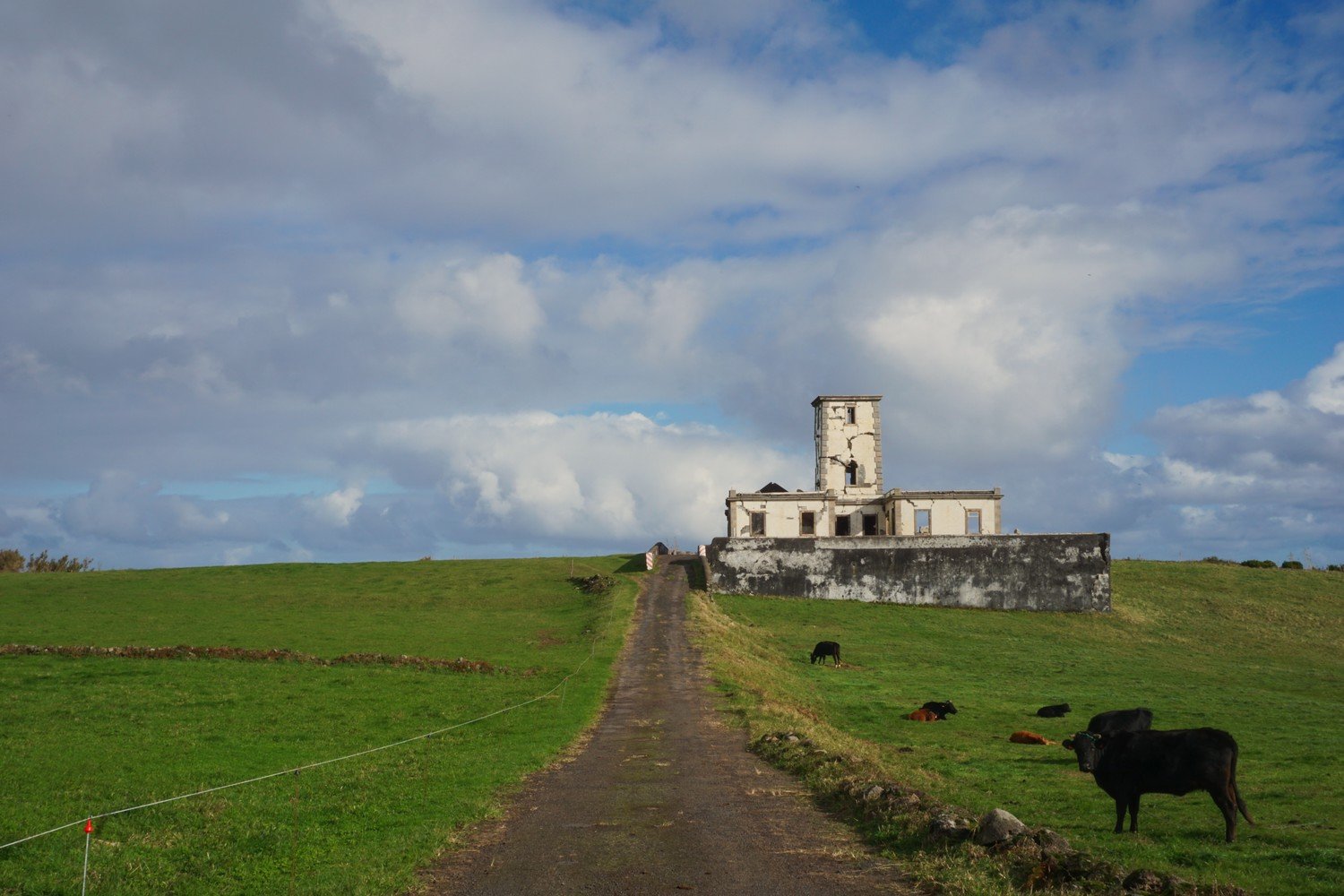
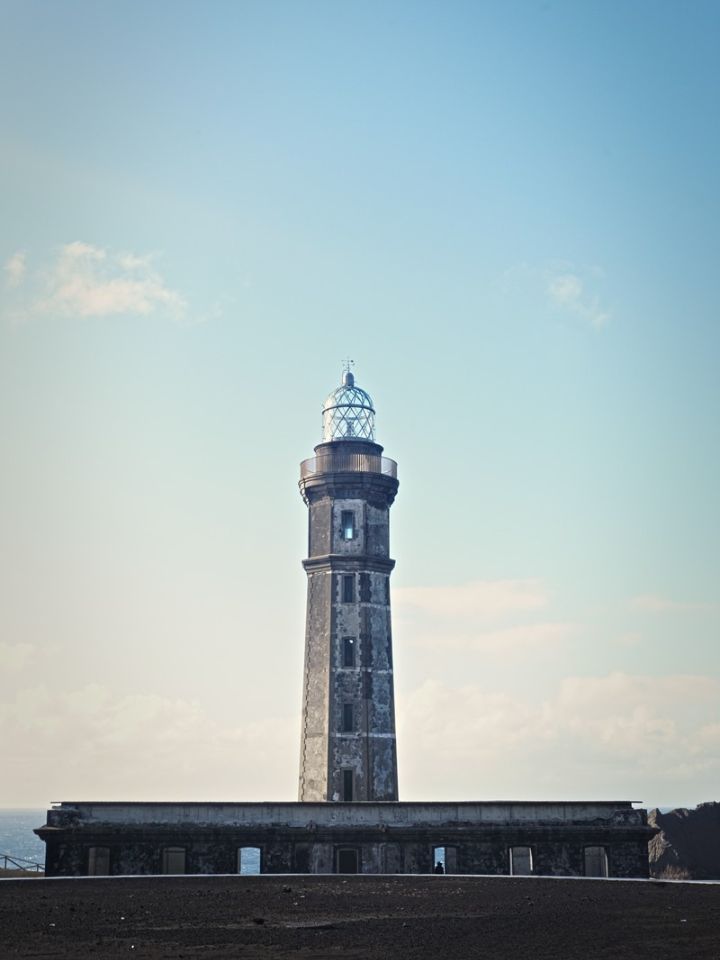
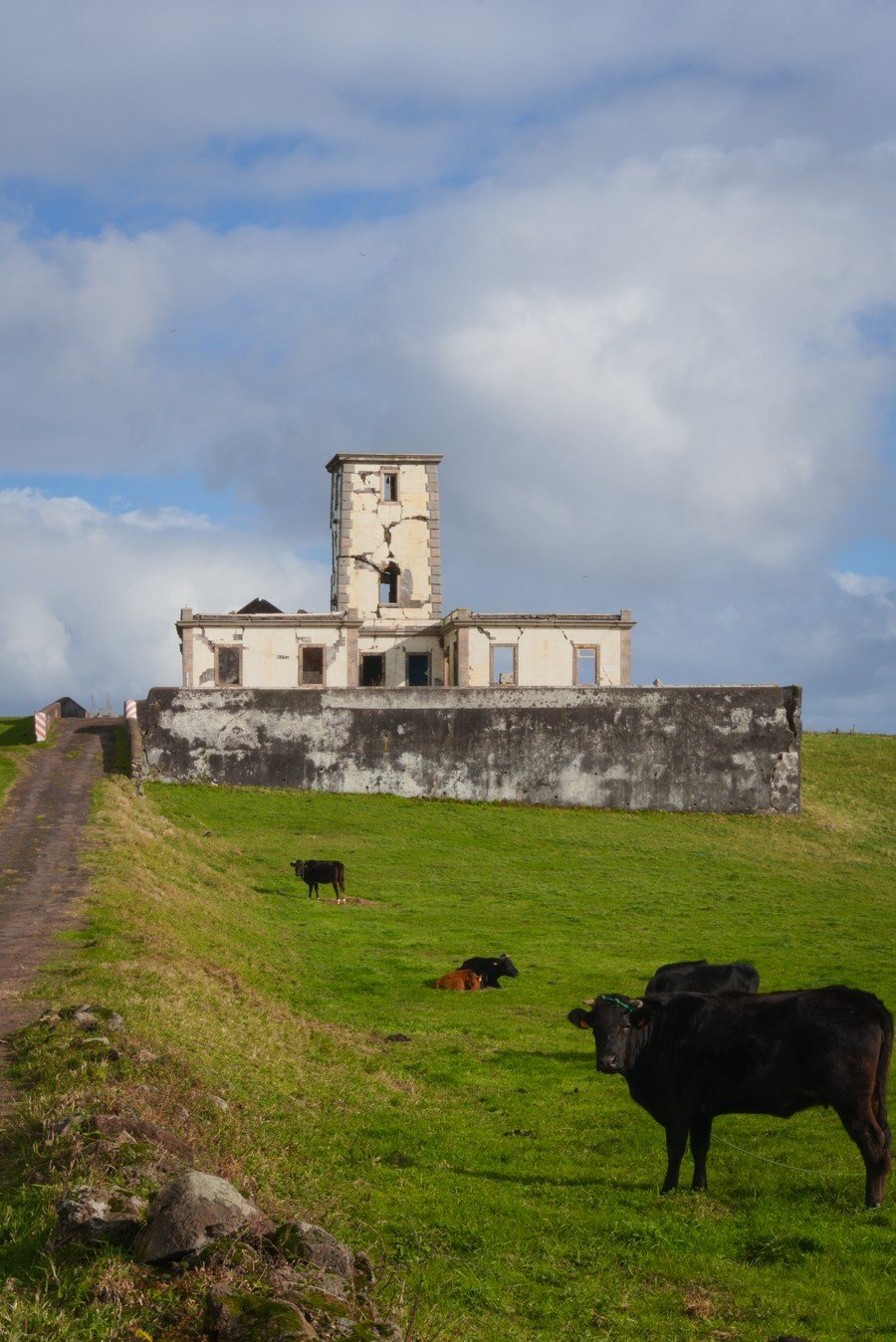
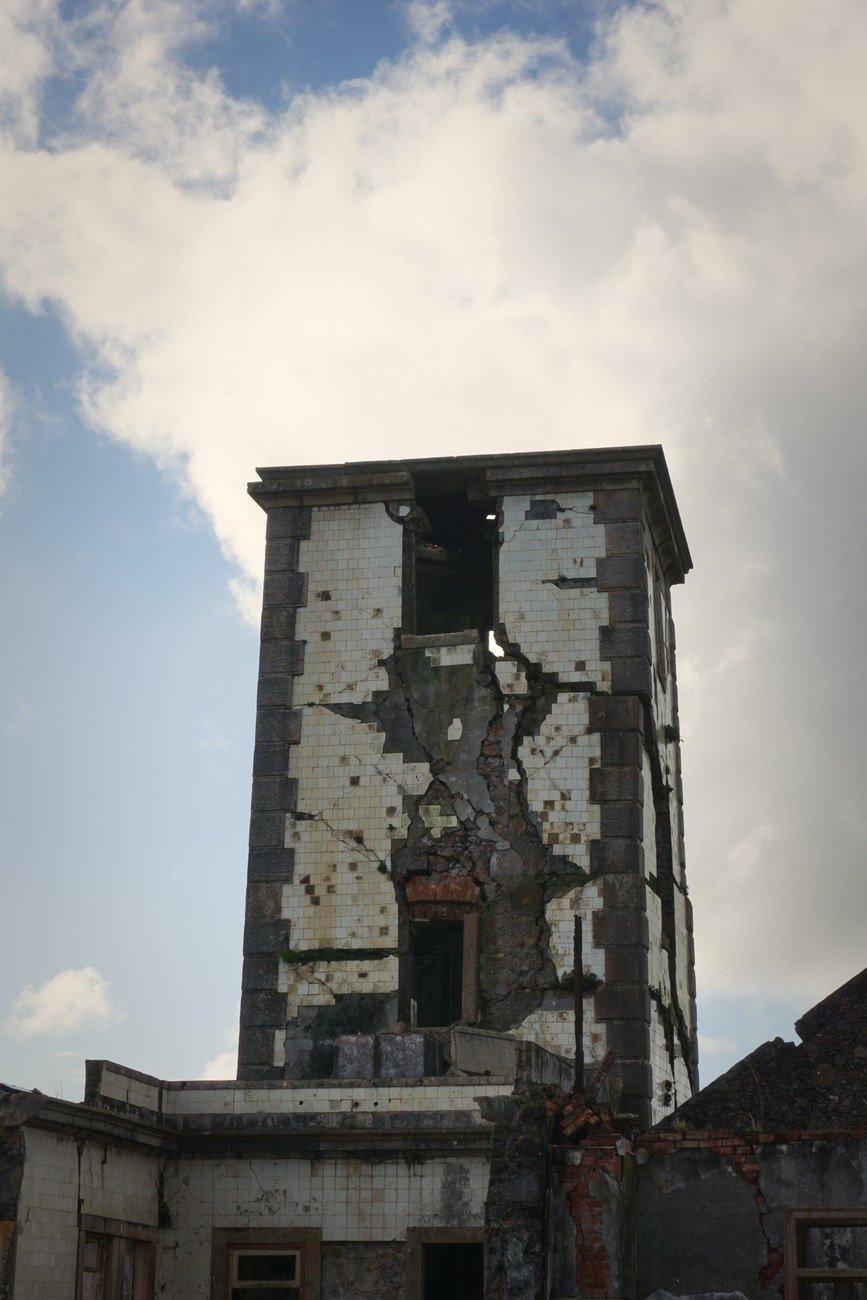
The Ribeirinha Lighthouse is another example of the effects of the 1998 earthquake. All that remains of this structure are its tower, the walls of the auxiliary buildings, and the white tiles on the wall.
North and West of Faial Island
Back on the main road, you’ll pass through small villages with a few sights to see.
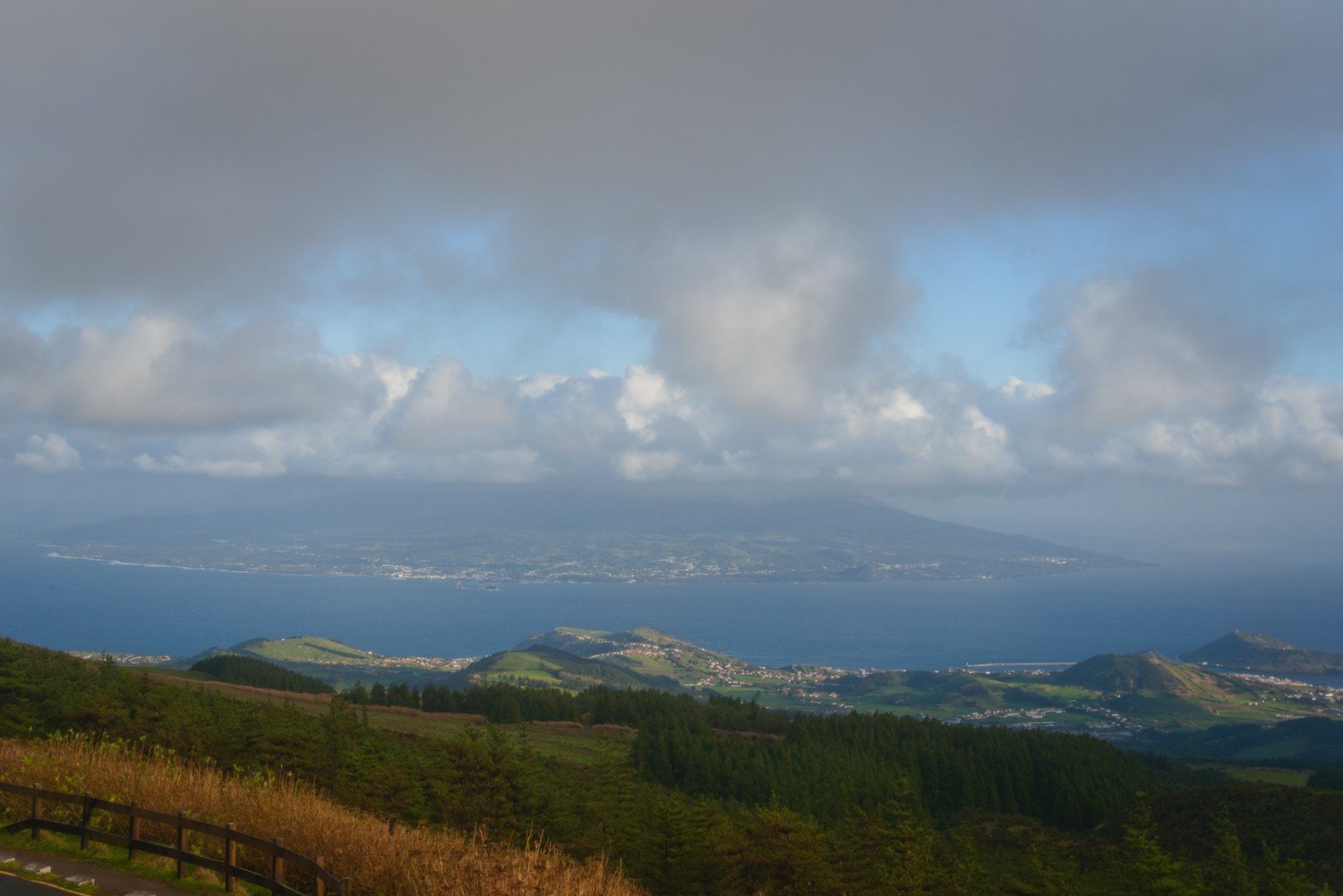
Here will appear several viewpoints, such as Porto do Salão and Porto de Eira, with views of the neighboring island of São Jorge. In Salão, it’s worth stopping by the windmill, so typical of the island of São Jorge but less common on Faial.
Further ahead you’ll find the so-called Black Rock Castle, in Cedros. This is the site of the ruins of what was once a noble residence belonging to the Lacerda family. In 2021, the Government of the Azores designated it as a property of public interest.
A little further on, you’ll come across a place worth stopping at for lunch: the Aldina Restaurant and Bar. There are also other restaurants in the area that are undoubtedly amazing.
Continuing along the highway, you will pass by the Empire of the Holy Spirit of Cascalho, another of the island’s iconic landmarks. Further ahead, on your right, you’ll see the Cascalho Windmill and the Faial Dairy Agricultural Cooperative, known for several cheese brands, including Ilha Azul ( Blue Island) (More information here).
More beautiful views of the ocean follow, along with a few places of worship and many lookouts. But we only stopped at our final destination: the Capelinhos Volcano.
Capelinhos Volcano and Interpretation Center
The Capelinhos Volcano, on the western tip of the island, is one of the island’s most visited sites. The result of a recent eruption (which began in September 1957 and lasted 13 months), it was a widely documented event. As a result of this eruption, the island expanded, forming the Capelinhos Volcano.
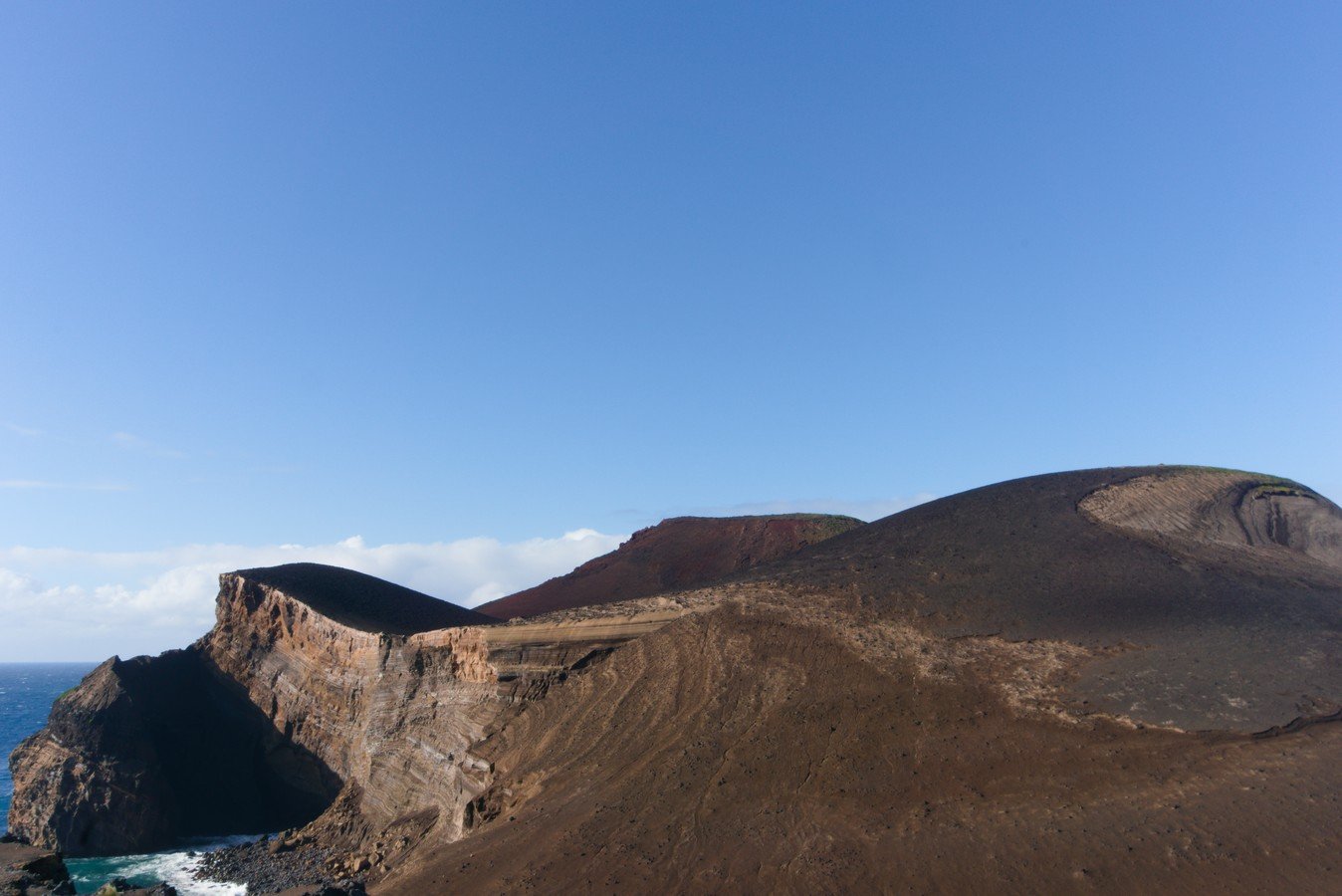
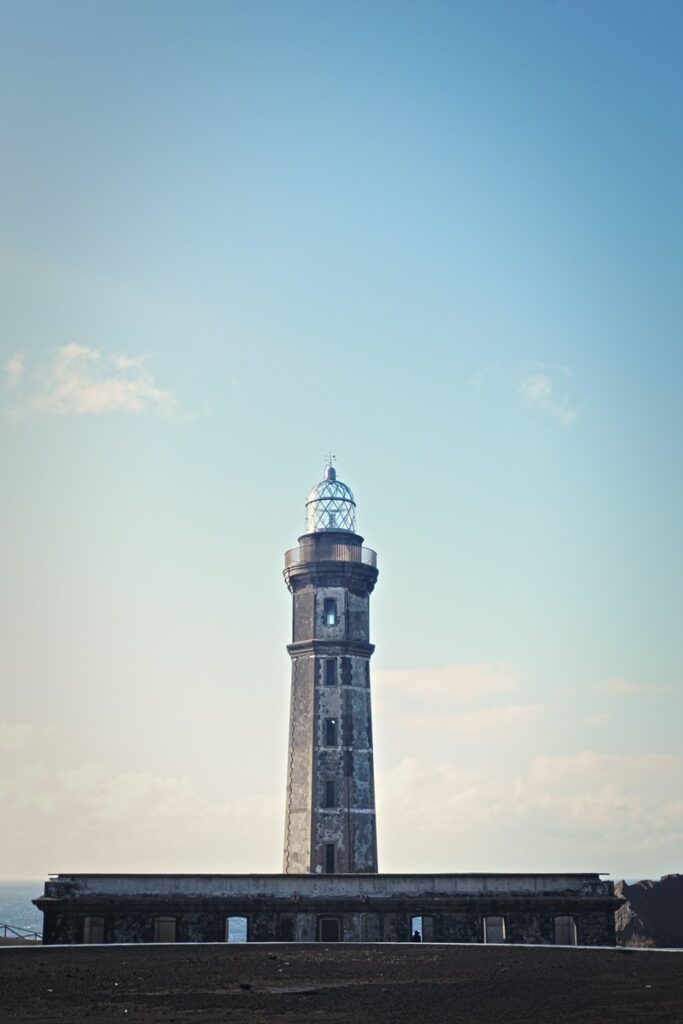
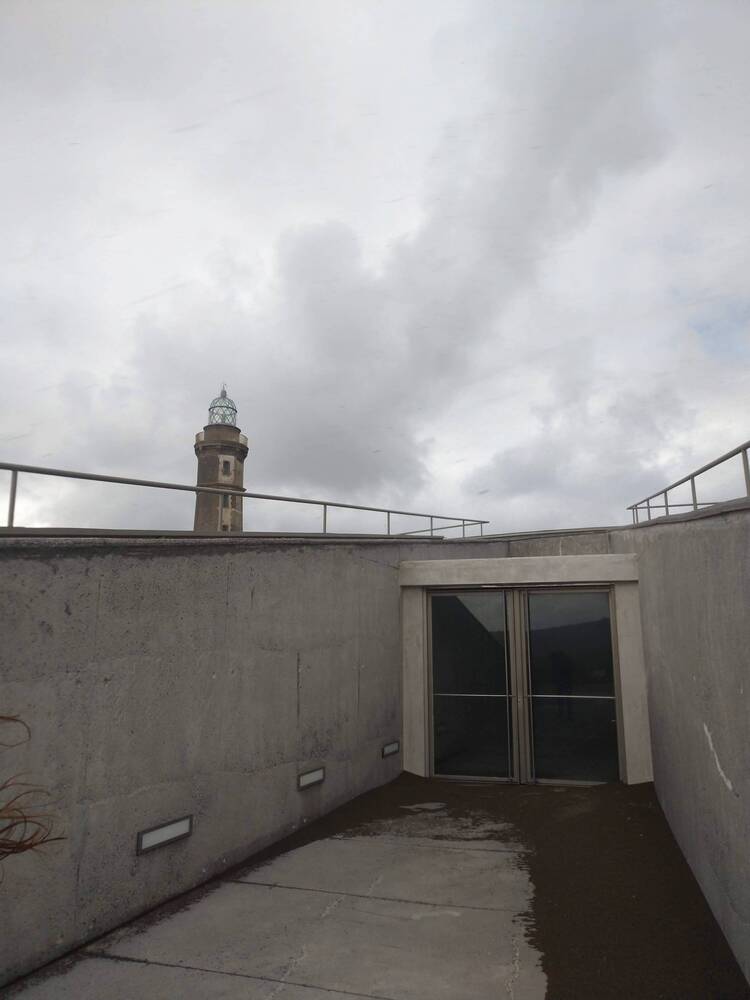
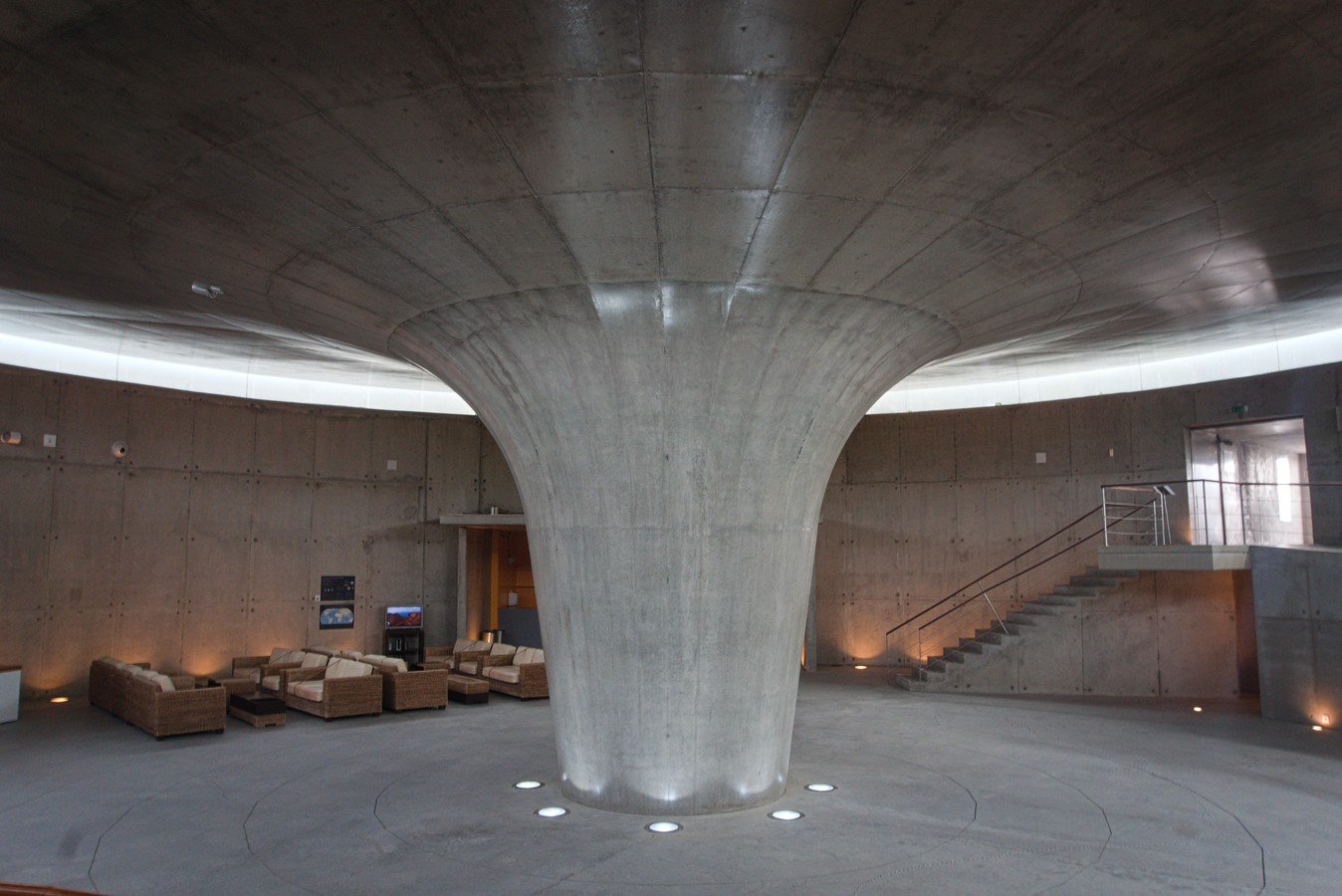
Although it is not possible to walk on the volcano itself, you can hike along the surrounding cliffs and visit the Capelinhos Lighthouse, which survived this eruption. Facing the lighthouse, underground, the Capelinhos Volcano Interpretation Center was built, a site dedicated to volcanic history, with a focus (obviously) on the volcano that gives it its name.
This Interpretation Center features various types of exhibits, so you can choose to visit just one or two sections rather than the entire Center. You can check out the Schedules and prices here. You can also learn more about this point of interest here in more detail.
As you continue your journey, you can take the opportunity to stop at the Capelo Handicraft Center, run by the Friends of the Capelinhos Lighthouse Association. Here, with free admission, you’ll find a variety of handicrafts created by more than 30 local artisans. The building itself is impressive—a fully renovated structure dating from the 19th and 20th centuries.
Castelo Branco: Ponta do Morro
Continuing south along the island, drive toward the town of Castelo Branco, where Horta Airport is located.
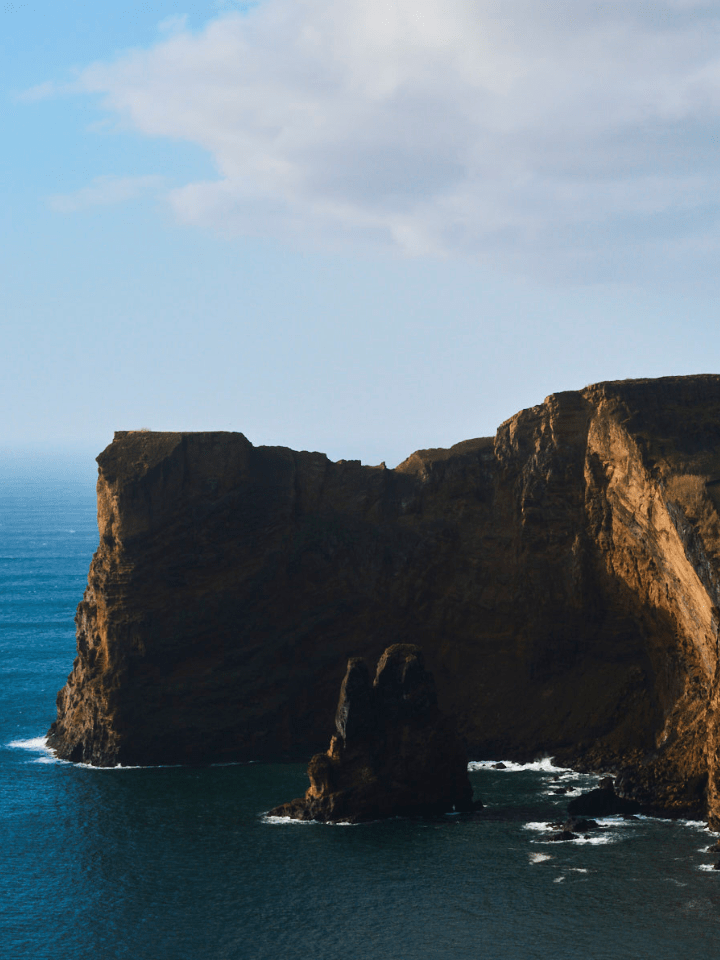
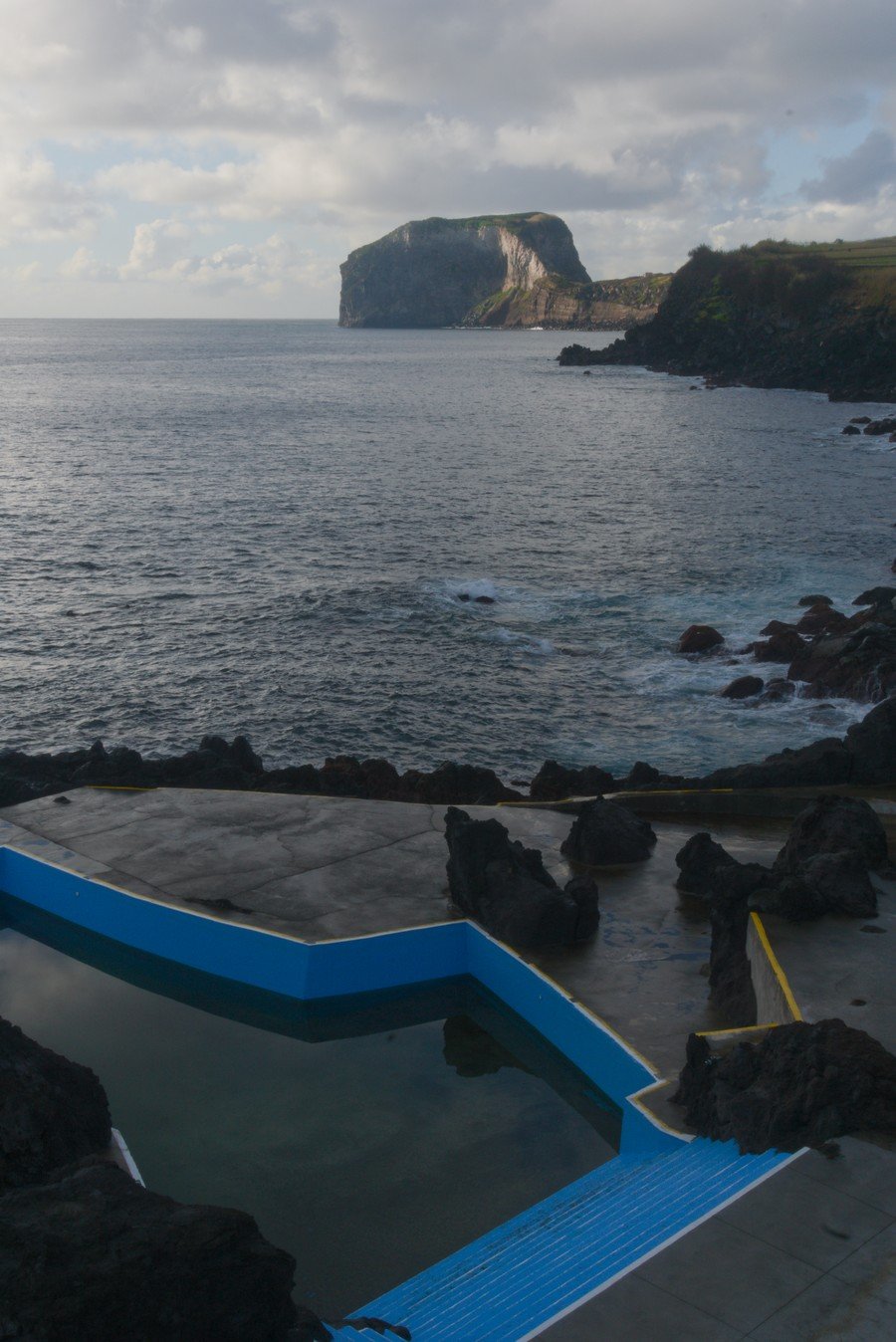
When you arrive, head to the Morro do Castelo Branco lookout point, which involves a short walk to the edge of the hill. Alternatively, you can take the PRC05 trail—Toward Morro de Castelo Branco—a 3.7-kilometer loop (More information here).
As you approach the airport, you’ll come across the Castelo Branco Natural Pools, offering a view of the hill. Since they’re so close to the airport, visitors using these pools can watch planes take off and land up close.
From here, we continue on towards Horta.
Monte da Guia and Porto Pim Beach
As the last rays of sunlight fade on the horizon, head toward Monte da Guia and stop along the way at the Porto Pim Beach. This beach is the most famous on Faial, stretching for about 350 meters of dark sand.
At the far end of the beach, you'll find the Porto Pim Whale Factory, which we unfortunately didn't have time to visit, but you can find out here in more detail.
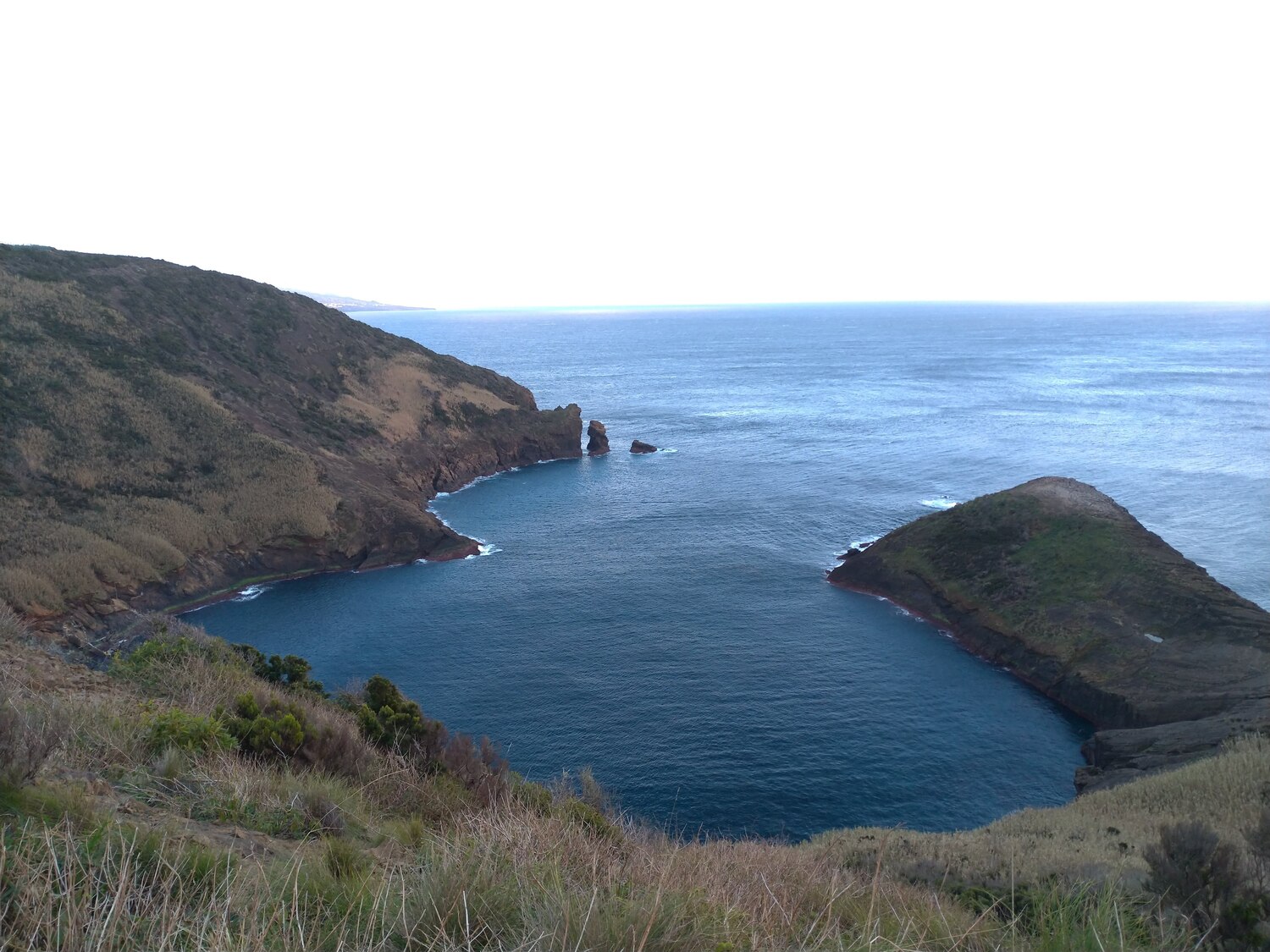
Head toward the imposing Monte da Guia, a 74-hectare protected area. Here, in addition to the breathtaking scenery, you’ll also find the Chapel of Nossa Senhora da Guia and the ruins of the Fort of Nossa Senhora da Guia (officially known as Military Building No. 004/Horta). At the furthest point of the hill, you’ll find the so-called Miradouro do Neptuno, which got its name from a famous photograph taken in 1986 during the worst storm ever recorded to hit the island.
At Monte da Guia, you can also hike the PR08 trail, a roughly 3.4-kilometer loop (flyer here).
Peter Café Sport and Peter Museum
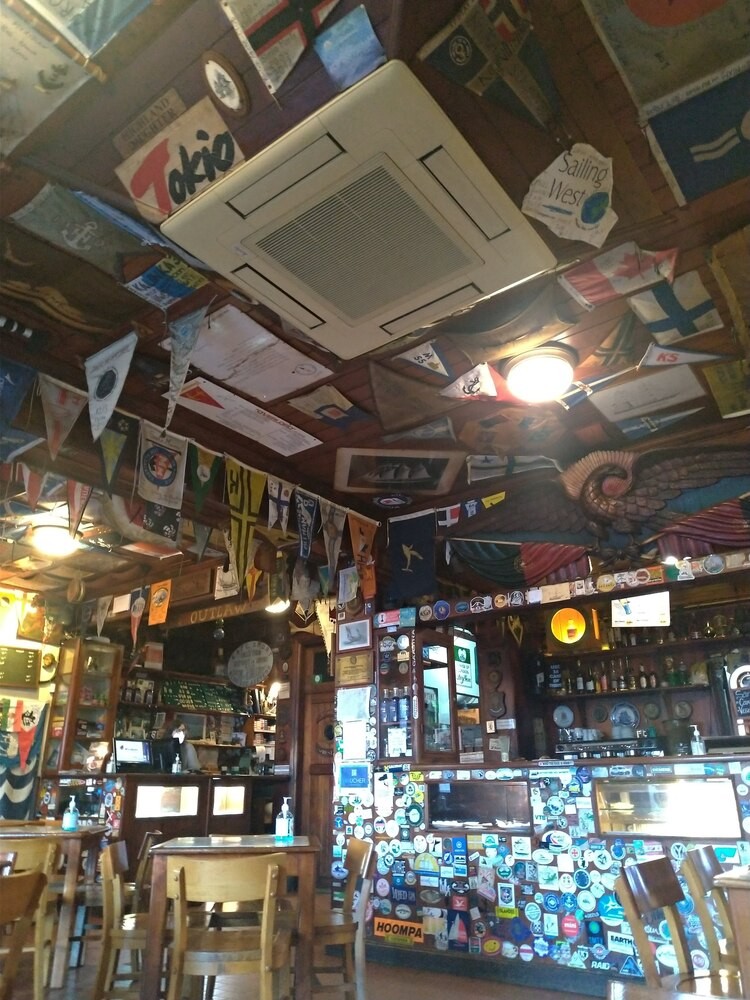
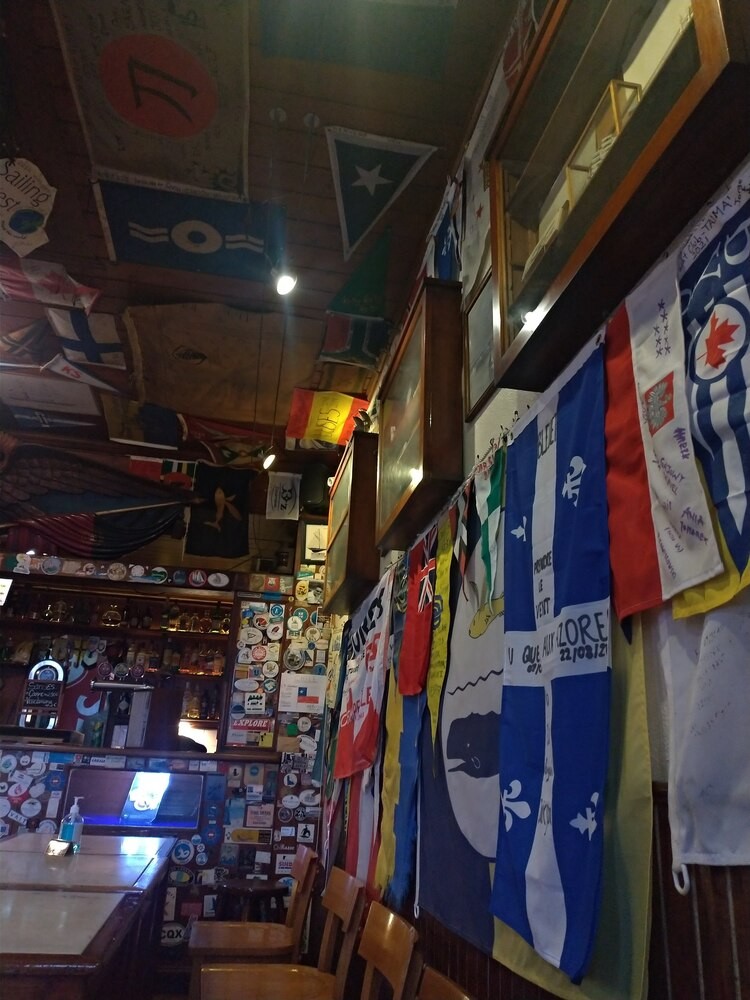
On your way back to Horta, we recommend ending the day at the famous Peter Café Sport. In our experience, when we mention Faial to people, one of the first responses or questions is about this iconic café.
With over 100 years of history, this family-run business is located next to the Horta Marina. Thanks to its location, it has become well-known among sailors and yacht owners, earning the reputation it enjoys today.
As the business grew, the company founded in 1986 the Peter's Scrimshaw Museum. This is a museum dedicated to the ancient art of scrimshaw, the art of carving on teeth and bones from sperm whales.
With an admission fee of €3.50 (2024), you’ll find hundreds of works of art here, created by some of the Azores’ most renowned artists.
Inland Faial: the Volcano
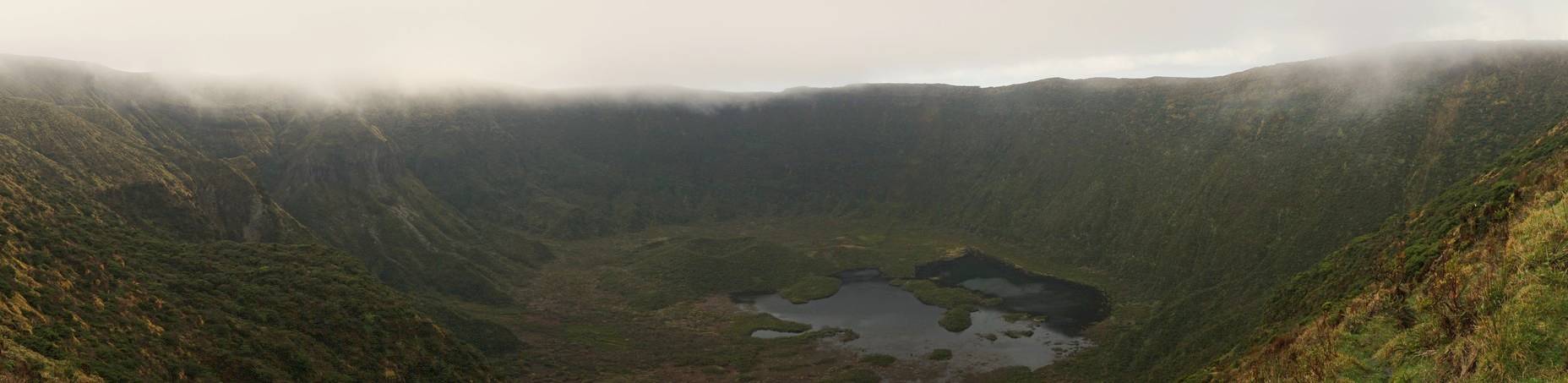
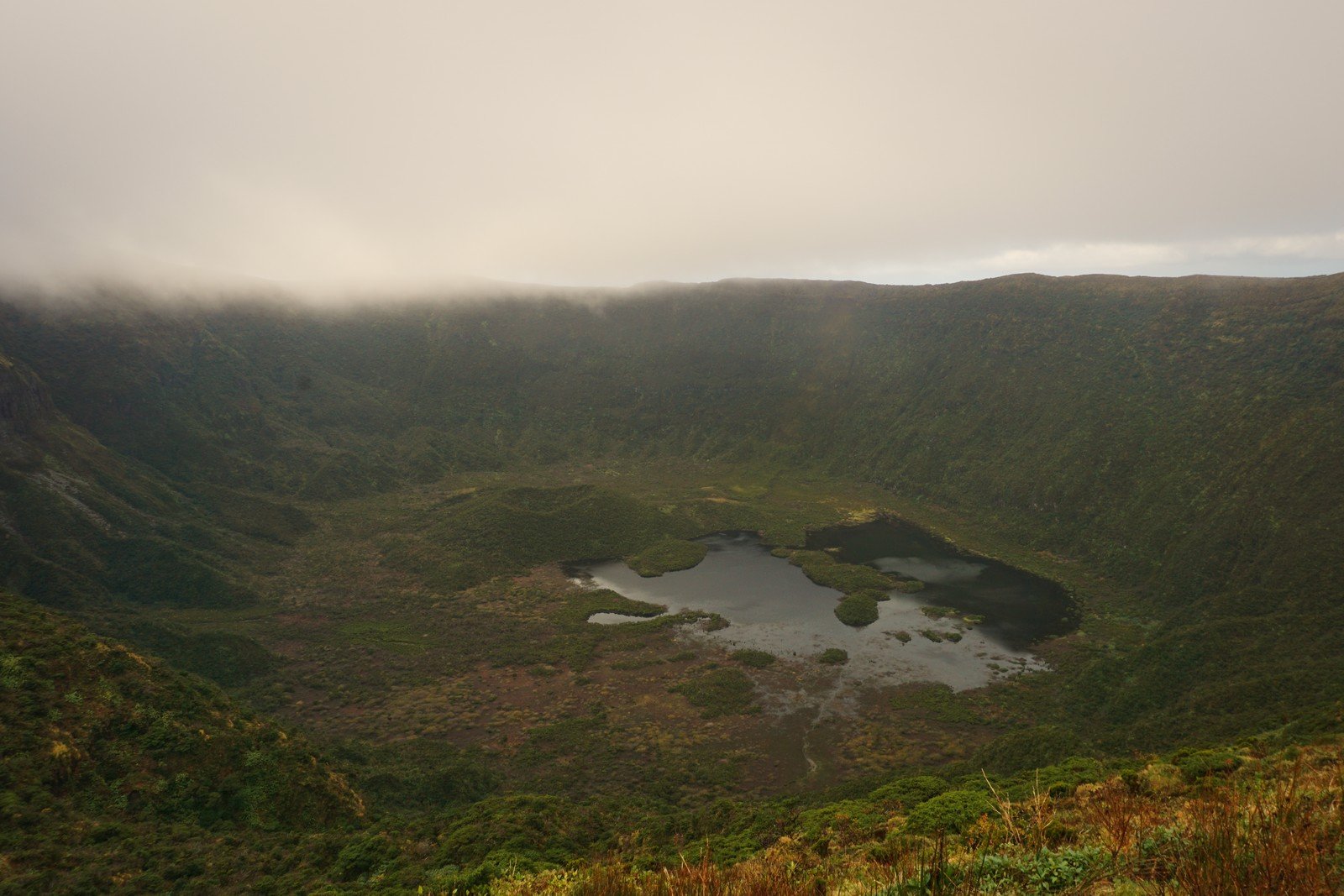
After exploring the surrounding island, we recommend saving the most impressive sight for last: its magnificent caldeira (Volcano eye). This caldera is about 2 km in diameter and 400 meters deep.
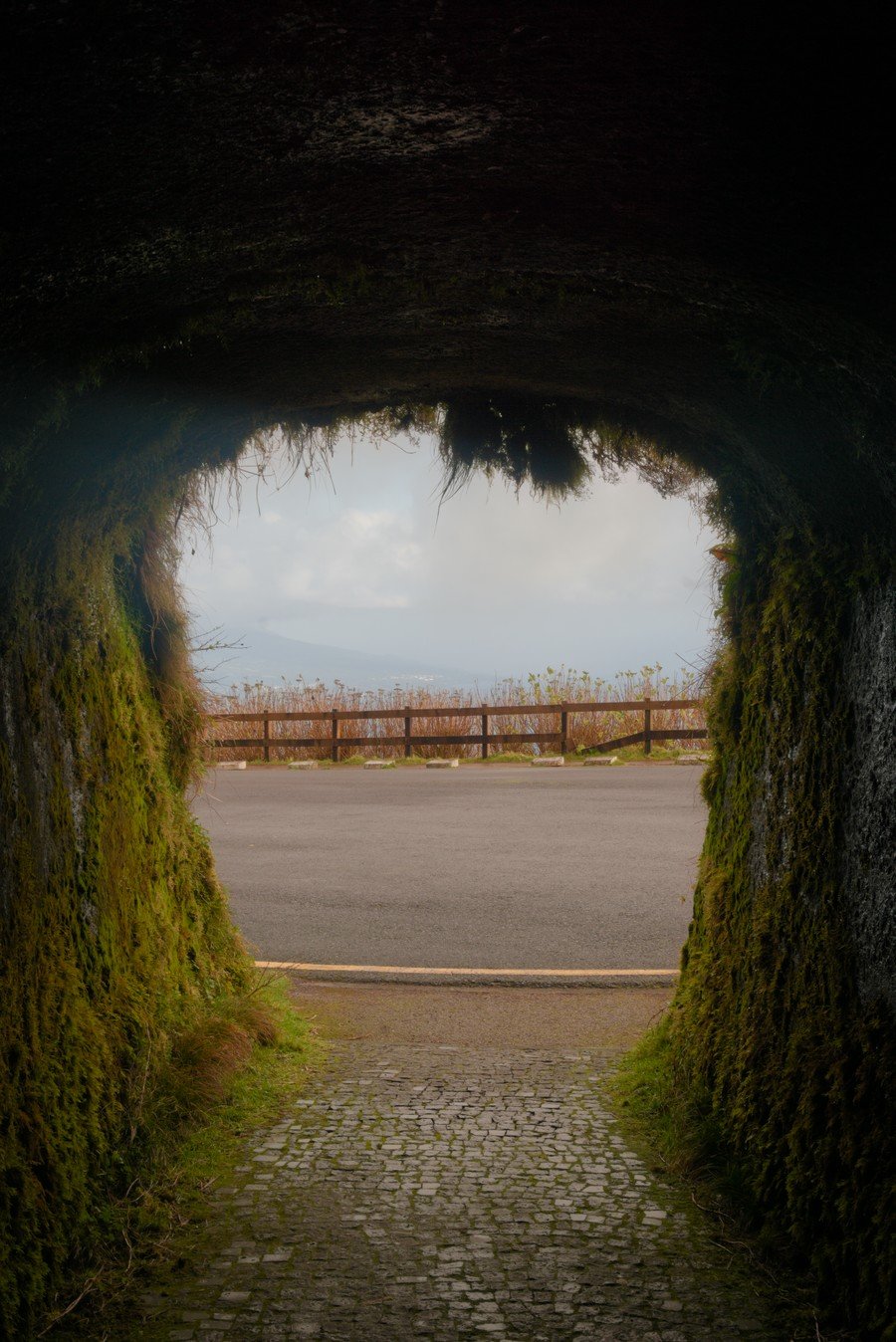
Next to the volcano, you’ll find a free parking lot where you should leave your car. From there, walk through a short tunnel that leads you right up to this natural wonder.
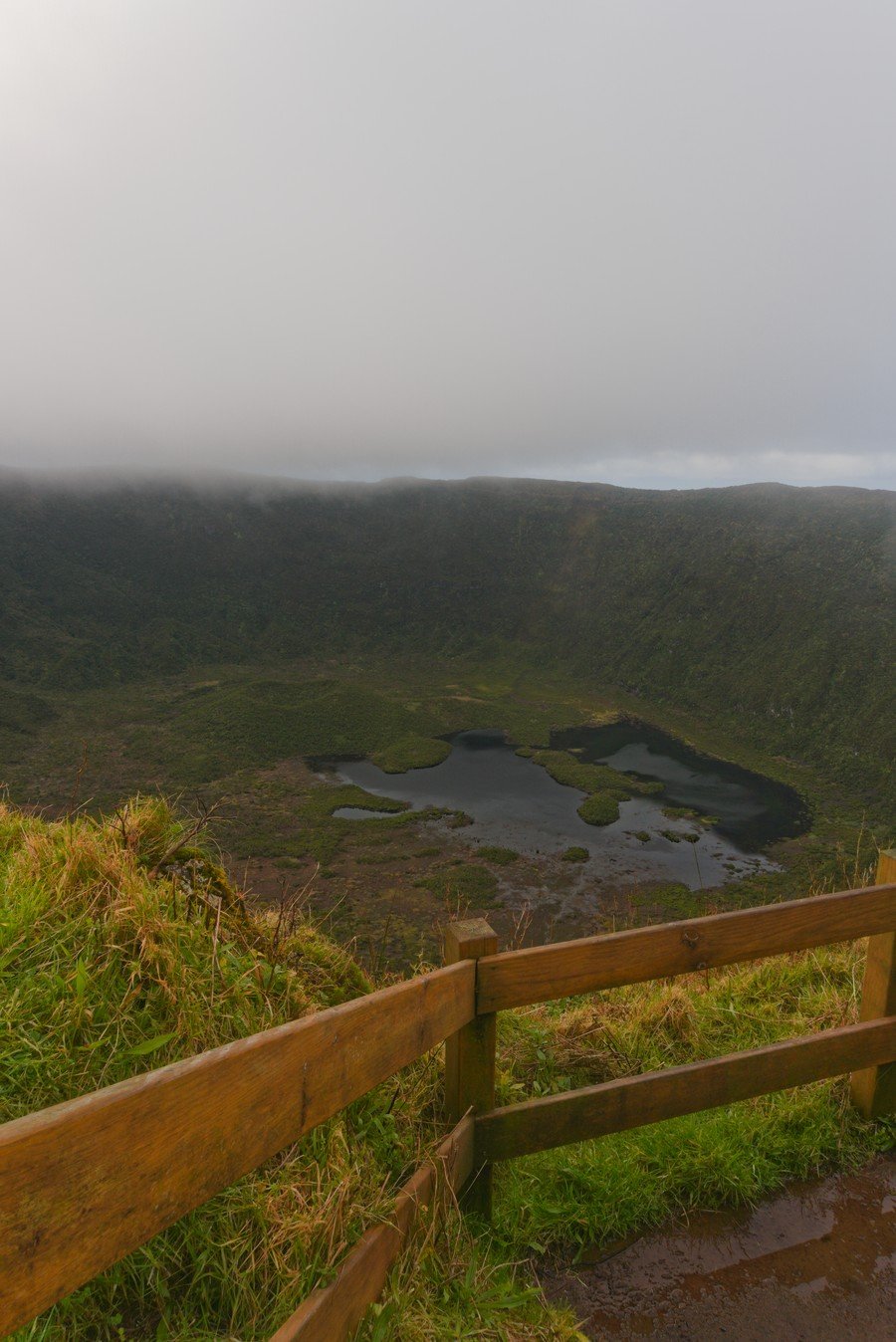
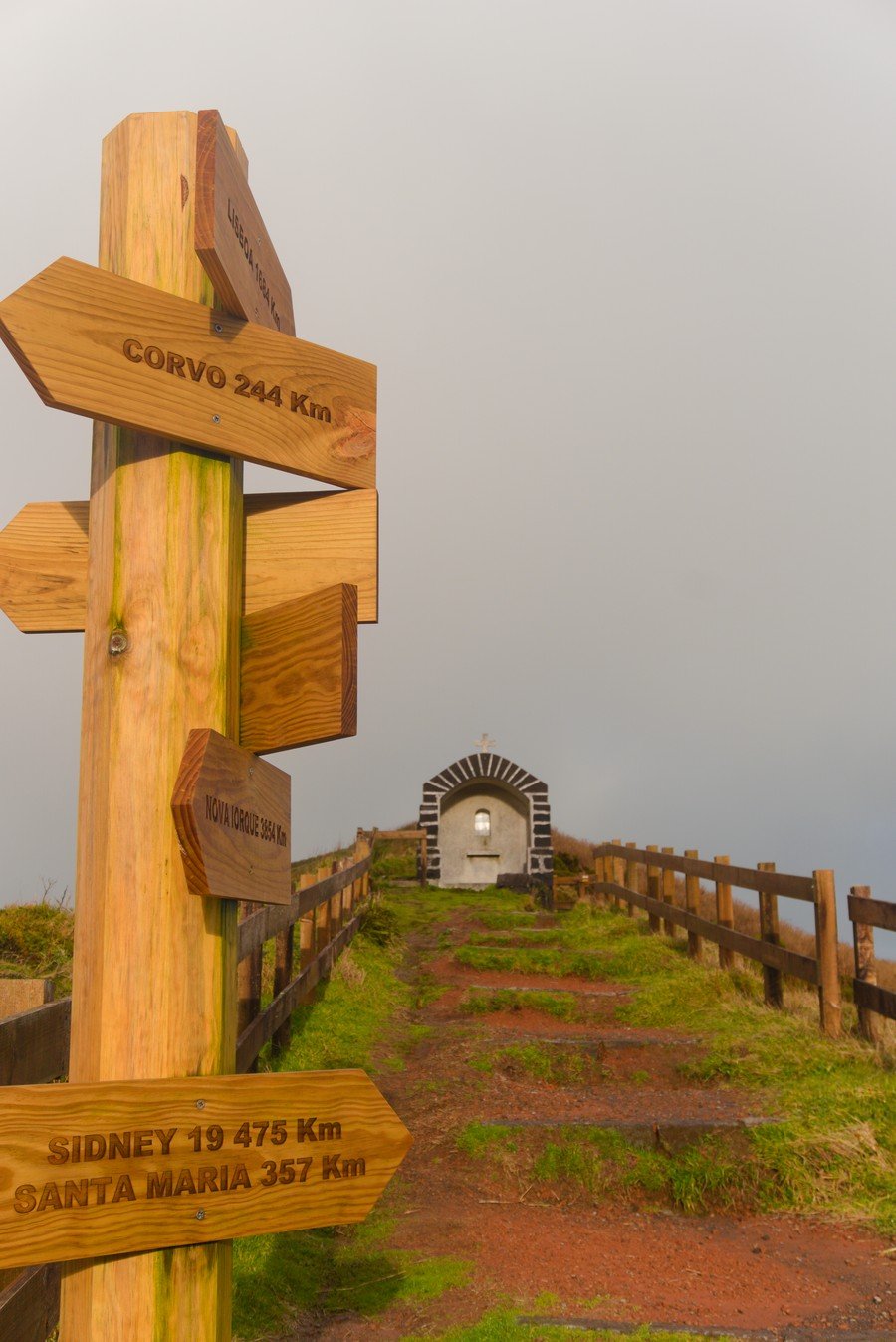
On your right, you will see a small place of worship, the Chapel of St. John, and, on the left, the entrance to the trail that circles the caldera, the PRC04, a 6.8-kilometer loop (More information here).
The descent into the volcano is restricted and takes place along a steep, narrow trail, which is why it is considered difficult. For all these reasons—not to mention the sensitivity of the environment—the descent must be led by a certified guide; there is a daily visitor limit, and the cost is considerable. In our case, exhausted from the climb to the summit, we didn’t even consider this adventure.
On the way back, if you have time, you can also visit the Faial Botanical Garden. It covers about 1.5 hectares, and among its many plants, the collection of approximately 5,000 orchids stands out. Admission to the garden costs €5 per adult (2024), and you can check the Schedules and prices here.
Trails
As is typical in the Azores, there are several marked trails. In total, there are nine short trails and one long trail, varying in length and difficulty:
- PR1 – Cabeço do Canto, a 2.6-kilometer loop
- PR2 – Rocha da Fajã, a 5-km loop
- PR3 – Levada, 7.6 km long (and one of the favorites!)
- PR4 – Caldeira, a 6.8-km loop
- PR5 – Heading toward Morro de Castelo Branco, a 3.7-kilometer loop
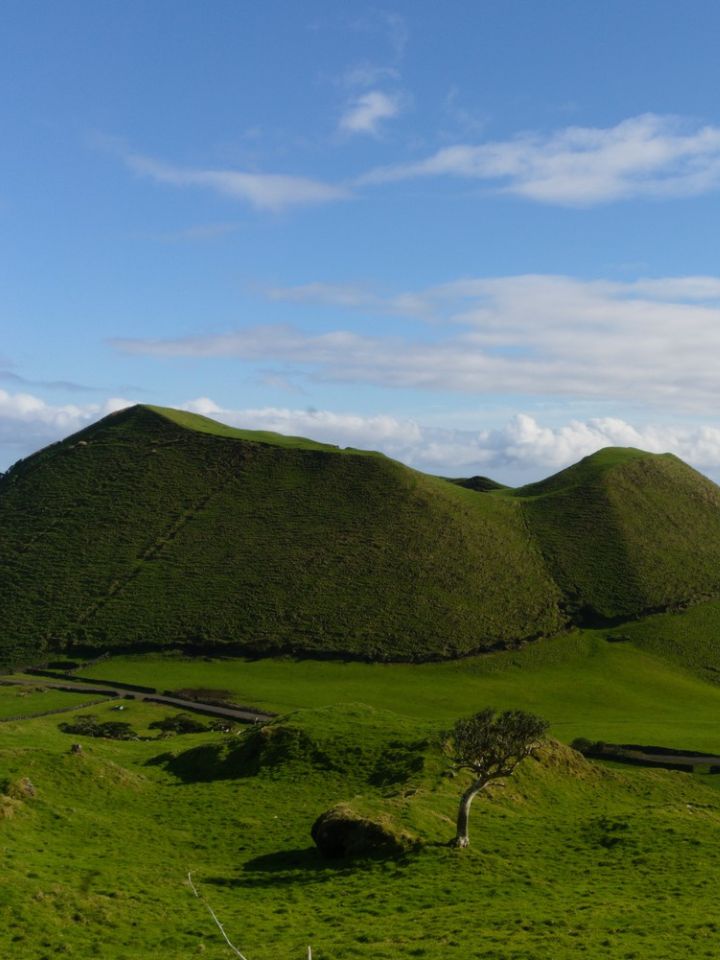
- PR6 – Ten Volcanoes, 19.3 km long (one way)
- PR7 – Old Trails, 17.5 km long (one way)
- PR8 – Entre Montes, a 3.4-kilometer loop
- PR9 – Ribeirinha, an 8.3-kilometer loop
- GR – Faial Coast to Coast, 36.8 km in length (one way)
Where to stay in Faial
Although it isn't a very large island, there are plenty of places to stay. In our case, we stayed at the Porto Pim Azores Guest House, just a few meters from Porto Pim Beach.
Since it’s in the main part of the island, near the city of Horta, there’s obviously a bit of everything nearby. If you prefer a more isolated spot, there are accommodation options scattered all over the island.
Costs (2022)
The big question at the end of a trip like this: so, how much did we spend? In our case, the two days we spent on Faial came to about €190 per person. This does not include the flight to the islands, since we flew to São Jorge and then took a ferry to Pico, using the ferry again to continue on to Faial. We then took the return flight from Horta Airport.
The biggest expenses here are, of course, the flight from Horta Airport to Porto Airport (€195.81 for two people), car rental and fuel (€65.93 total), accommodation at Porto Pim Azores Guest House (€36 for two people), and shopping and restaurants (about €40 total, since we always chose to eat at home).
In terms of activities, we spent just €16 for two people on our visit to the Capelinhos Volcano Interpretation Center and €24.50 at the Capelo Handicraft Center.
Transportation and Car Rental in Faial
Getting around the islands: a topic that gave us such a headache before our trip. When traveling between islands, the answer was simple: Atlântico Line, the ferry company that operates between the islands. But the problem was within the island. To visit a destination like São Jorge, you must have a car or you won't be able to enjoy your trip! Also be aware that rented cars are not normally allowed to travel between the islands.
But even when renting a car, you need to pay close attention to detail. This is because many car rental companies require you to block a deposit on your card - so far so good. But we were going to three different islands and sometimes it can take several days for credit card deposits to be unblocked. With amounts ranging from €1,200 to €2,000 per car, and for three different islands, this was a problem.
In our case, the solution was to rent the car directly from Ilha Verde (both on Pico and São Jorge), which, since we purchased comprehensive insurance, did not require a security deposit. Since we didn’t have any deposit blocked on our card, we were able to get to Faial and rent a car through Autoeurope, with a €1,000 deposit (which is mandatory even with comprehensive insurance).
We’re highlighting this issue for one simple reason: few banks are willing to set a credit limit of more than €3,000 on credit cards, and for those visiting the Azores Triangle—São Jorge, Faial, and Pico—this can be a problem. So we strongly recommend that you always confirm whether a security deposit is required and opt for full coverage—the islands’ roads often have small loose stones that can fly up and damage your car—it’s not worth the risk.
Also pay attention to the minimum age that the driver has to be and the minimum length of license required. Take every precaution to avoid being barred when the time comes to pick up the car.