Pico Island, home to Portugal’s highest mountain, is one of the Azores islands that most piques people’s curiosity. It is also the second-largest island in the archipelago, second only to São Miguel.
For those visiting Pico, our initial recommendation is to plan for at least four full days. In our case, we ended up staying about three to three and a half days, but since we climbed Pico on one of those days, we felt there were still a few things we didn’t get to see.
Towers Cave
Since we had spent the night in the southern part of the island, we set off toward the village of Madalena. Along the way, we made our first stop: the Towers Cave.
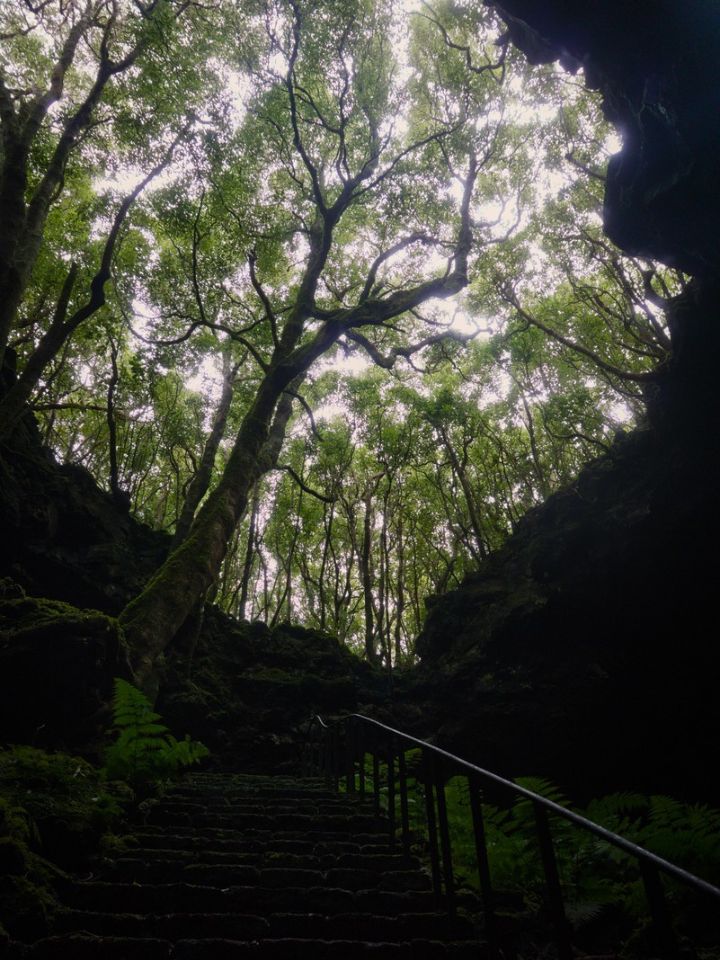
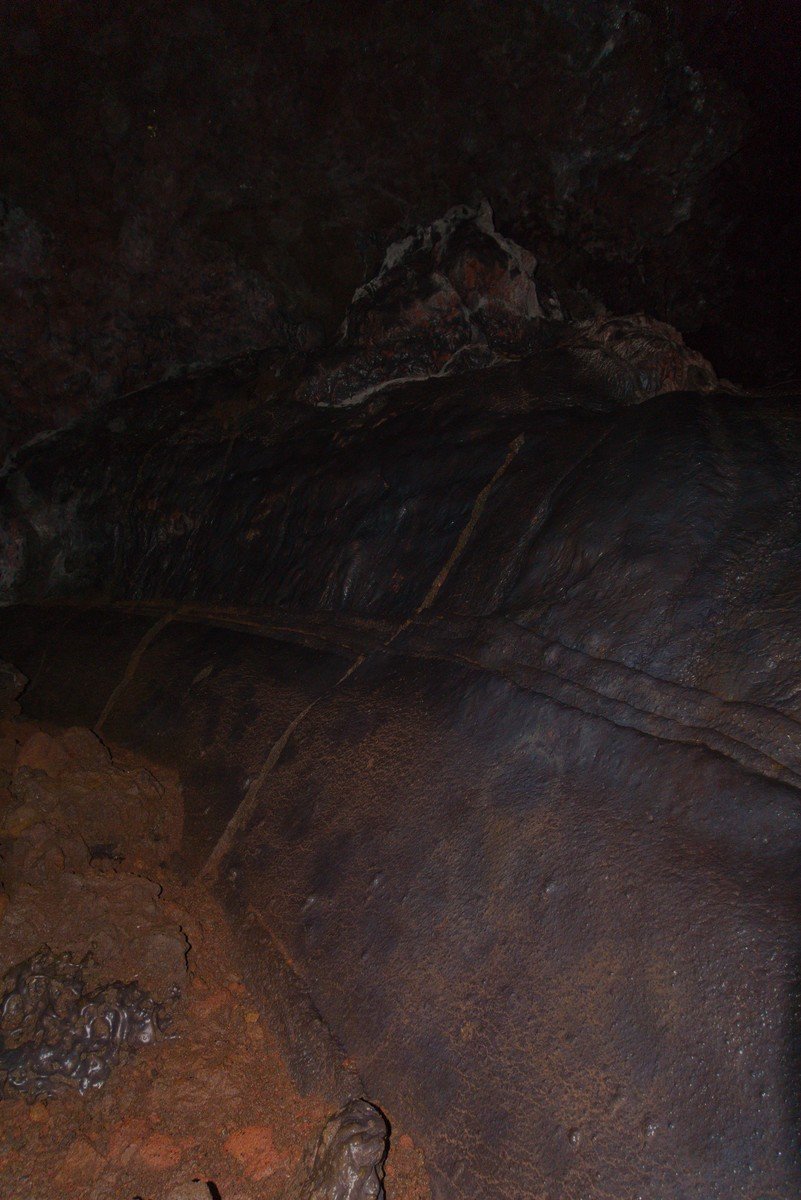
This spot is a must-see for anyone visiting Pico Island, as it consists of the the largest lava tube in Portugal. The cave, which is the largest known cave in the Azores, was discovered in 1990, and the tourism project began ten years later.
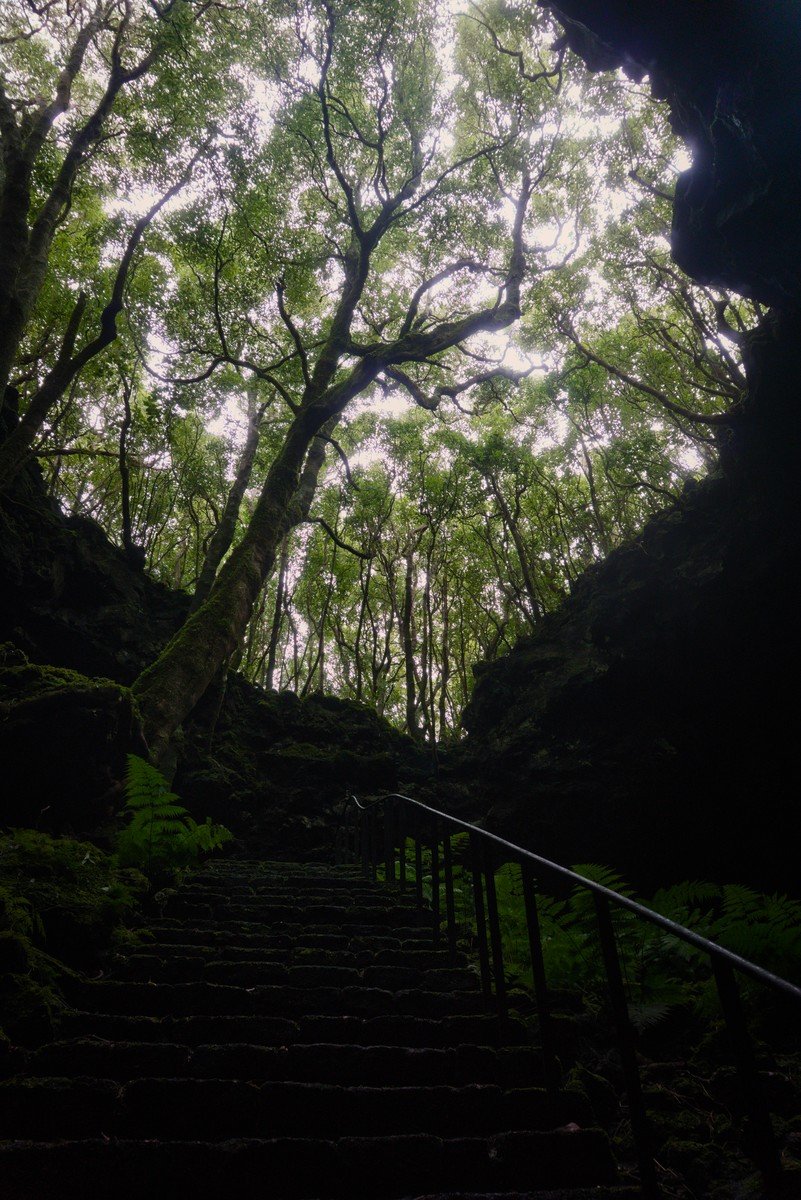
Here you can explore a cave that remains largely in its original state, with accessibility modifications made only at the very beginning and end. In the rest of the cave, you’ll walk over uneven ground, crouch down, and even climb over rocks, guided only by the light of your flashlight. That said, we do not recommend this visit for those with limited mobility or claustrophobia.
Tours are held four or five times a day (depending on the time of year), so we strongly recommend that you book your tour in advance! You can check the opening hours and any restrictions on visits here and book your ticket here.
The visit lasts about 1h / 1h30 and costs 8€ / adulto (em 2022). This price includes the guided tour, a flashlight, a helmet, and a head cover. In our case, we had an absolutely amazing guide who made the whole experience unforgettable.
Pico Vineyards: "Criação Velha"
Returning to the road that leads to Madalena, you’ll have to pass through the parish of Criação Velha.
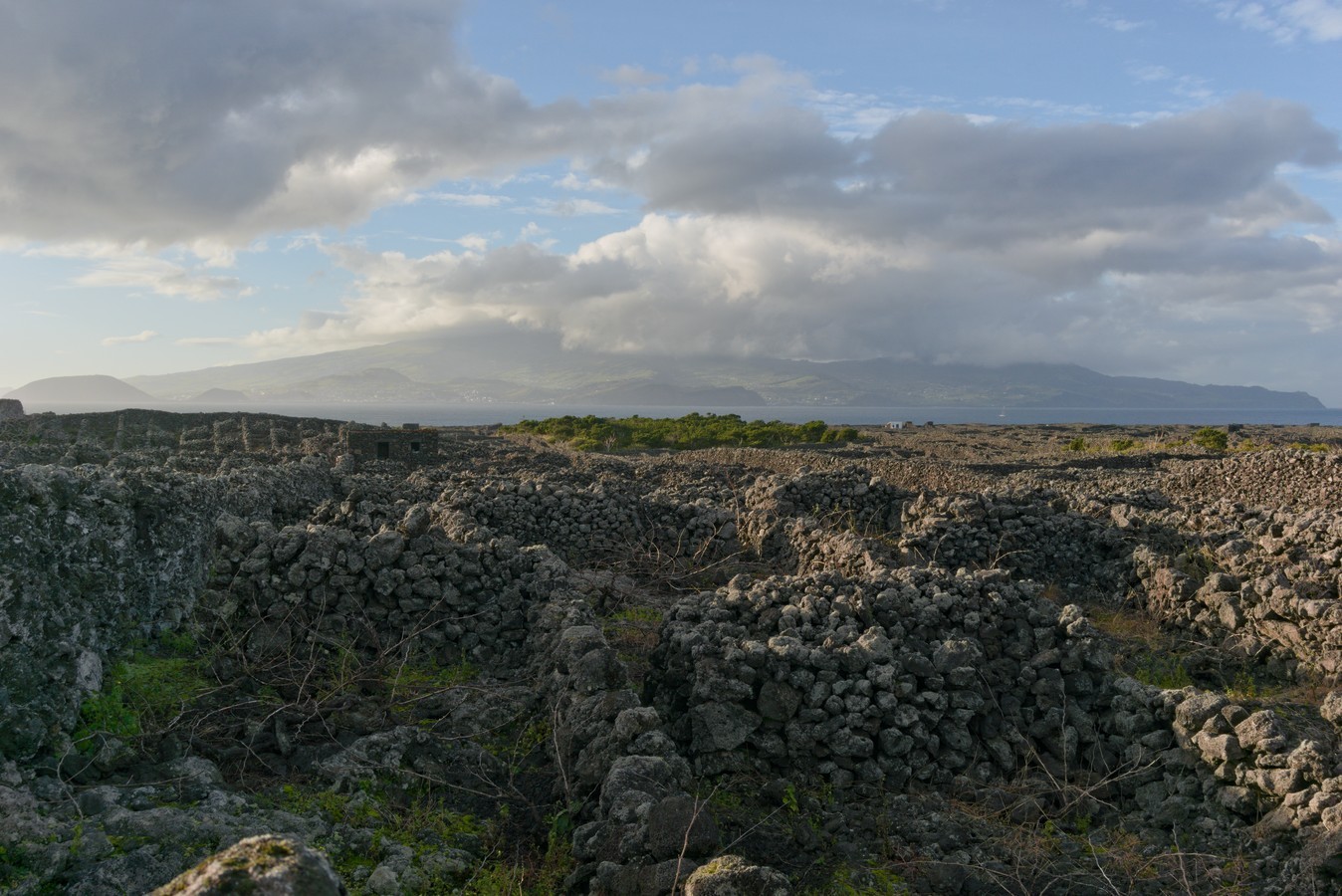
The highlight here is the vineyard landscape stretching as far as the eye can see. The vineyards on Pico Island are unique for being low-growing, protected by small walls made of volcanic rock. So, park your car and take a stroll through the vineyards, enjoying the scenery.
In the middle of the vineyard, you'll find the famous Frade Mill, an old windmill that stands out against the surrounding landscape (more details in the next section).
For wine lovers, there are a few places near the vineyard that are well worth visiting, each offering a unique wine tourism experience:
- Volcano Winery, next to the Criação Velha vineyards (More information here)
- Pico Island Wine Cooperative – Picowines, in the Madalena area (More information here)
- Azores Wine Company, in Bandeiras, a few kilometers past Madalena, heading north (More information here)
Wind Mills
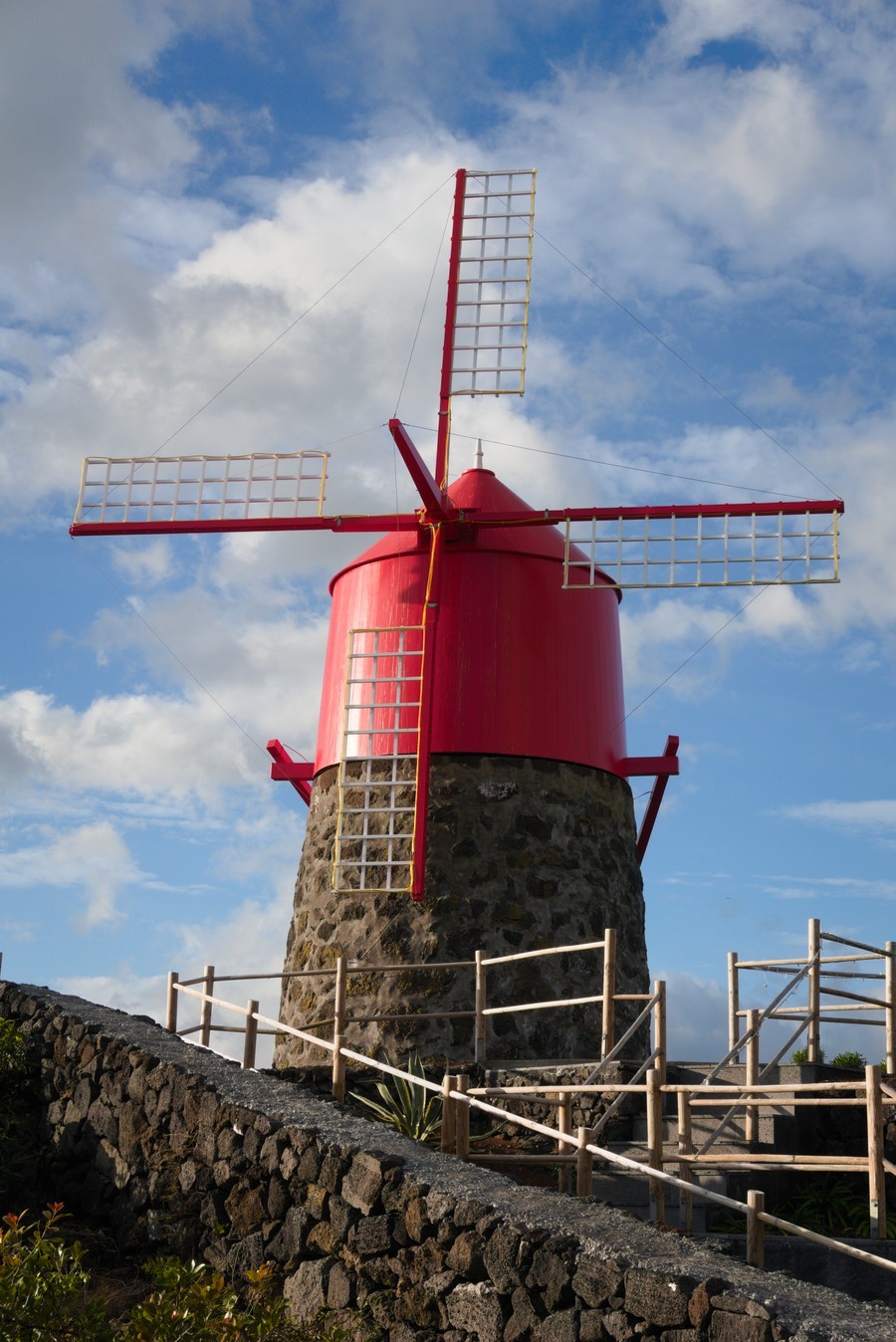
The windmills scattered across the island of Pico are iconic landmarks. As you drive around the island, you’ll come across several of these structures, painted in bright colors.
These were used until the 20th century, harnessing the power of the wind to grind grain. Although some have been destroyed, there are still several on the island, including:
- Frade Mill, located in the middle of the Creação Velha vineyard, as mentioned earlier;
- 'Monte' Mill;
- Ponta Rasa Mill (or São João Mill, as it appears on Google Maps), in Lajes do Pico;
- Santana Mill (Saca), in Madalena.
Some of the windmills on Pico Island have even been converted into lodging. At the same time, many aren’t marked on Maps, so you might just be out for a stroll and stumble upon this little piece of history.
Madalena
One of the island’s main towns, Madalena is the county seat and home to one of the two ferry terminals that connect to the neighboring islands.
Park your car and take the opportunity to explore this village: visit the Church of St. Mary Magdalene, the largest church on the island of Pico, the beautiful building of the City Council (Town Hall), with its coat of arms above the door, and the Pico Wine Museum (more details in the next section).
Walk to the edge of the village, next to the Madalena Municipal Pool, and take in the view of the Atlantic Ocean: the Standing Islet (Ilhéu em Pé) and the Lying Islet (Ilhéu Deitado) (the Madalena Islets), located about 900 meters from the village.
Pico Wine Museum
While you're in Madalena, be sure to set aside about an hour to visit the Pico Wine Museum.
Here, you will learn about the importance of vineyards in the history of the people of Pico Island, as well as the challenges this industry has faced over the years.
In addition to various historical artifacts related to wine, the museum tour includes a large vinyeard where people are working, a viewpoint with a breathtaking view and the Dragon Tree Forest, where there are century-old dragon trees.
The museum has a reasonable admission fee of €2 per person (as of 2022) and is well worth a visit.
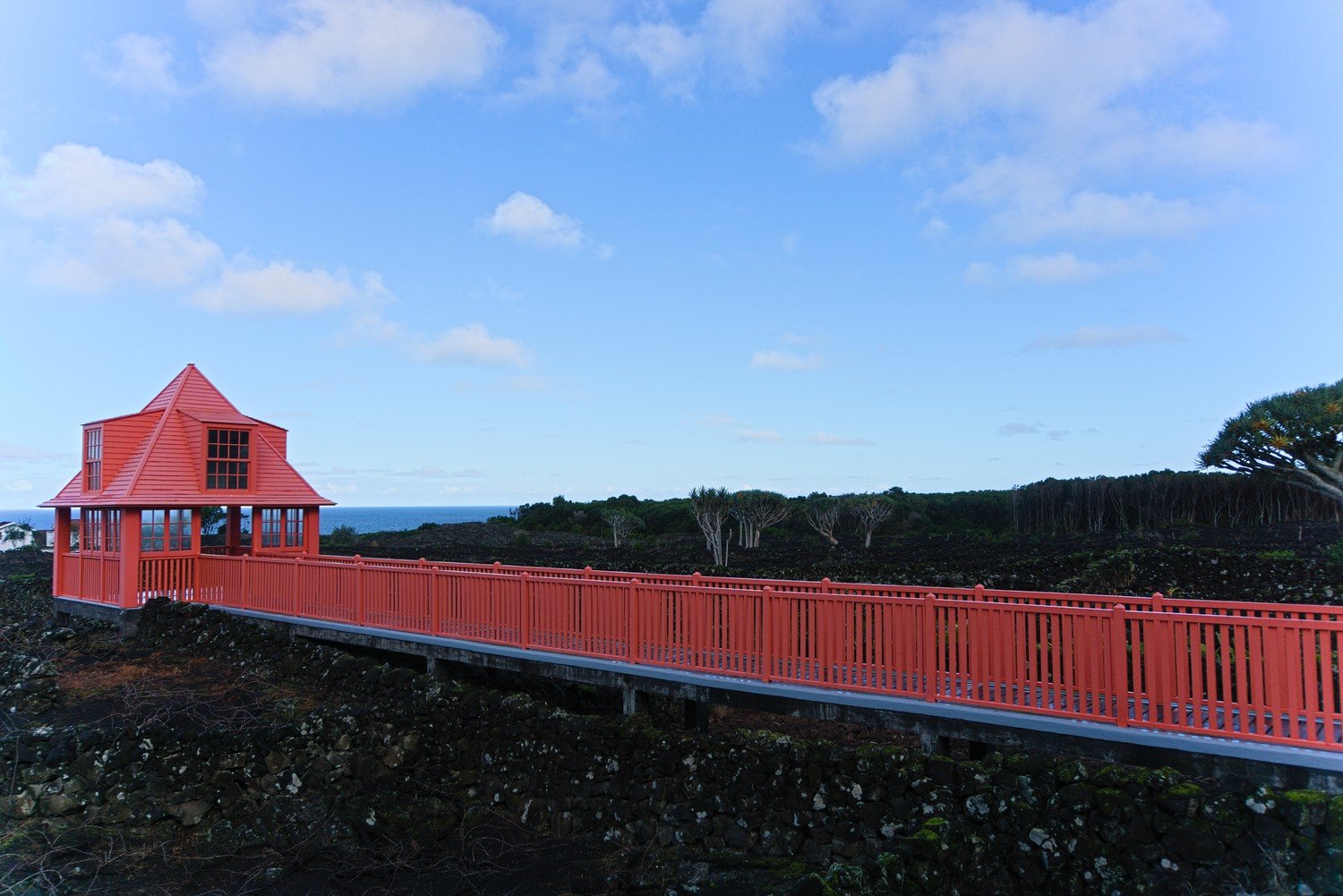
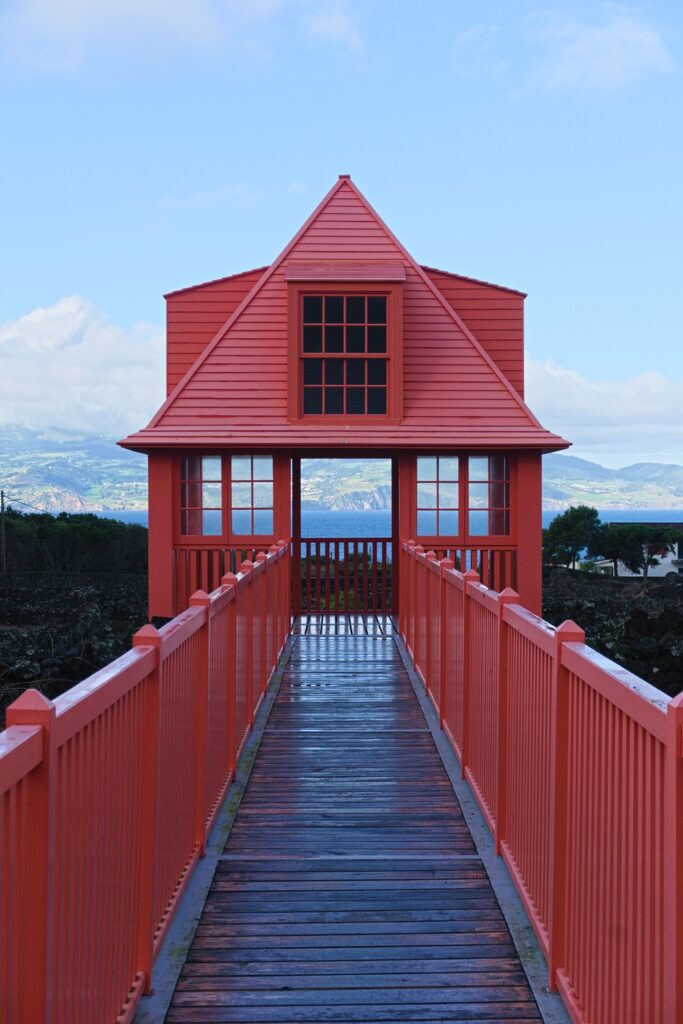
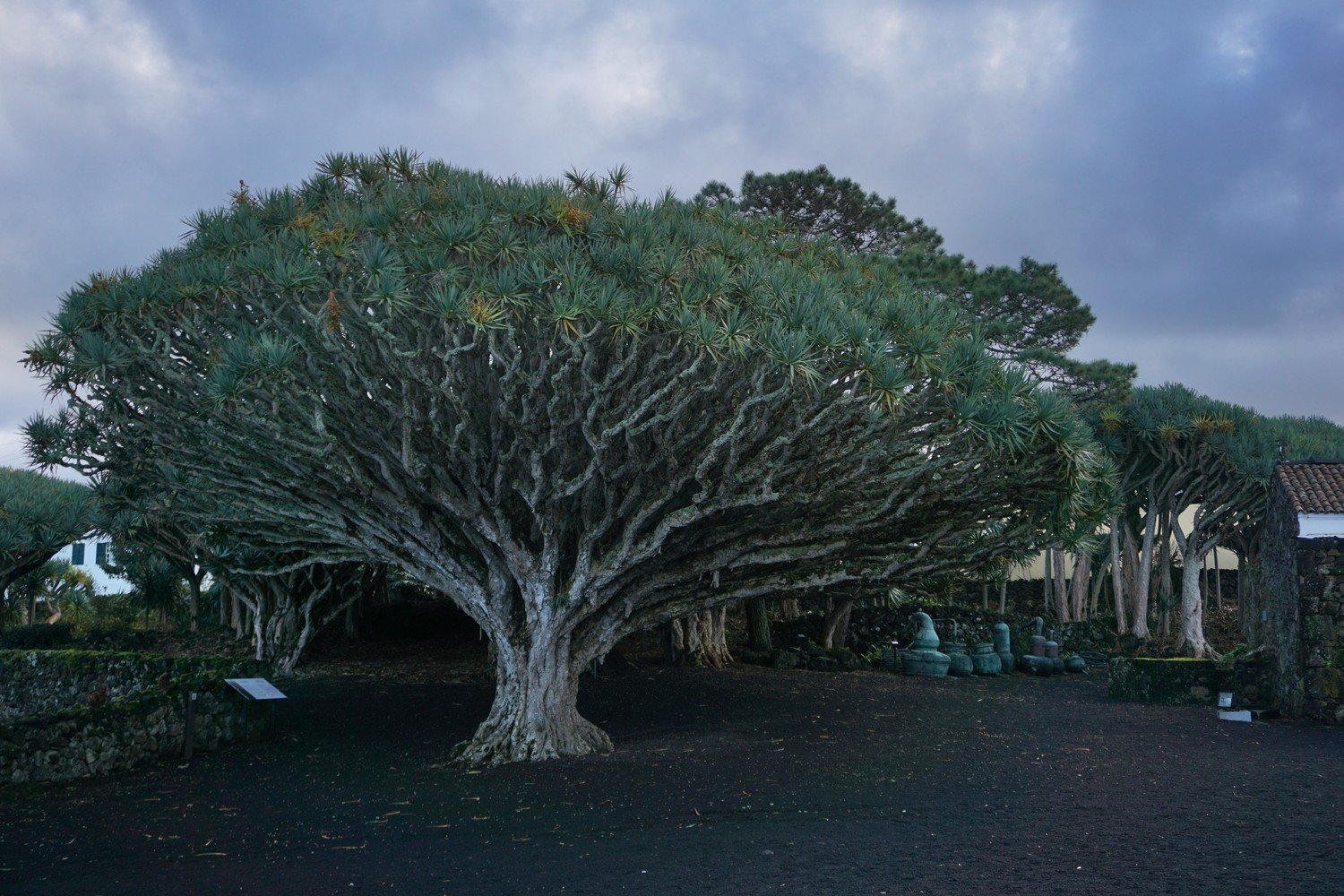
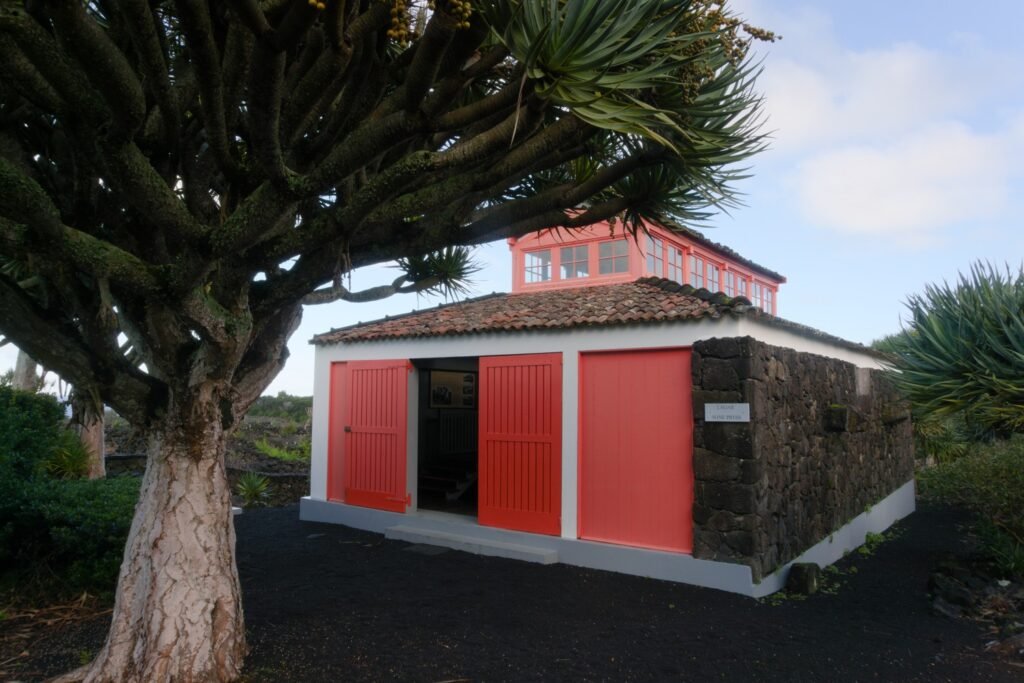
São Roque do Pico
Heading north, you’ll come across São Roque do Pico, a beautiful historic village, which we (unfortunately) weren’t able to explore as much as we would have liked.
São Roque do Pico is also closely linked to the whaling industry, which is why you’ll find here the Whaling Industry Museum, at the former Whaling Factory “Armações Baleeiras Reunidas, Lda,” where for years oils, flours, fertilizers, and vitamins were produced from sperm whales. A little further on, you’ll see the São Roque do Pico Municipal Garden and the Cais Street, where it's worth taking a short walk.
If the weather is nice, take the opportunity to go for a swim in the São Roque Natural Pools. A little further on, you’ll come across the magnificent São Roque Parish Church.
As you continue on your way, pass by the Church of the former Convent of São Pedro de Alcântara (closed)) and by the Wish Tree where you can find an 'Araucaria' that survived a violent storm when it was young. In Australia, at the Royal Botanic Garden in Sydney, there is a tree considered its “sister”—of the same species, the same age, and which also survived a violent storm. It is therefore believed that the tree in Sydney is a wishing tree, and since this one is its “sister,” it is one too. For anyone who wants to try it, just follow the instructions next to the tree and make a wish.
East Side of the Island
Continuing by car, it’s time to explore the eastern part of the island. Although there aren’t any towns here as large as São Madalena and São Roque do Pico, it’s always worth driving all the way around the island.
Stop at the High Land Viewpoint and enjoy the scenery of São Jorge, fall in love with the scenery in 'Ponta Gorda', the 'Ponta da Ilha' Lookout e o seu Lighthouse.
Here we decided to follow the paths to the center of the island and explore the caldeira (Volcano eye), José Inácio Lagoon and the Black Lagoon. There is in this area a hike which allows you to explore this natural heritage, but which we chose not to do since we still had the major challenge of climbing the Pico Mountain ahead of us.
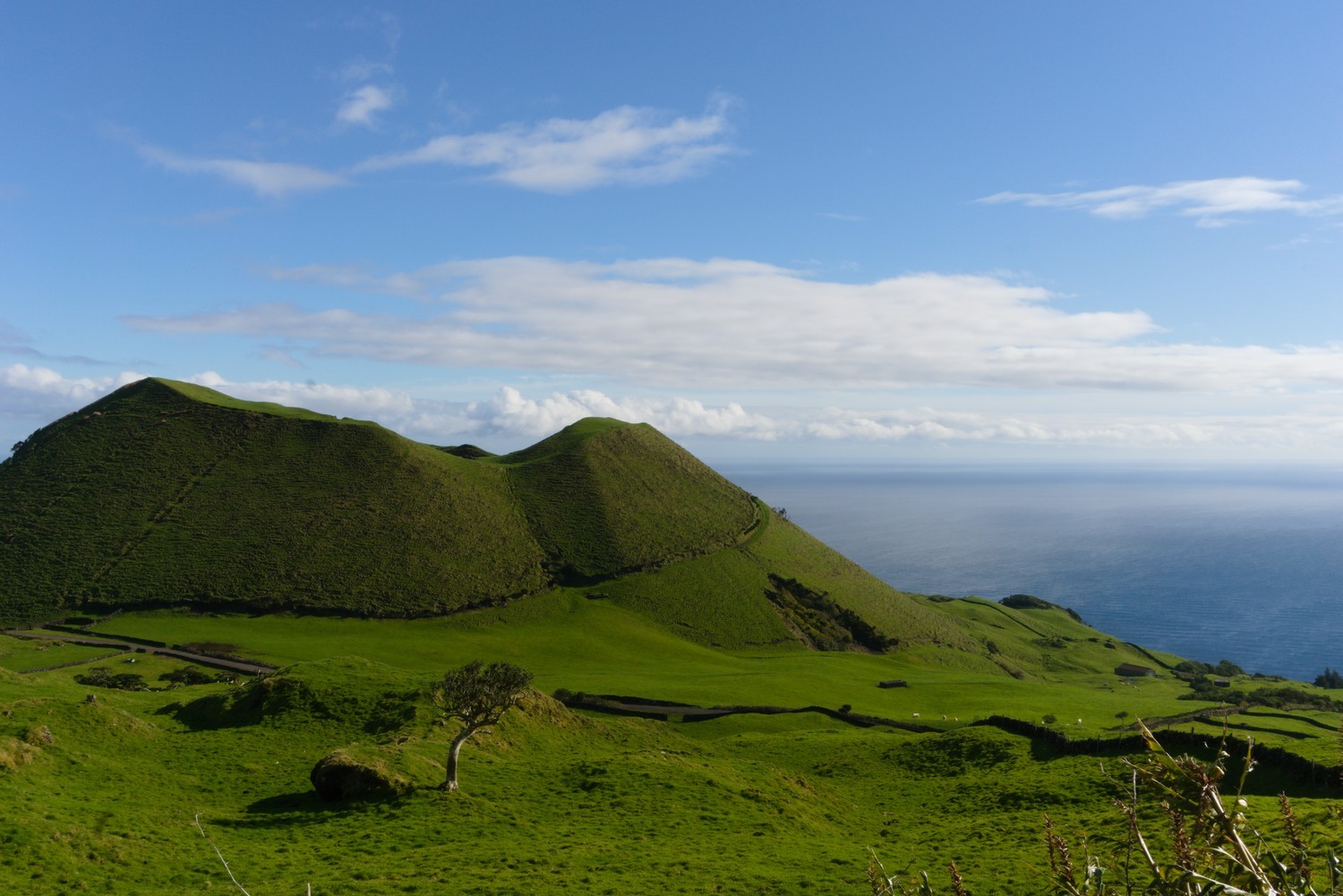
Lajes do Pico
Another village you shouldn't miss is Lajes do Pico, in the southern part of the island.
Here you can visit the third and final museum on Pico, the Whalers' Museum, dedicated to traditional whaling. Be sure to also check out the Church of the Holy Trinity (the oldest on Pico) and the military construction of the Santa Catarina Fort.
As is typical in the Azores, you’ll also find a natural pool here, the Natural Pools of Lajes do Pico.
If you have time, be sure to visit the São João Mystery Forest Park, a park covering an area of 212 hectares. In this park, you’ll find a variety of animals, including deer!
Inland: Lagoons and Pico Mountain
Now that you’ve driven around the island, it’s time to explore the interior: drive to Madalena and take the EN3, the famous road, considered the most beautiful on the island.
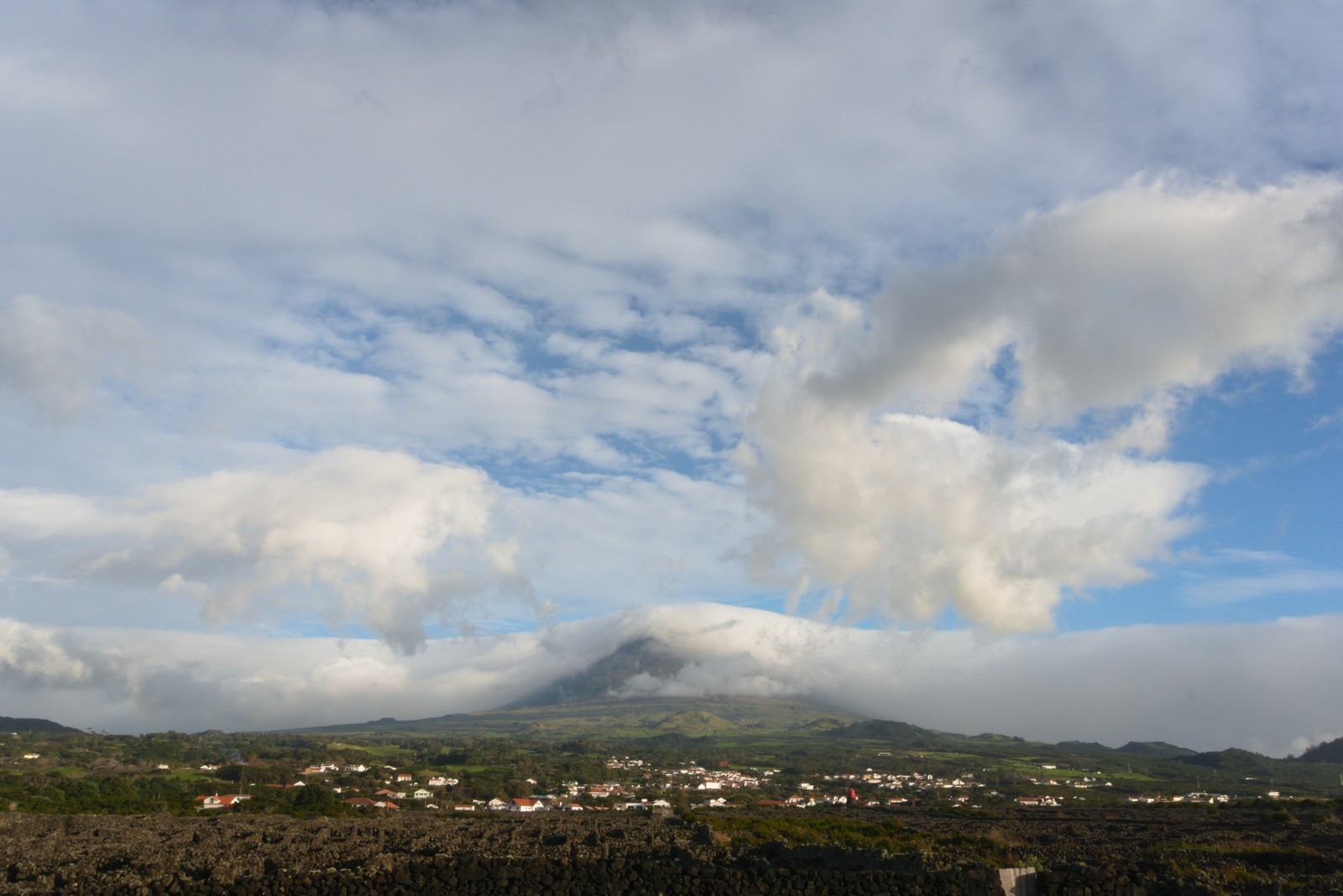
With only the greenery, animals, and (of course) Pico Mountain dotting the landscape, here are two stops that are well worth making:
- Frei Matias 'Furna', a lava tube about 650 meters long;
- Lagoon of the Captain, one of the most famous in Pico, thanks to the view it offers with the Pico Mountain in the background.
At the end of the road, where it connects to the EN2, you can take the opportunity to explore some other small lagoons.
It is also via the EN3 that you have access to the Mountain House, the starting point for the climb. Please note that, although it is possible to reach Mountain House via other roads, this is the most recommended route. It’s time to experience the greatest adventure on this island: climbing Portugal’s highest mountain.
Climbing Pico Mountain
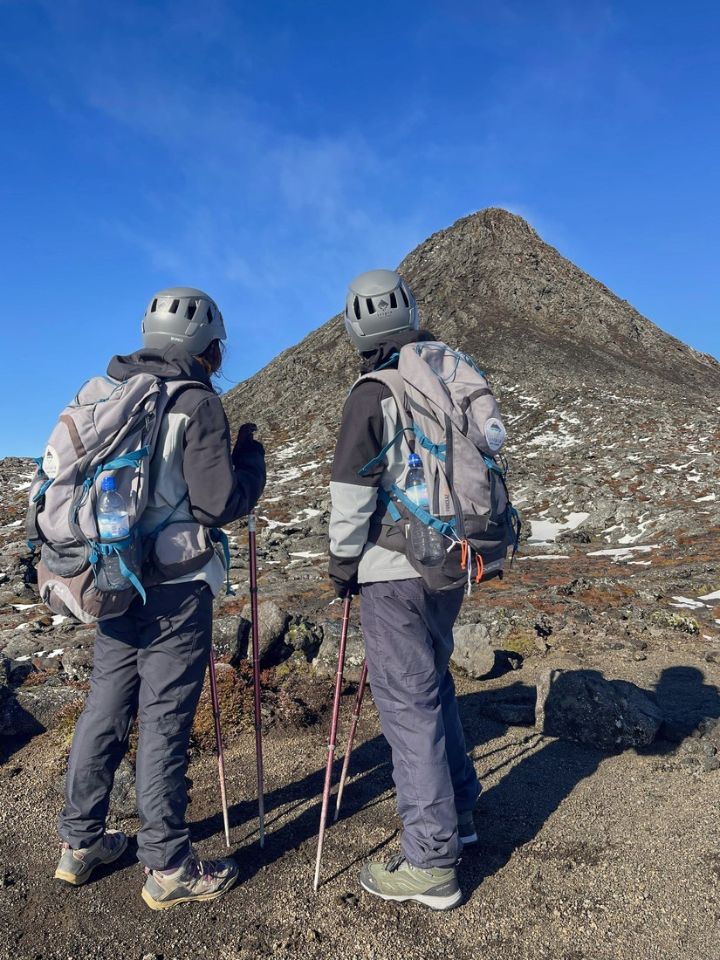
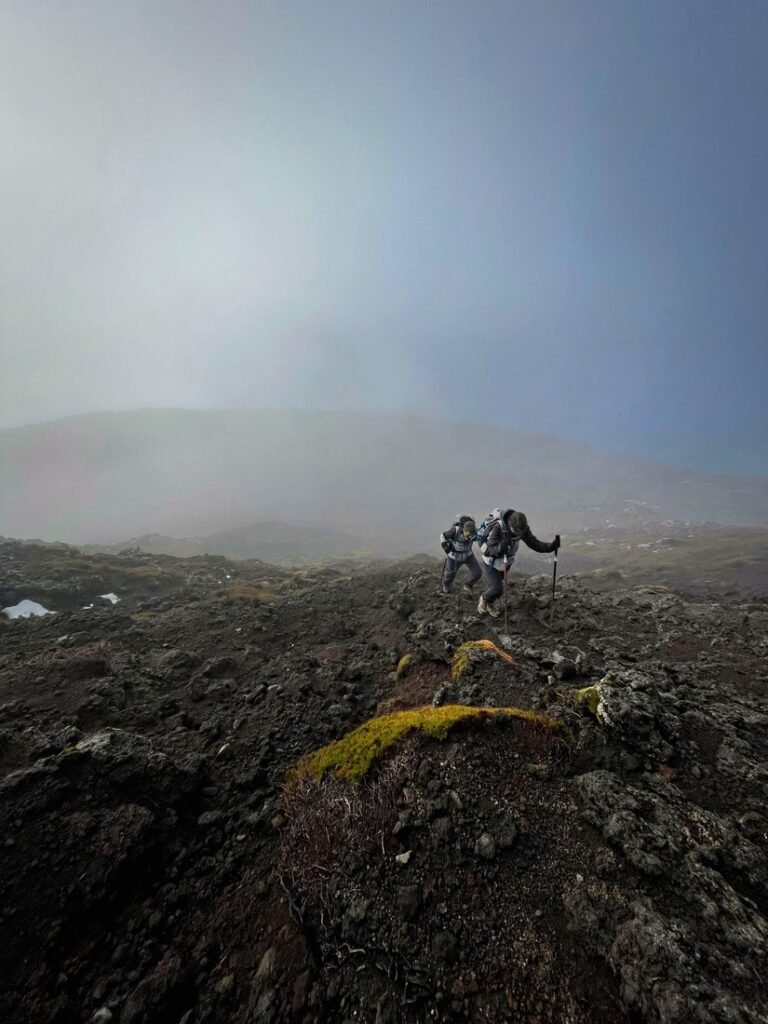
One of the biggest physical challenges we’ve ever taken on: climbing Pico Mountain. Doing so requires a lot of physical preparation and the right gear, which we explain in here in more detail.
All in all, the process consists of “just” 3.8km, but don’t let that number fool you: we’re talking about a 1,150-meter elevation gain!
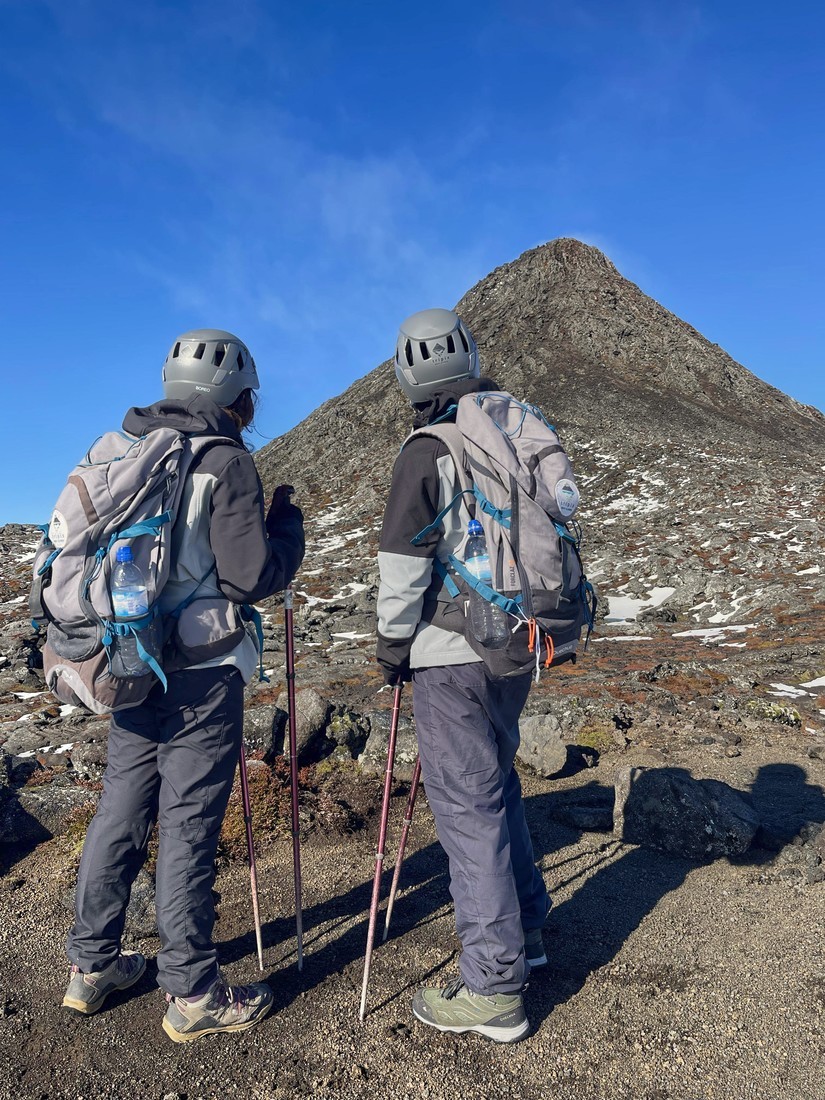
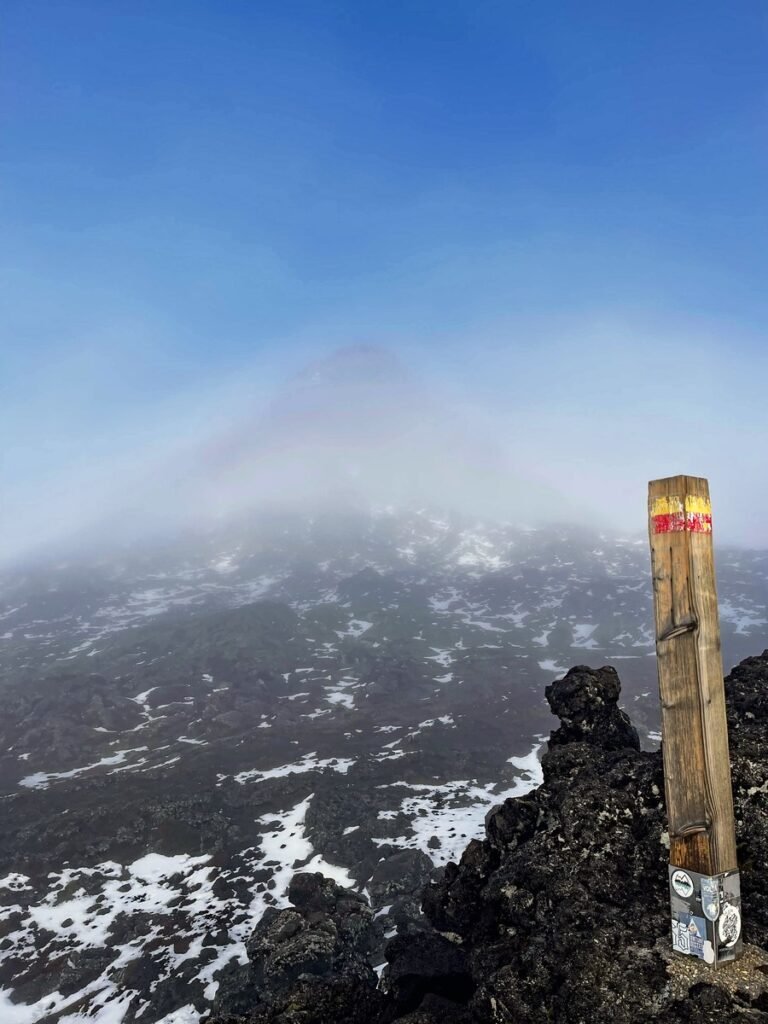
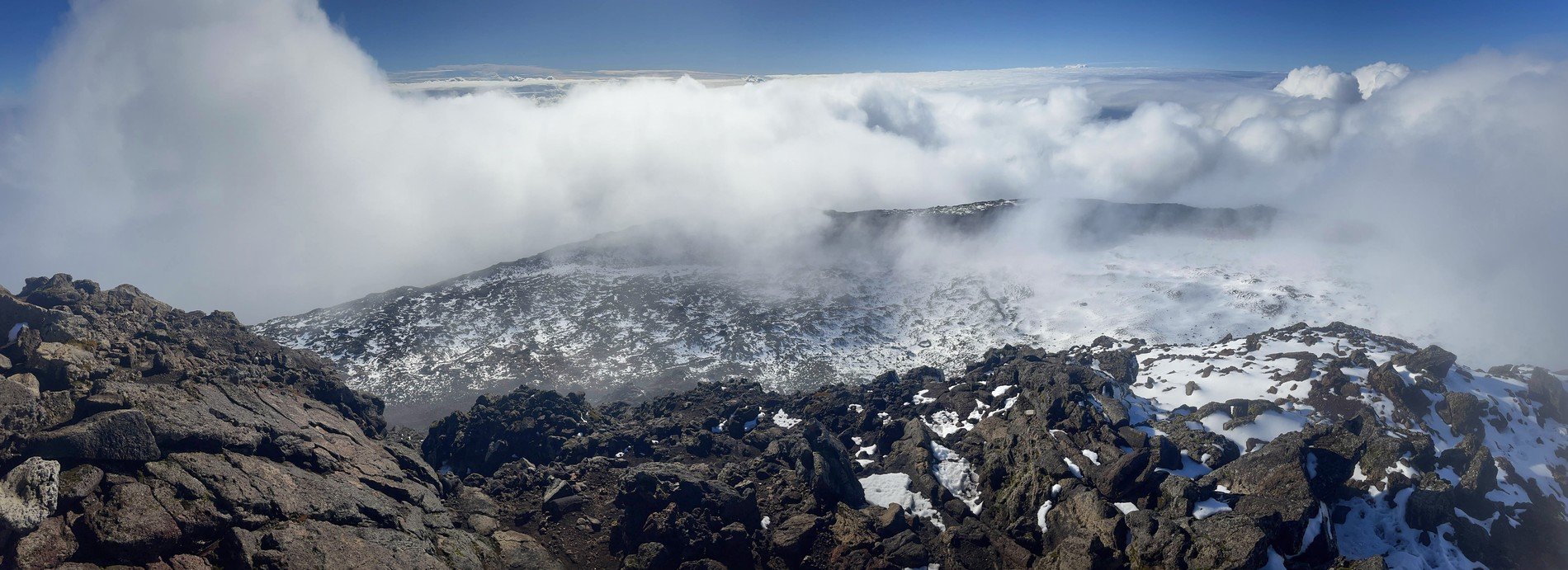
There are several types of hikes: daytime, nighttime (which starts at dawn and ends at sunset), or—the most challenging—an overnight hike in the crater. For any of these, we strongly recommend booking a guide. In our case, we paid €65 per person (in 2022) and did the hike with Tripix—in the end, it was totally worth the money.
If you still want to hike on your own, please note that you are required to pay a fee at House of the Mountain, where the hike begins.
In our case, it took us about 4 hours to climb up and 4 hours and 30 minutes to climb down, and we can confirm that the descent can actually be even harder!
Natural pools
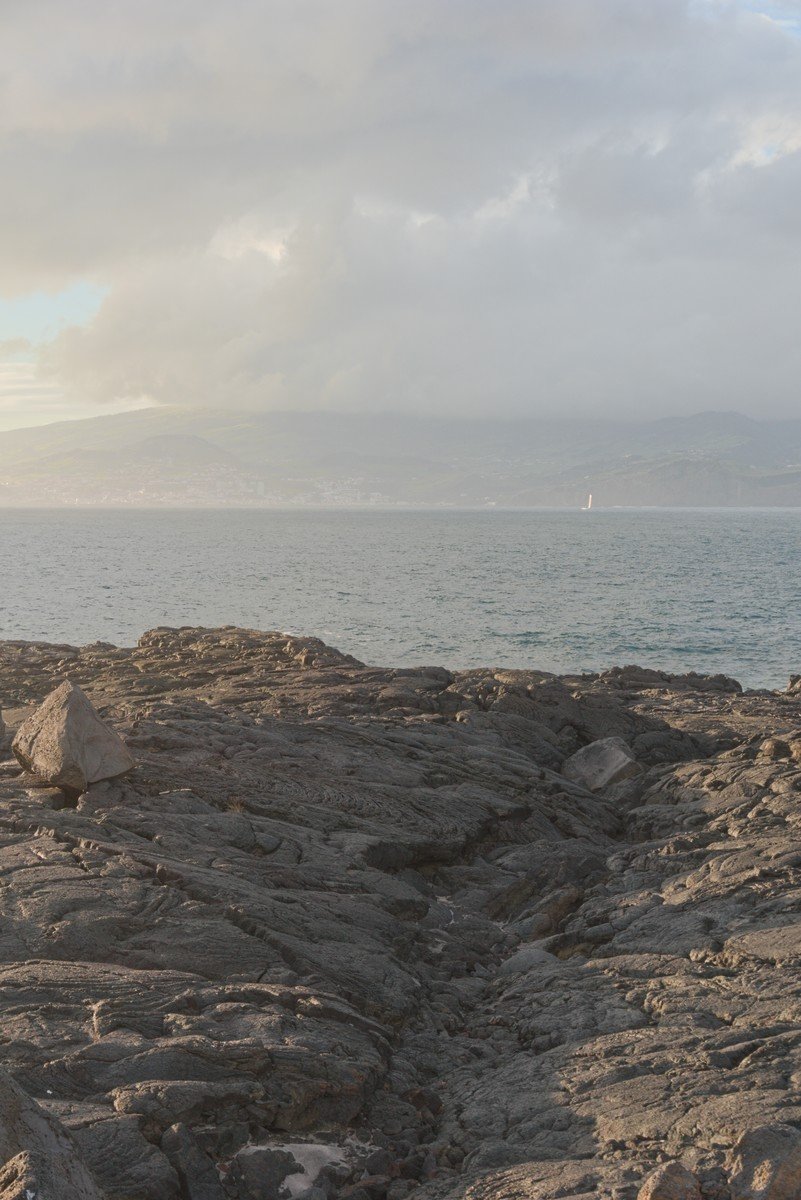
One thing we quickly realized is that the islands of the Azores are full of natural pools. Unfortunately for us, we visited the island in January and it was cold, so we weren’t able to try them out, but here are a few options:
- Criação Velha Natural Pools, in Madalena
- Cabrito Natural Pools, in Santa Luzia
- São Roque Natural Pools
- Cais do Pico Swimming Pool, São Roque do Pico
- Natural Pools of Lajes do Pico
And many, many more! It’s really just a matter of picking a part of the island and looking around: the island is full of great swimming spots.
Trails
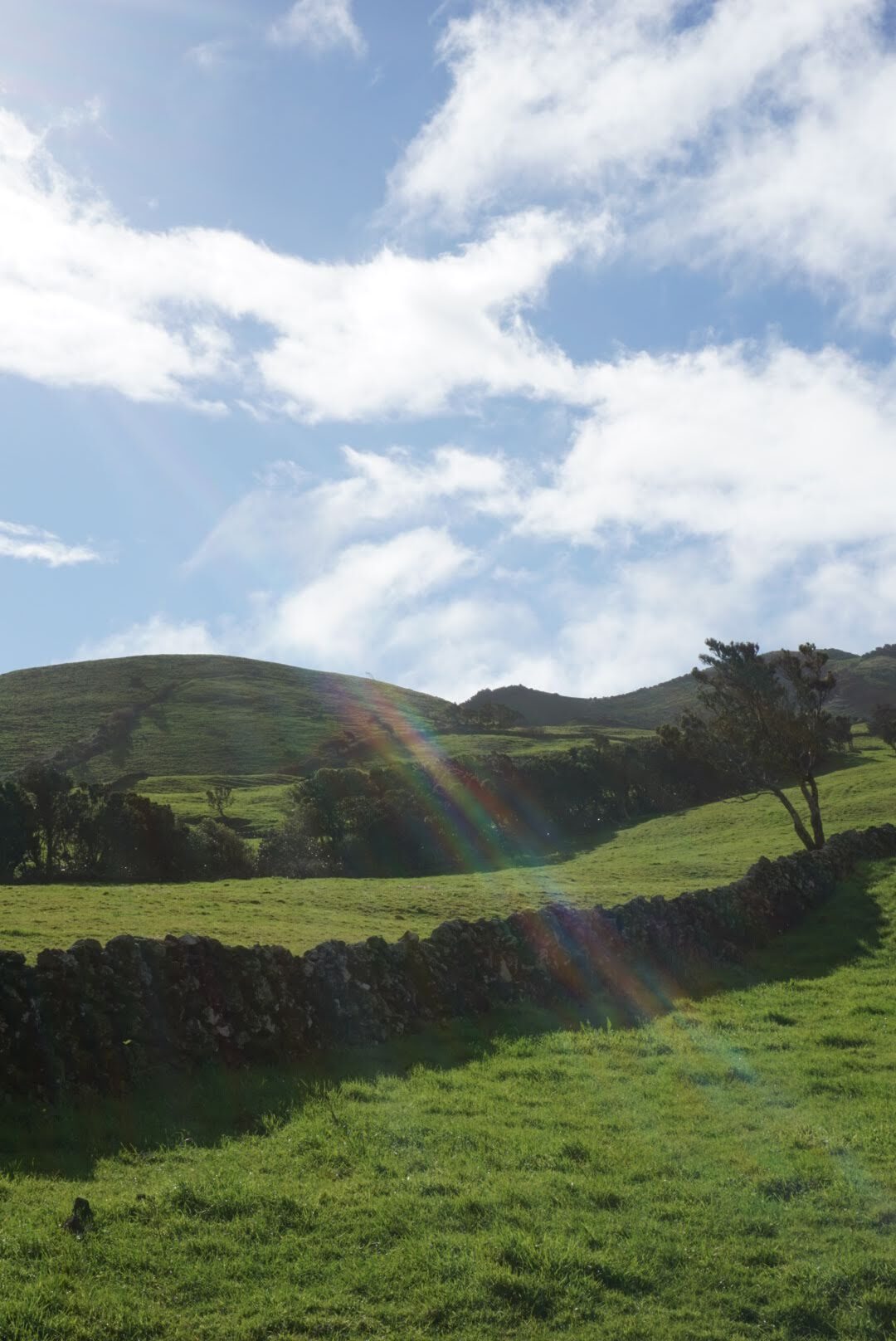
As is typical of the Azores, the islands are full of hiking trails. In addition to the trail that takes you to the Pico Mountain, there are obviously many others worth exploring. In total, there are 14 short routes (PR), with the following trails being particularly noteworthy:
- PR3 – Ponta da Ilha, a 6-kilometer trail that lets you explore the eastern part of the island, which often goes unnoticed;
- PR5 – Criação Velha Vineyards, a 6.9-kilometer-long trail that takes you through the vineyard landscape of Pico;
- PR8 – Ladeira dos Moinhos, a 3.4-kilometer loop that takes you past some old windmills;
- PR13 – Lagoa do Capitão, a 9.3-kilometer linear trail that offers a close-up view of the beauty of the coastal road. Since this trail is not a loop and ends in São Roque do Pico, we recommend that you walk only half of the trail—the section near Lagoa do Capitão (Captain Lagoon).
You can find all the available trails on the Azores Trails website, here
Where to stay in Pico
When we visited (in 2022), there were fewer accommodation options on Pico. Since then, the selection has been growing on various platforms, so you should be able to find something you like without much trouble.
In our case, we stayed at 'Adega do Cavaco', a local guesthouse in São Caetano, in the southern part of the island. The house had a cozy, old-fashioned style, and nearby there’s a playground, the São Caetano Natural Pools, and the Café/Snack Bar O Galeão, where we had a delicious meal.
Where to Eat in Pico
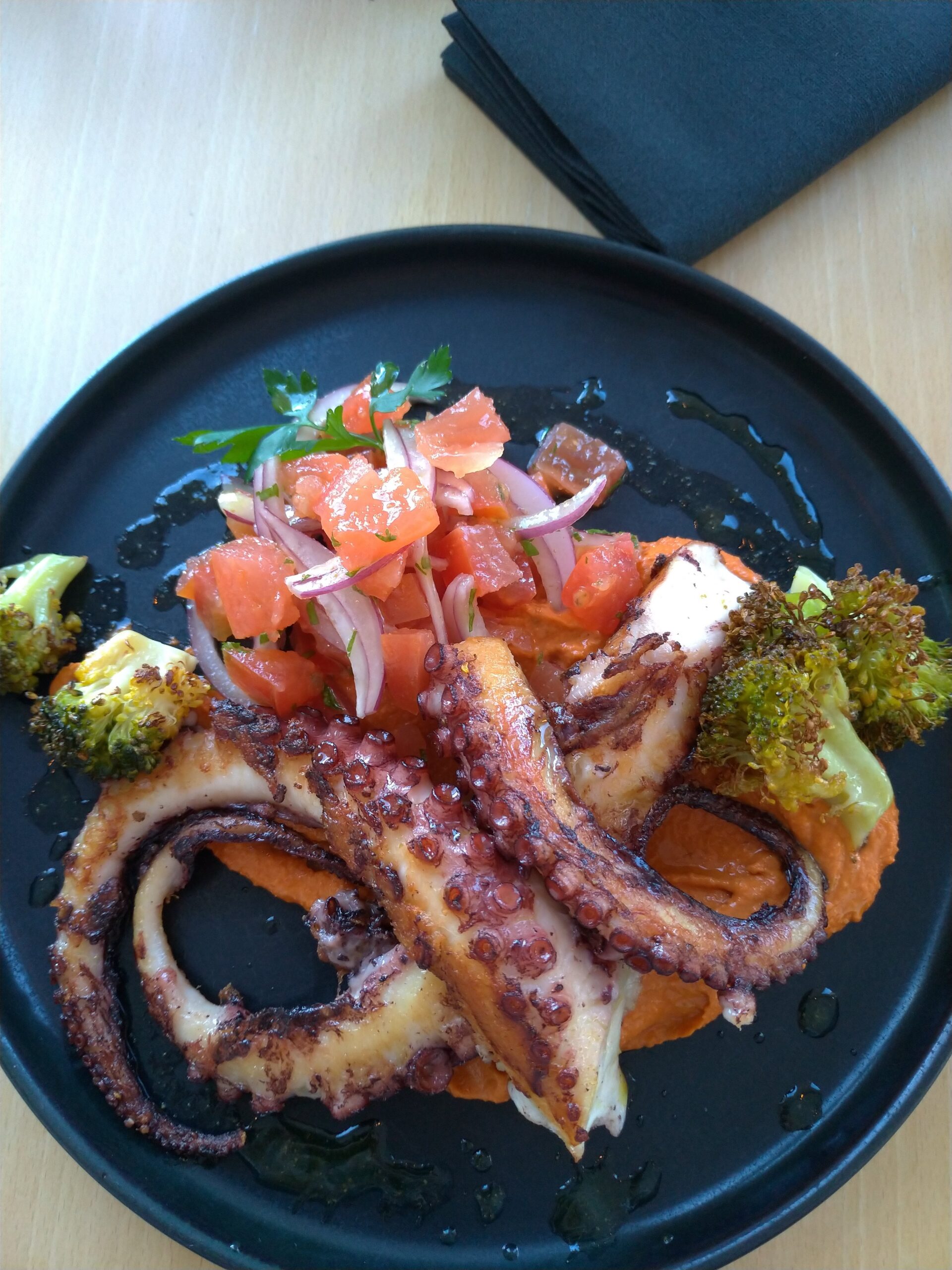
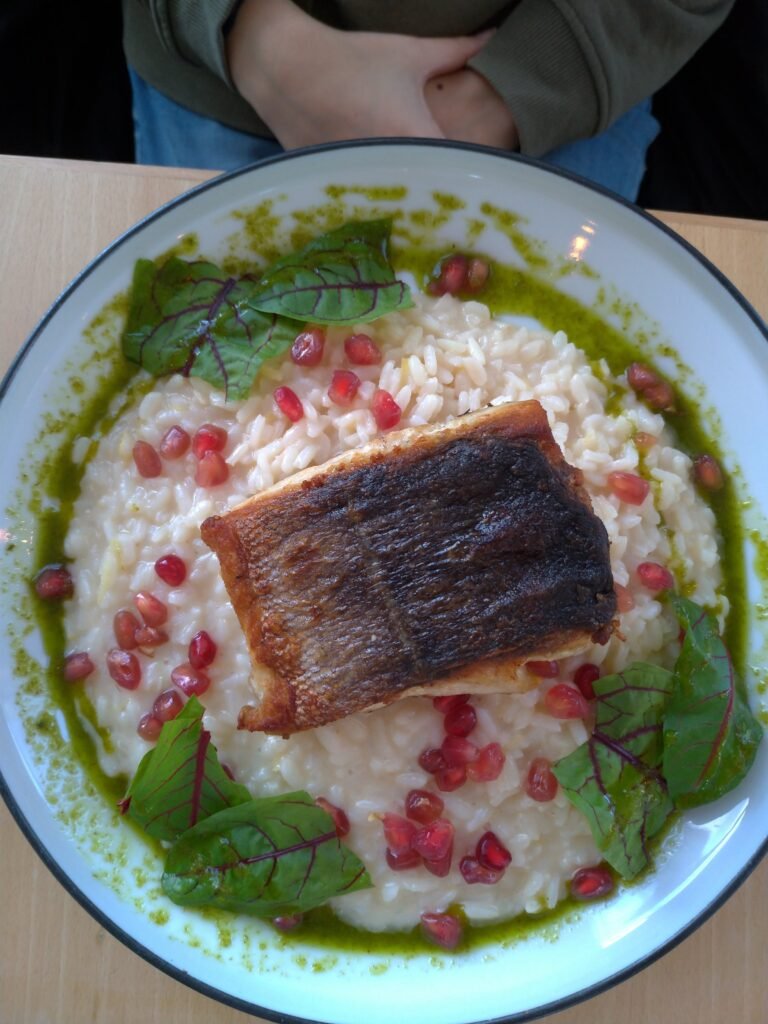
As for food, we ate incredibly well on the island of Pico. In addition to the Café/Snack Bar O Galeão, where we ate on the first day, we had lunch at Casa Âncora in São Roque do Pico—which became one of our favorite meals (🙋🏻♂️)—and, of course, at the iconic Cella Bar in Madalena.
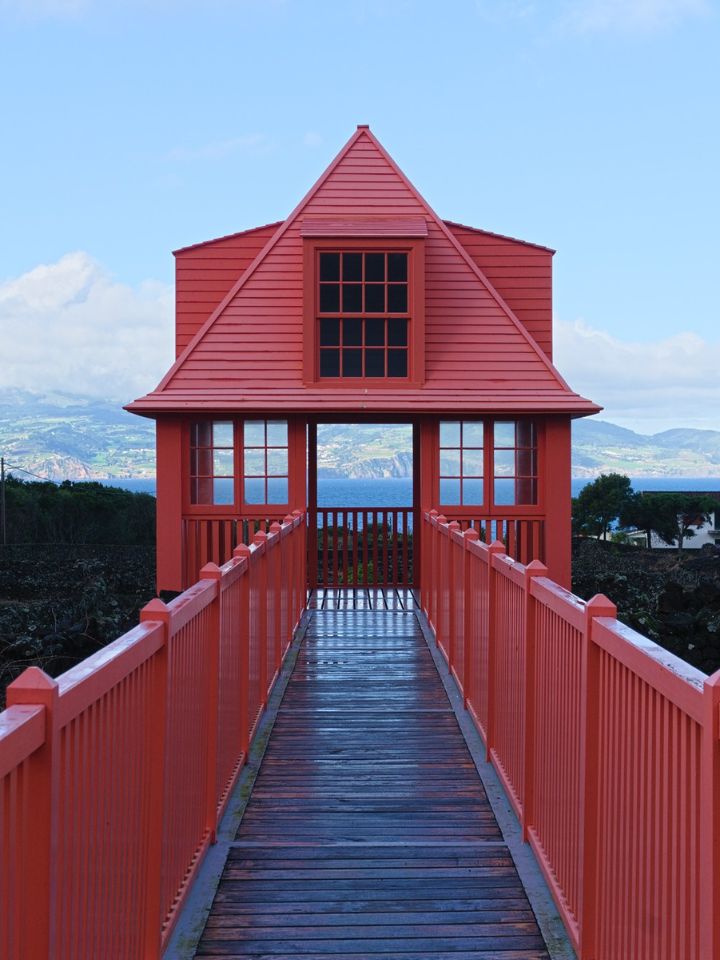
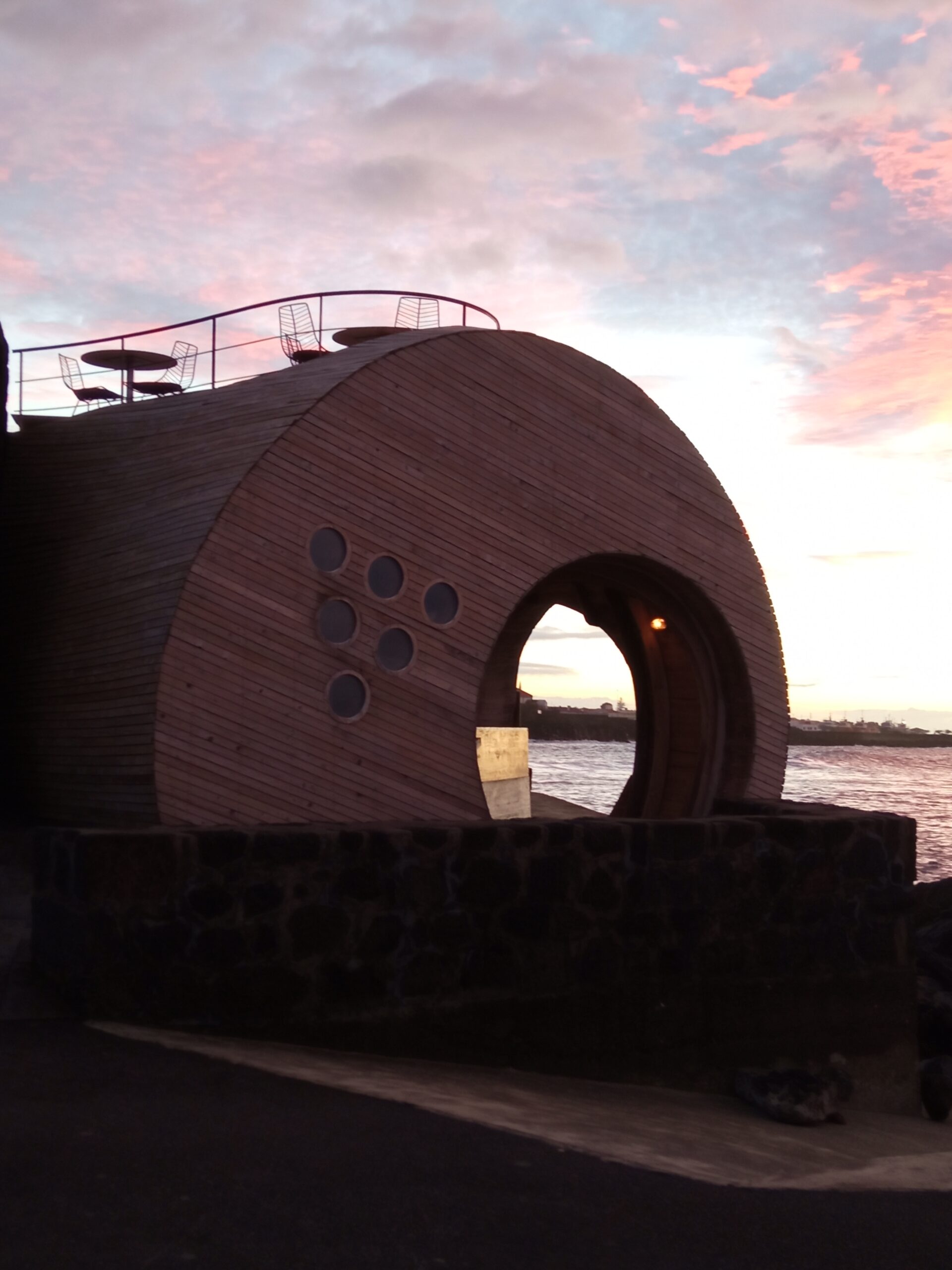
Cella Bar has already become an iconic spot on Pico Island, known for its location and futuristic design. Be sure to enjoy a drink or a hot meal after a long walk around the island.
Costs (2022)
The big question at the end of a trip like this: so, how much did we spend? In our case, the three days we spent on Pico came to about €260 per person. This does not include flights, since we flew to São Jorge and then took a ferry to Pico, using the ferry again to continue on to Faial, from where we flew back to the mainland. In other words, for transportation to get to Pico, we spent only €5.25 per person on the ferry.
The biggest expenses here are, of course, the accommodation at Adega do Cavaco (€105.63 for two people) and the car rental (€132 in total), plus fuel (€23.16).
Between restaurants and cafés, we spent €74.60 (which was totally worth it!) and another €24.58 on snacks and meals we made at home, since we always like to have one or two meals at home in the evening to have a more relaxed night.
Of our total expenses on the island, we spent a total of €150 on activities: the Pico Wine Museum (€2 per person), a visit to the Towers Cave (€8 per person), and, the most expensive item, the guide for the hike up to Pico (€65 per person). Don’t be intimidated by the €75 per person for activities—if you have the chance, these are three activities we highly recommend and still remember to this day.
Transportation and Car Rental in Pico
Getting around the islands: a topic that gave us such a headache before our trip. When traveling between islands, the answer was simple: Atlântico Line, the ferry company that operates between the islands. But the problem was within the island. To visit a destination like São Jorge, you must have a car or you won't be able to enjoy your trip! Also be aware that rented cars are not normally allowed to travel between the islands.
But even when renting a car, you need to pay close attention to detail. This is because many car rental companies require you to block a deposit on your card - so far so good. But we were going to three different islands and sometimes it can take several days for credit card deposits to be unblocked. With amounts ranging from €1,200 to €2,000 per car, and for three different islands, this was a problem.
In our case, the solution was to rent the car directly from Ilha Verde (both on Pico and São Jorge), which, since we purchased full coverage insurance, did not require a security deposit. Another company we looked at (which aggregates several car rental companies on the same island) required a security deposit even with full coverage insurance.
We’re highlighting this issue for one simple reason: few banks are willing to set a credit limit of more than €3,000 on credit cards, and for those visiting the Azores Triangle—São Jorge, Faial, and Pico—this can be a problem. So we strongly recommend that you always confirm whether a security deposit is required and opt for full coverage—the islands’ roads often have small loose stones that can fly up and damage your car—it’s not worth the risk.
Also pay attention to the minimum age that the driver has to be and the minimum length of license required. Take every precaution to avoid being barred when the time comes to pick up the car.
More to See