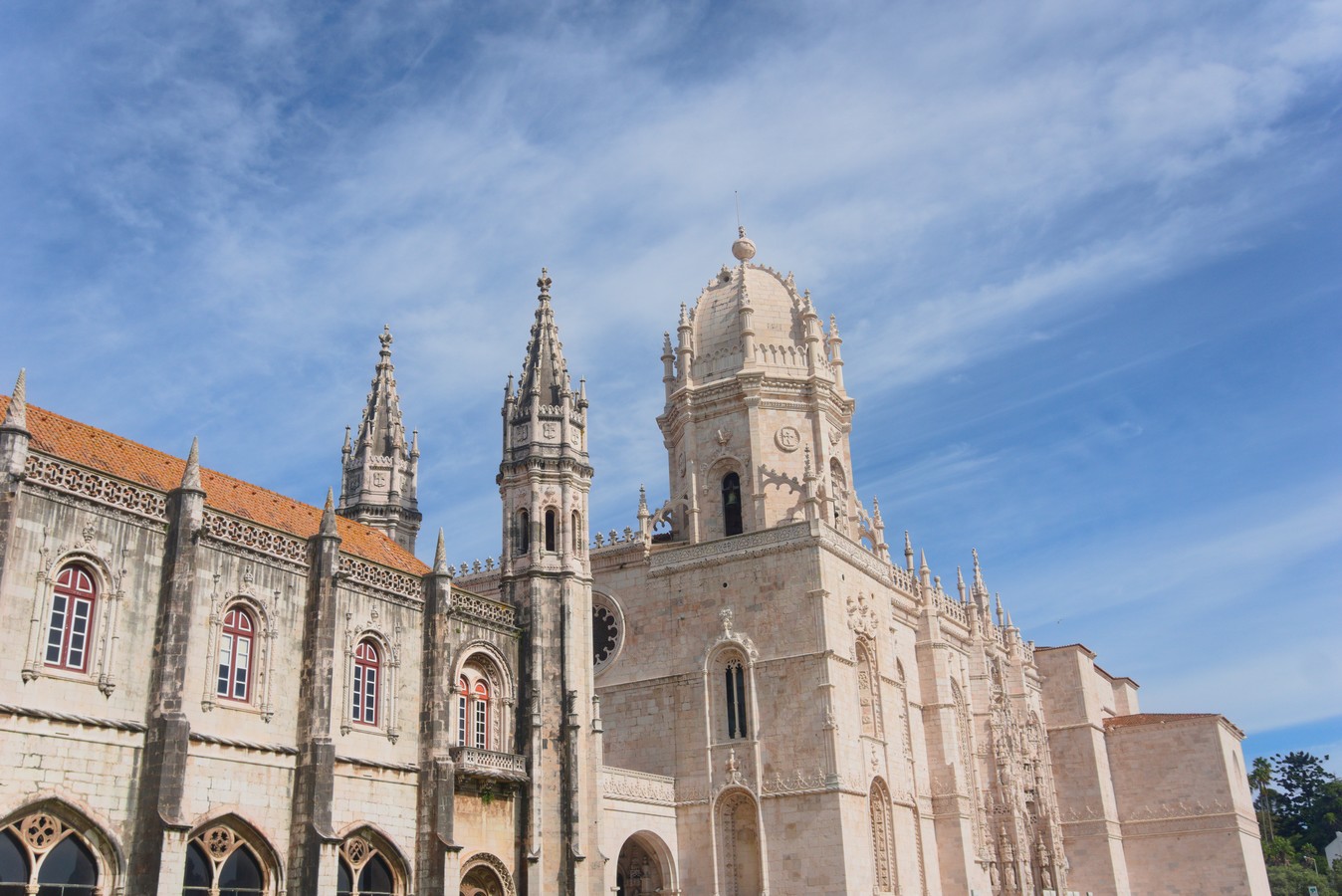
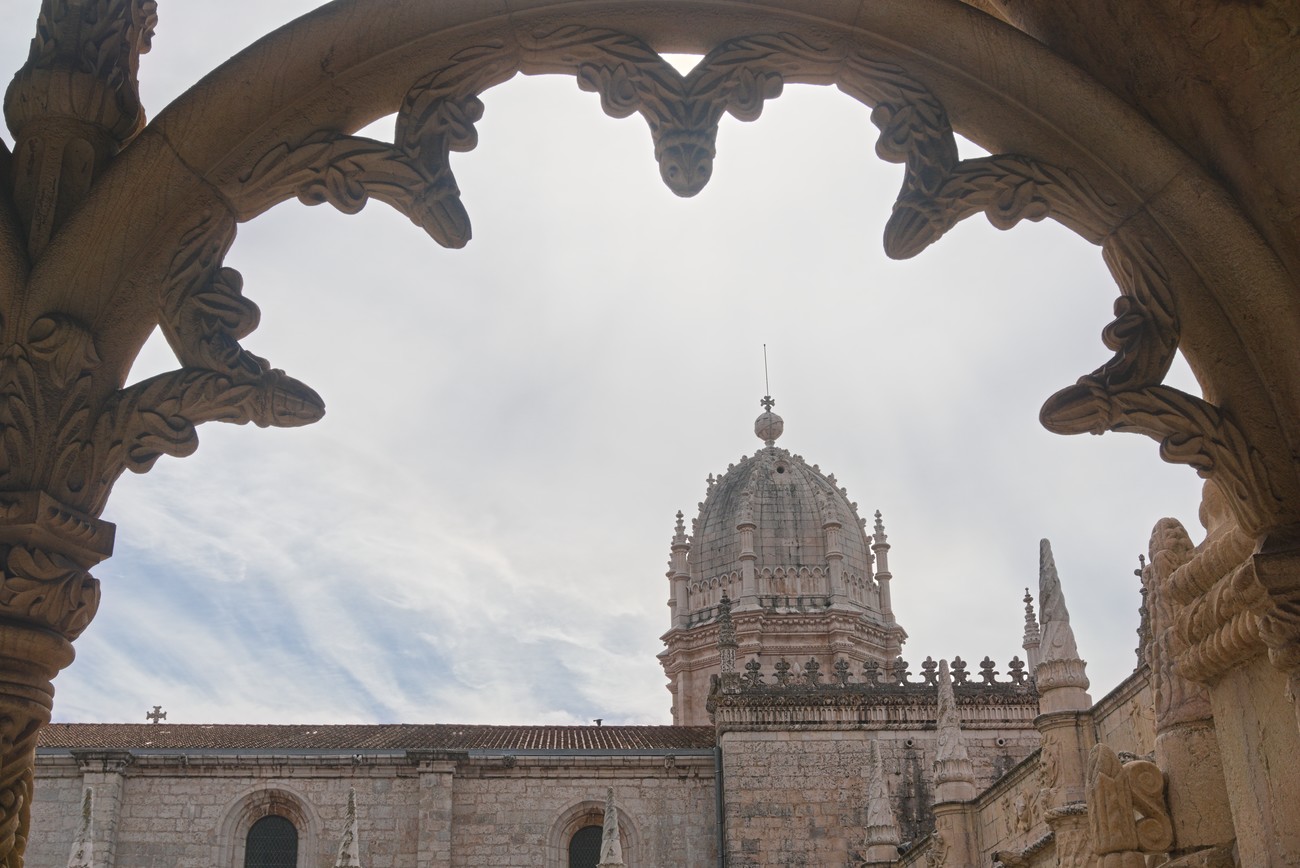
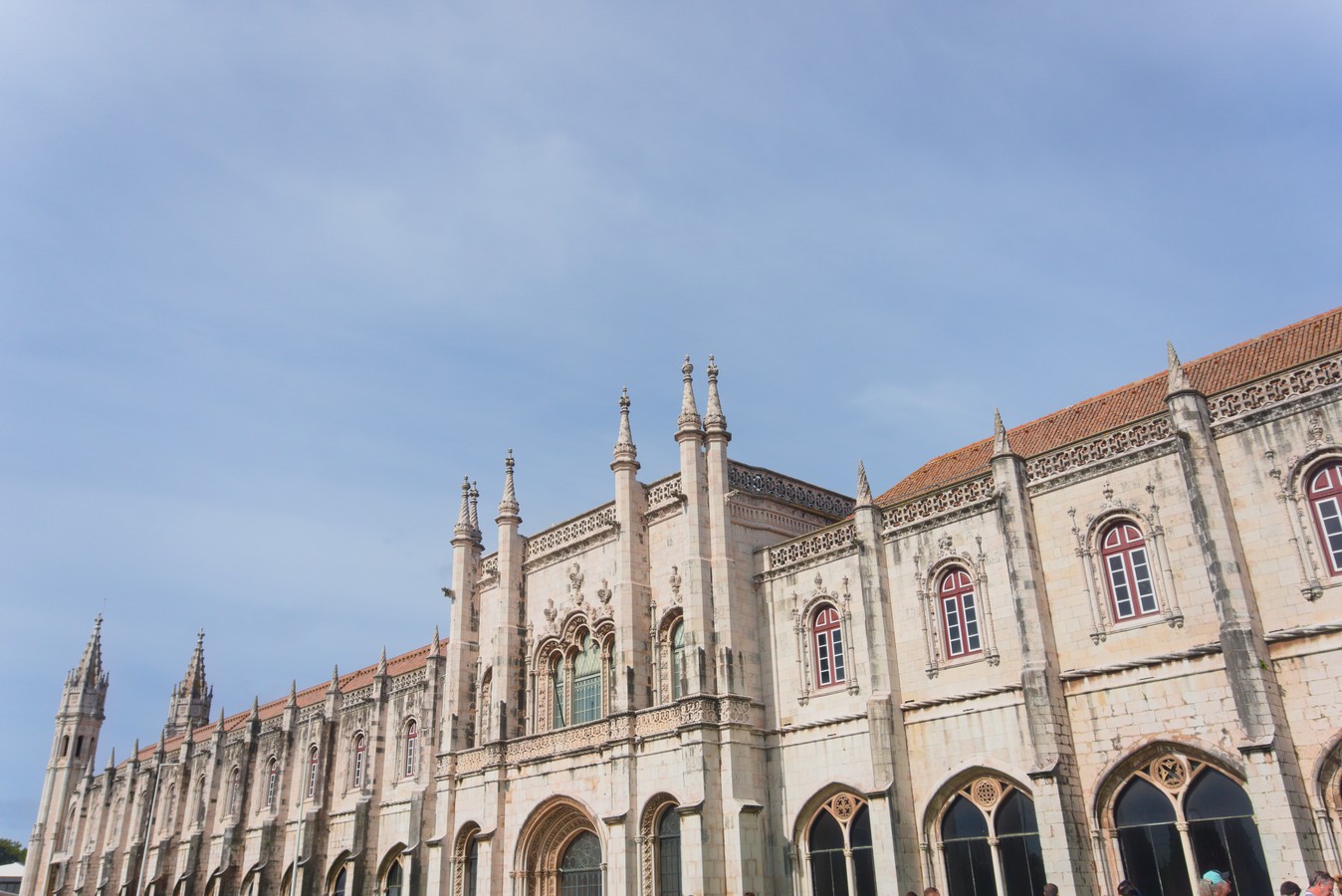
The Jerónimos Monastery, or Monastery of Santa Maria de Belém, is located in the parish of Belém, next to the Tagus River. It is known by this name because it was entrusted to the Order of St. Jerome (Jerónimo).
This monument, designated a UNESCO World Heritage Site and considered one of the seven wonders of Portugal, is one of the most visited national monuments.
A Brief History of the Jerónimos Monastery
This impressive structure was the result of a request made to the Holy See by King Manuel I, one of Portugal’s kings during the Age of Discovery. The request to build a monastery on the site of a former chapel was granted, and it was decided that it would be donated to the Order of the Friars of St. Jerome.
Construction began in the early 16th century and lasted 100 years. This project was largely funded by Portugal’s arrival in India and the resulting trade. In 1517, it officially became the mother house of the religious order by which it is known today.
It was the Age of Discovery that greatly inspired the construction of this building, which is strongly influenced by the Manueline style. Throughout its history, several master builders were responsible for this magnificent structure, notably João de Castilho, one of the architects behind the south portal.
An interesting fact is that one of the reasons for building the Belém Tower, located about 1 km away, was to protect this monastery.
Visit the Jerónimos Monastery
You can visit this monument Tuesday through Sunday, from 9:30 a.m. to 5:30 p.m. Try to go on a weekday and, if possible, outside of peak season. But no matter what time of year you choose, be prepared to wait—there’s almost always a line. In our case, we went on a weekday in October and waited about 20 minutes.
The ticket to the monument is a bit pricey, costing 18€ per adult . However, this is one of the monuments now included in the free monuments(more information here), so admission is free for residents of Portugal. To take advantage of this offer, simply go to the ticket line and indicate that you wish to use this offer.
Tickets (in 2024) are purchased in the garden across from the Jerónimos Monastery, in the Praça do Comércio Garden. There are several tourist stands here, and the one closest to the street is where you can buy tickets for the monastery.
With your ticket in hand, head to the inevitable line that will likely be forming at the monastery’s entrance. In our case, the line stood still for a long time, but once it started moving, we went right in. That said, we believe there’s a limit on the number of people per time “slot.”
After about 20 minutes, we showed our tickets and began our tour of the Jerónimos Monastery.
Exterior and Portals
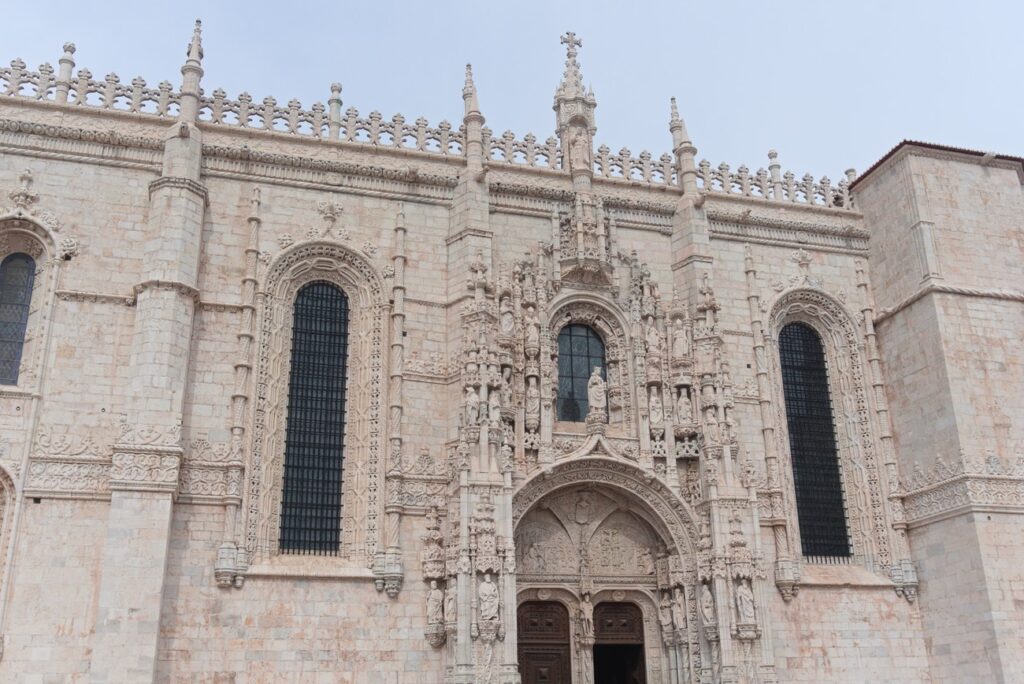
While you wait outside, take a moment to appreciate the grandeur of the portals that adorn the monastery's facade.
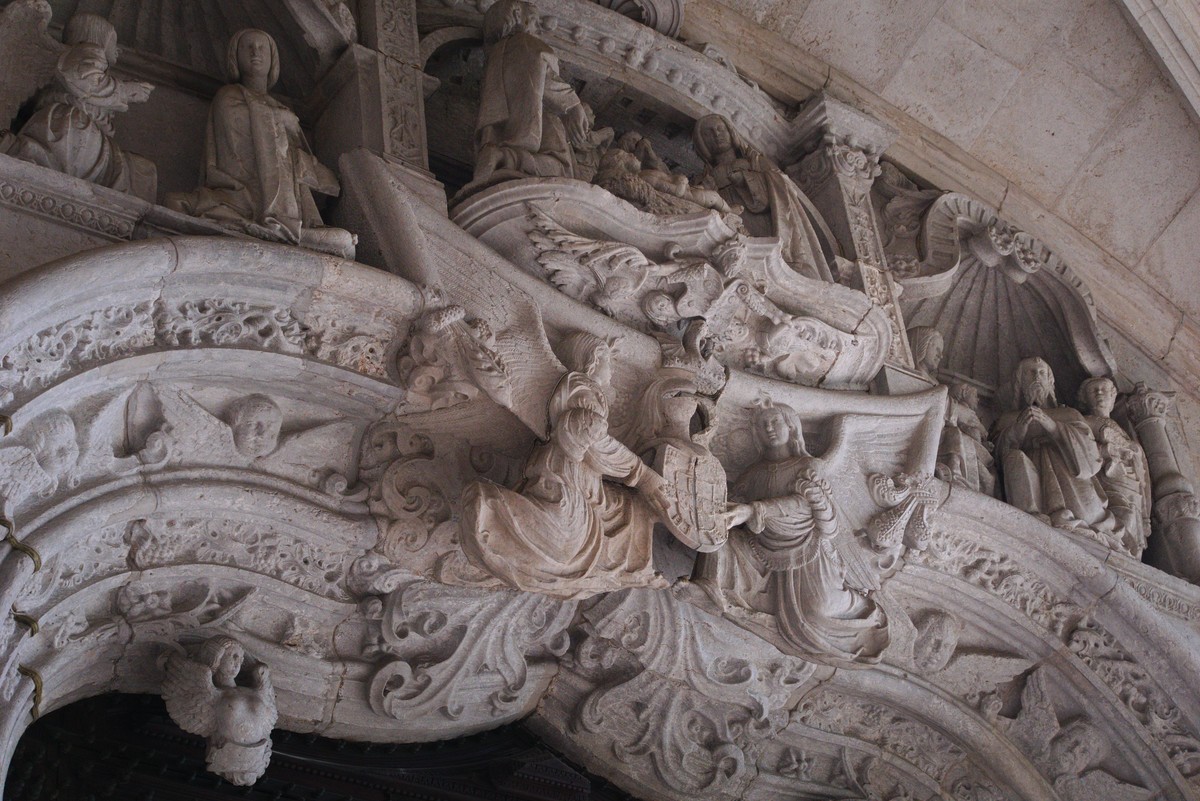
One of the highlights here is the so-called South Portal. Standing an impressive 32 meters tall and more than 12 meters wide, this portal features forty figures. Among them are the 12 apostles and, most prominently in front of the window, Our Lady of Belém with the Child. At the top stands the Archangel Saint Michael.
Another notable door is the one known as the West Portal, considered the main entrance to the Jerónimos Monastery. Among the highlights of this door is the depiction of King Manuel I with Saint Jerome at his side.
This door is the first one you encounter upon entering the monument, so you will inevitably have to pass through it.
Cloister
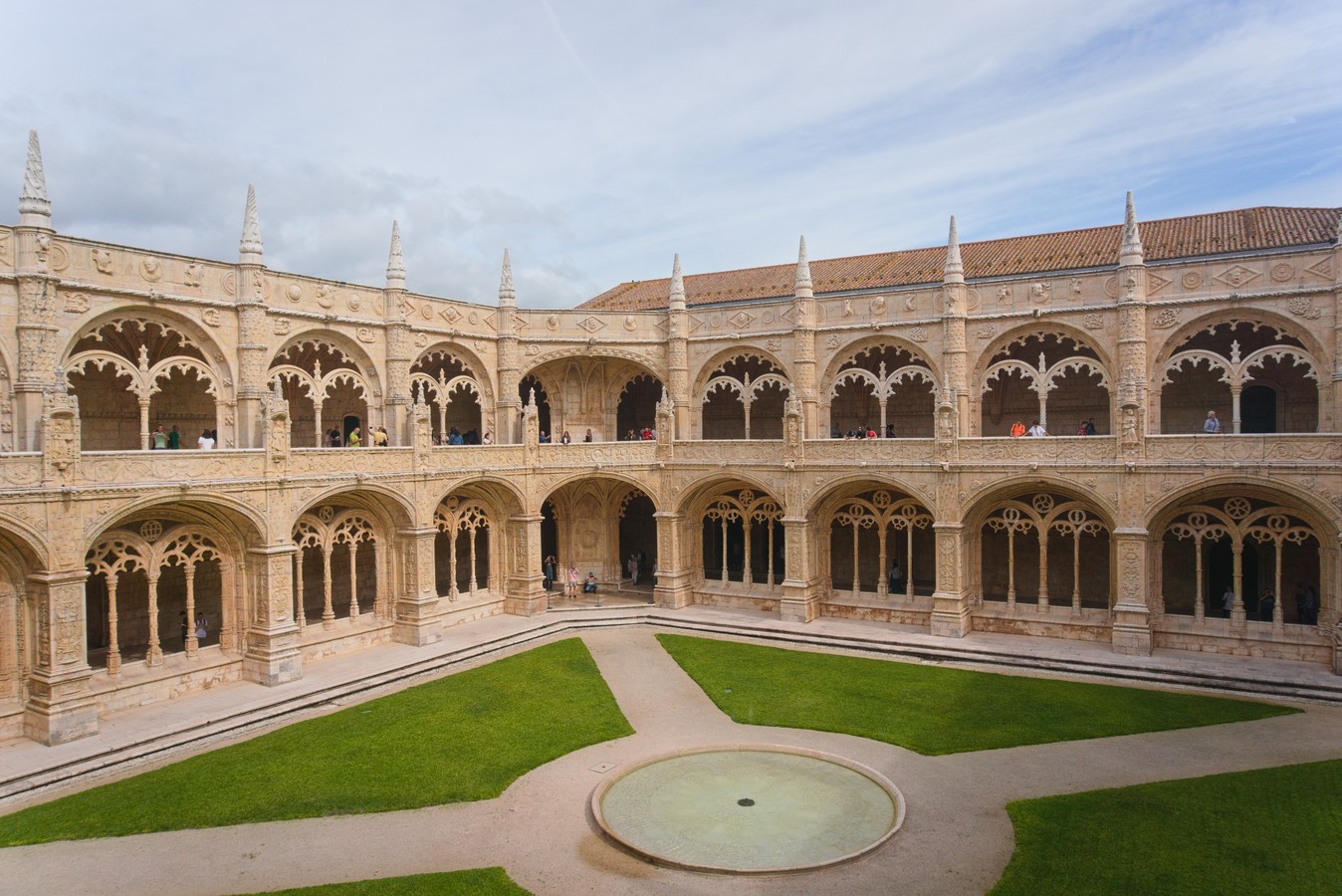
Currently, the main attraction at the Jerónimos Monastery is the cloister and its various adjoining rooms.
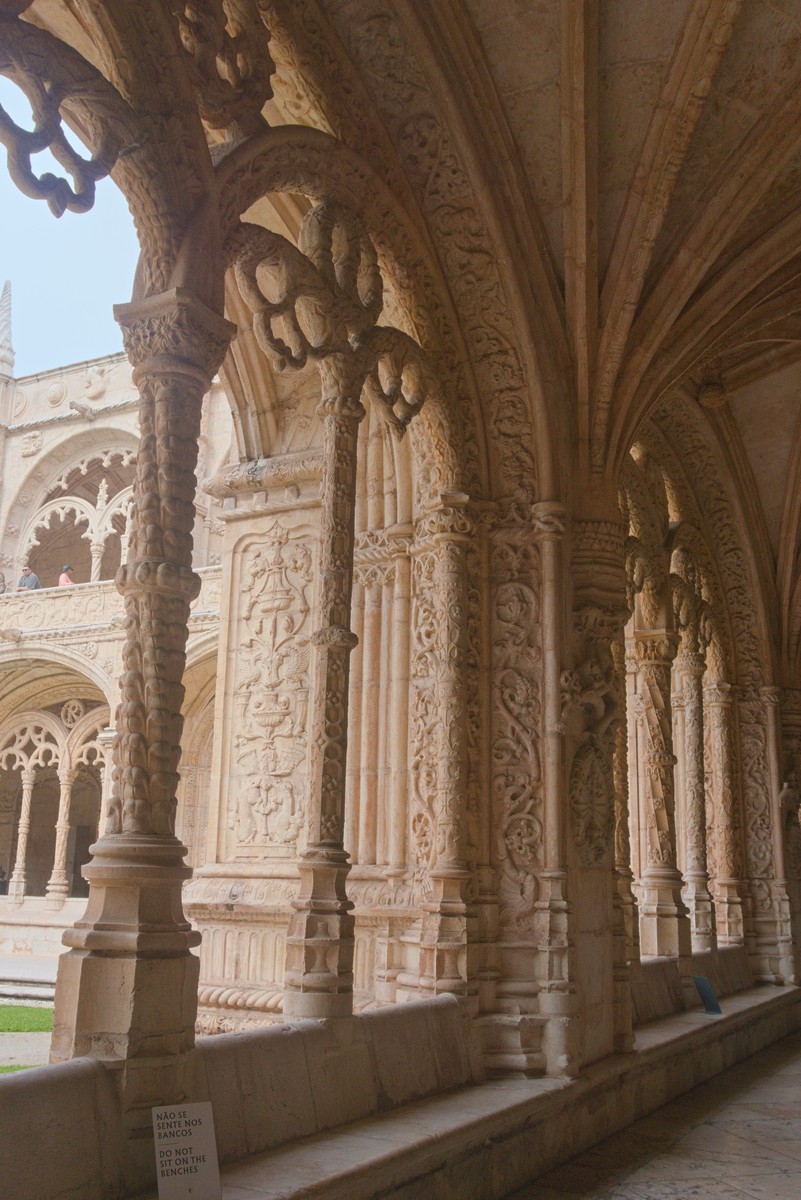
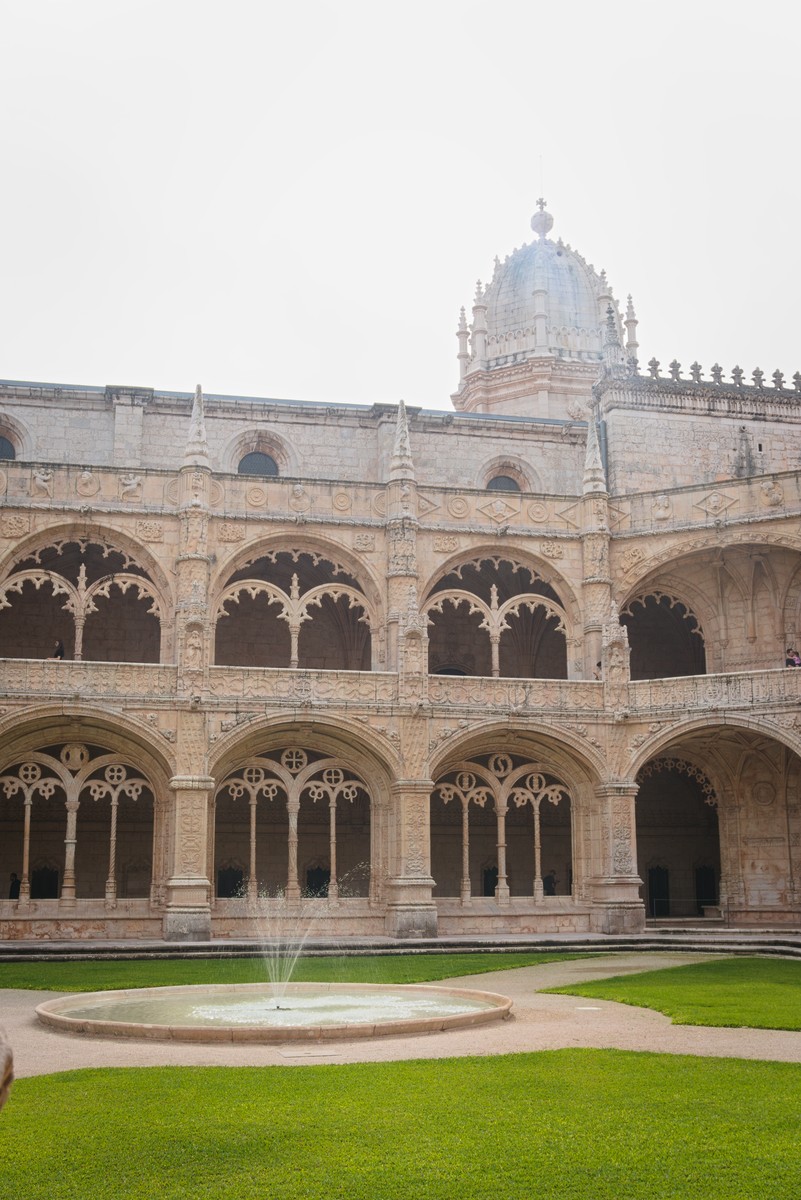
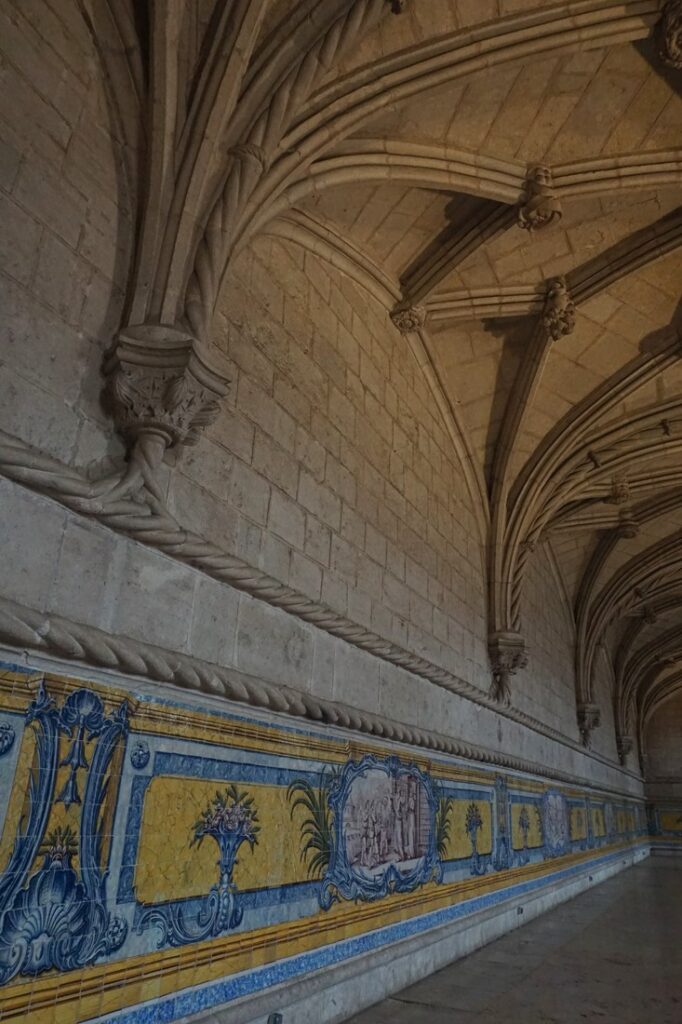
The cloister of the Jerónimos Monastery has two floors, with walls adorned with sculptures featuring various symbols. Be sure to look up and admire the detailed work on the vaulted ceiling.
The tour continues along the route and takes you to the various adjoining rooms, such as the library, the dining hall, and the chapter house.
Among the various rooms, the chapter house stands out, as it was never used for the purpose for which it was created. It is currently the resting place of the tomb of the writer Alexandre Herculano, which, although imposing today, was simplified in 1940.
The dining hall, on the other hand, stands out for its 18th-century tiles and vaulted ceiling.
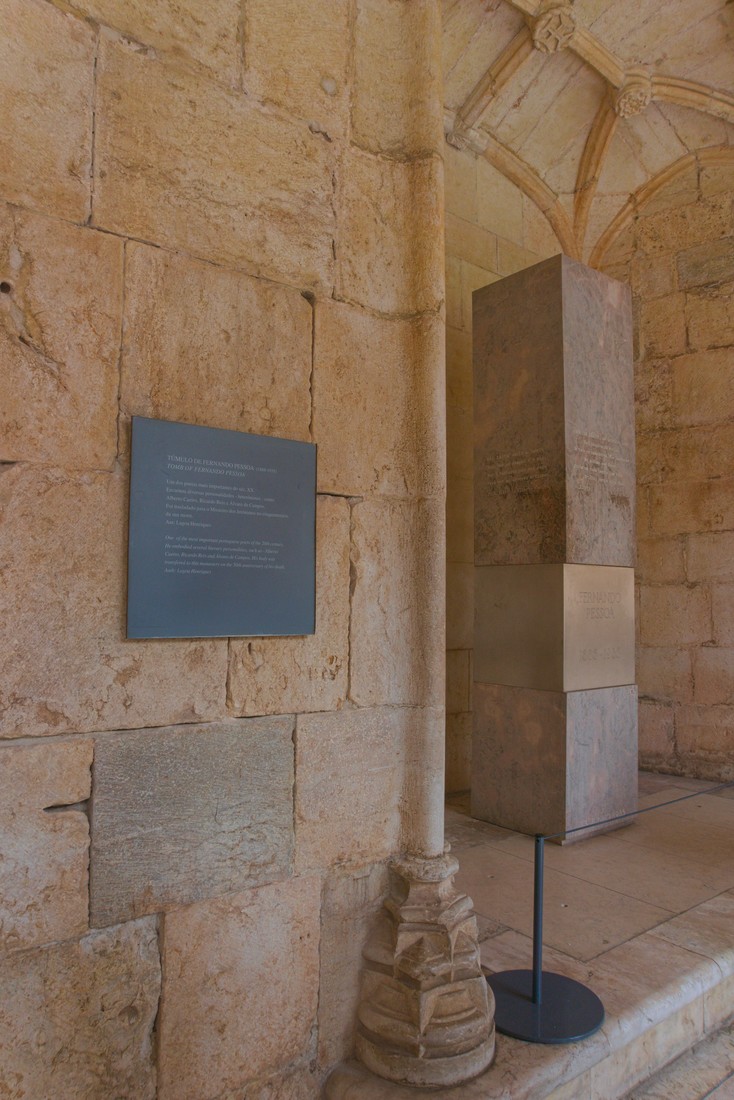
Fernando Pessoa's grave is also located inside the cloister.
Church of Santa Maria de Belém
Once you’ve finished your tour of the cloister and continue along the path, you’ll exit the monastery. That said, it’s time to visit the adjoining church, the Church of Santa Maria de Belém.
We got in line (this one was shorter and let people in more frequently) and went into the church. Access to the church is free.
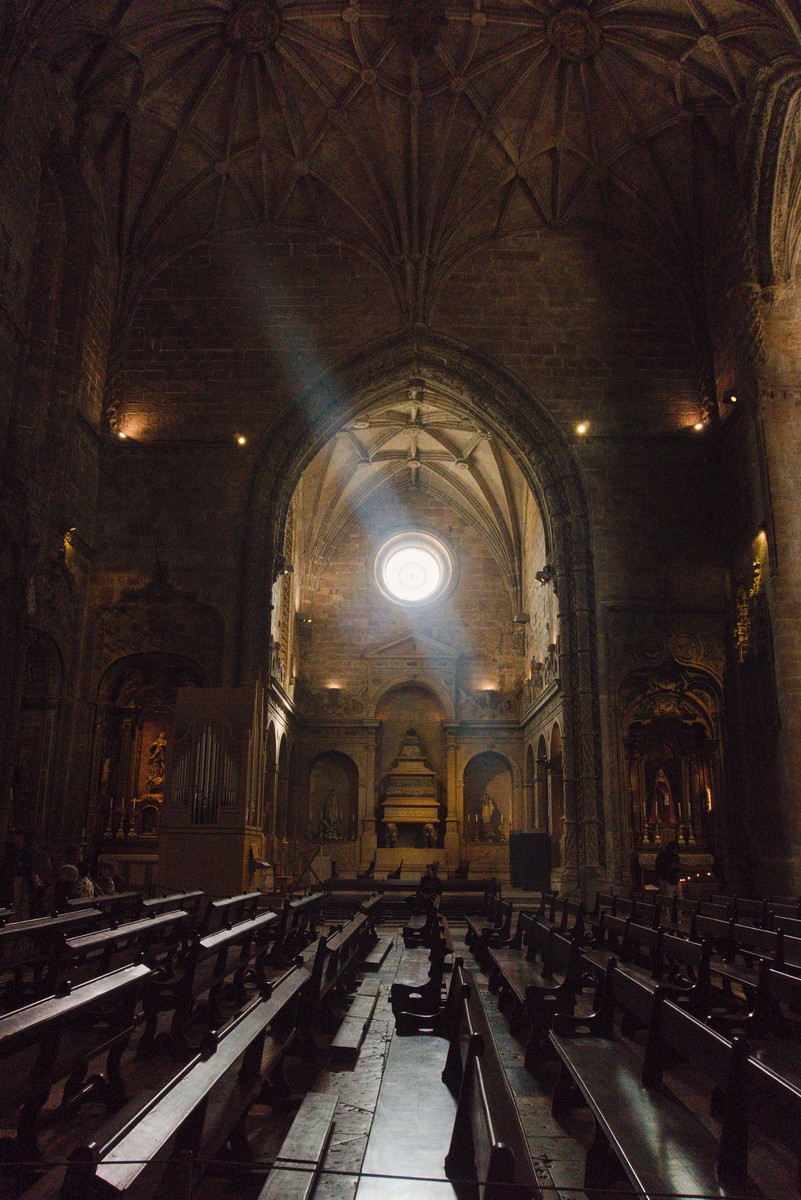
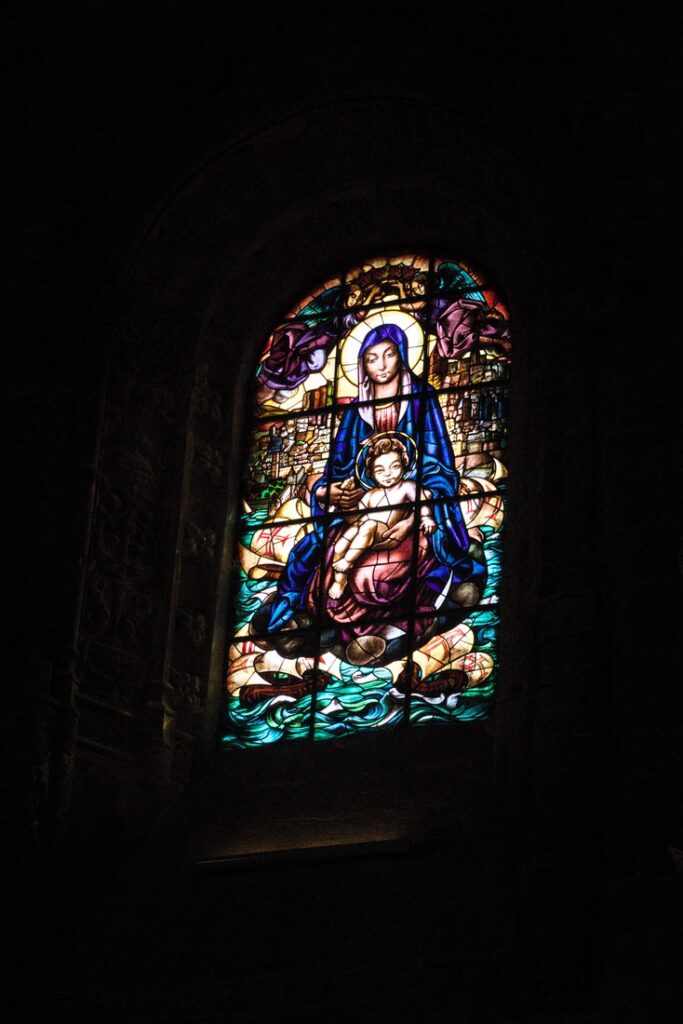
As soon as we entered the church, we were struck by its grandeur. Besides being very tall, the church is also very long and is filled with tombs. The stained-glass windows on either side are particularly striking.
Looking up, a magnificent vault, supported by just six pillars.
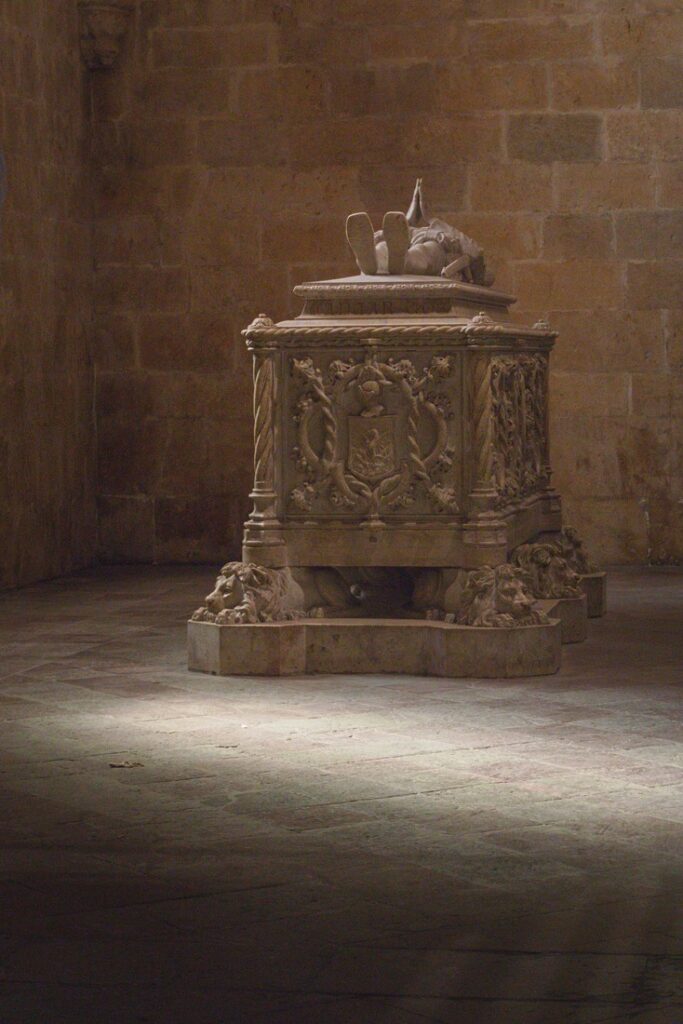
As you walk through the church, you will find several tombs, notably that of King Manuel I, the monastery’s founder, located in the chancel; the tomb of Cardinal-King Dom Henrique; and that of King Sebastião (though it is unclear whether it is empty or actually contains his remains).
At the back of the church are the tombs of Vasco da Gama and Luís de Camões. Unfortunately, when we visited the church, part of it was under construction, so we were unable to see these two tombs and the sacristy up close.
Among Portugal’s monuments, the Jerónimos Monastery undoubtedly stands out for its grandeur and beauty. We found the admission fee a bit expensive for the amount of time it takes to tour the monument, but we understand that these sites require significant maintenance costs, in addition to staff salaries. That said, the government’s initiative to offer free admission to monuments is definitely something worth taking advantage of.
Around this monument, you’ll also find other places worth visiting, such as the Monument to the Discoveries, the Belém Tower, and the Quake – Lisbon Earthquake Museum. If you have the chance, walk a few meters to the iconic Pastry Shop Pastéis de Belém (here) and enjoy a warm, delicious 'pastel de Belém'.