The town of Dunkeld in Scotland was our first stop on the way to the Highlands. Precisely because of its location, Dunkeld is known as the the gateway to the Highlands.
And this really is an excellent gateway city, since you can already feel the same atmosphere that has accompanied the rest of the trip: charming places, old streets and houses, and friendly people.
Located on the banks of the River Tay, Dunkeld was long a vacation destination for the wealthy during the Victorian era, including Queen Victoria herself. Today, it is a historic town that has been undergoing restoration following a historic event in the 17th century that led to the destruction of many of its buildings.
What to See in Dunkeld
You enter Dunkeld via the Dunkeld Bridge, which spans the River Tay. This bridge, also known as the Thomas Telford Dunkeld Bridge, was built between 1805 and 1809.
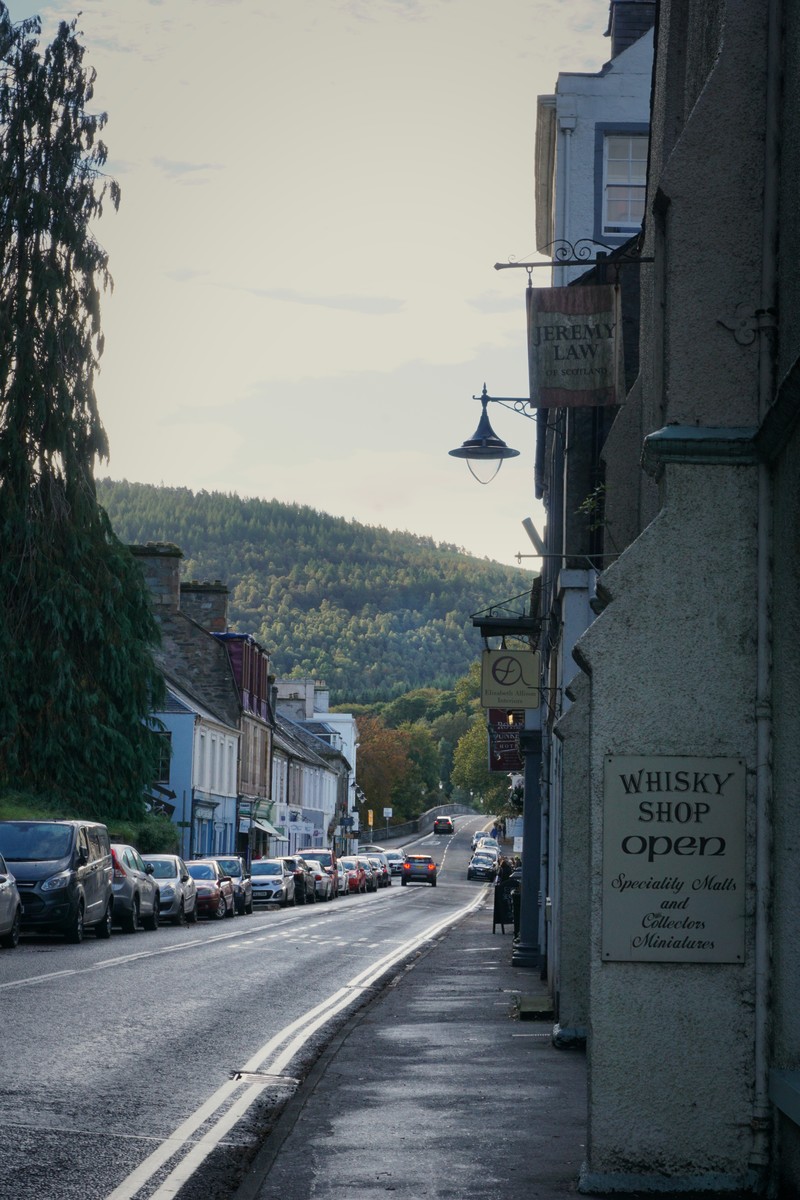
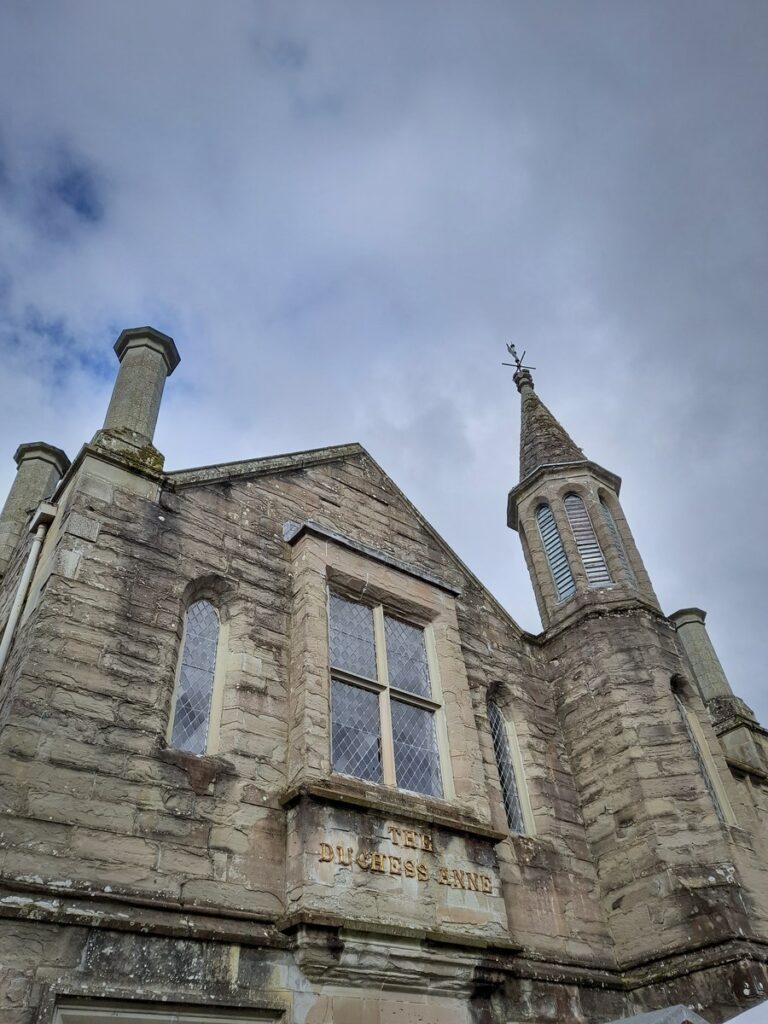
From here, you’ll turn onto one of the city’s most famous streets, Atholl Street, where many of the main businesses are located. Among the businesses on this street, be sure to visit one of the many cafes, restaurants, and bakeries.
Along this street and the parallel streets, there are still several traditional houses. These houses, typical of the 18th century, were at risk of being demolished, so a program was created in 1950 to save them by restoring the existing houses and building new ones among them, while maintaining the original architectural style.
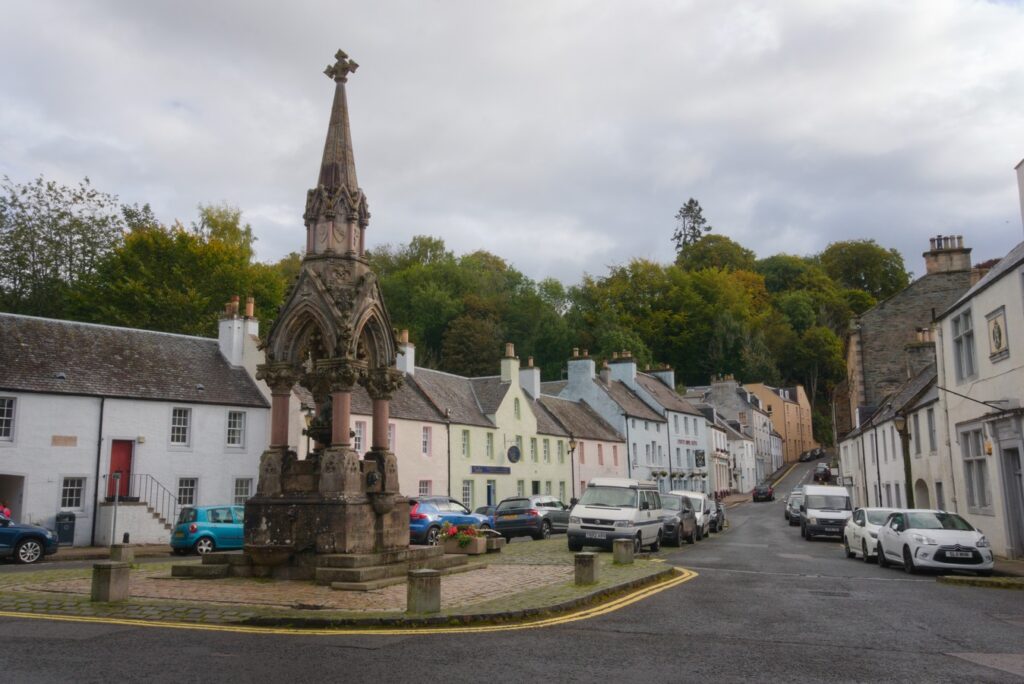
As you head toward the cathedral, the city’s centerpiece, you’ll come across the Atholl Memorial Fountain. The fountain, built in 1866, was erected in memory of George Murray, 6th Duke of Atholl.
In this courtyard, you’ll also find The 3 Churches Charity Shop, a very interesting secondhand store (mainly clothing and books). Also in this courtyard is the Dunkeld Community Archive, a museum and archive dedicated to the history of Dunkeld.
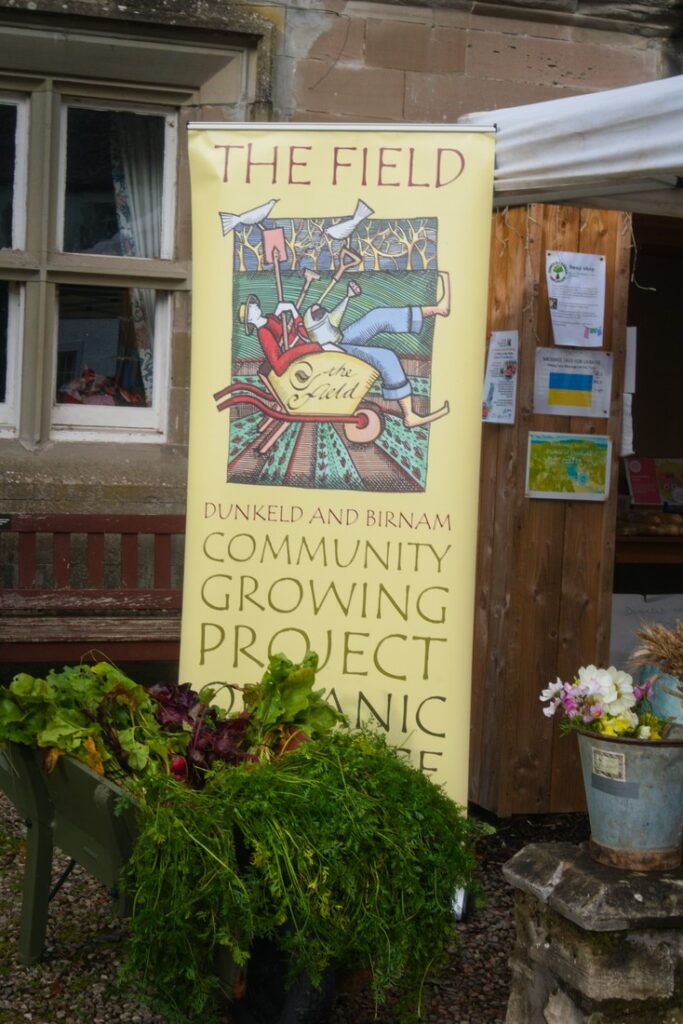
On the day we visited the city, The Field – Dunkeld & Birnam Community Growing was taking place. This project is a community initiative that grows vegetables, fruits, and flowers for sale and distribution. Seeing the project in action was very interesting, as it allowed us to see the entire community come together.
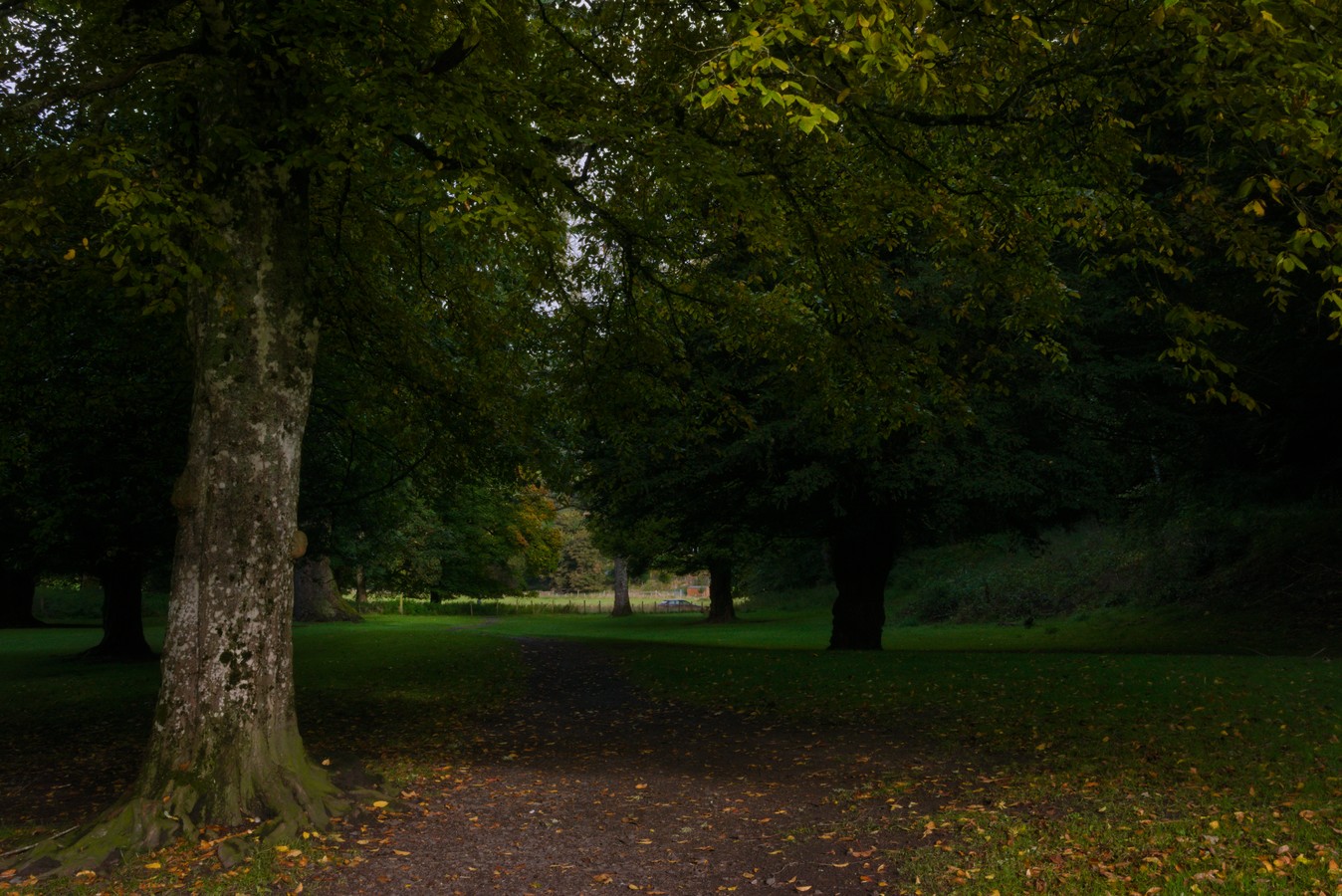
If you love nature, be sure to visit Stanley Hill Park. There are also a few marked trails and a place called The Hermitage.
The Hermitage is an 18th-century forest that was once the recreational grounds of the Dukes of Atholl. This park is best known for its giant Douglas firs (including one of the largest trees in the country). Within the forest is also Ossian’s Hall, decorated in honor of Ossian, which currently serves as a lookout point. In this area, you’ll also find the Black Linn waterfall. You can learn more about the Hermitage and its points of interest here.
If you have time, you can also stop in the nearby town of Birnam.
Dunkeld has many walking trails, so we highly recommend that you park your car and explore these trails without hesitation.
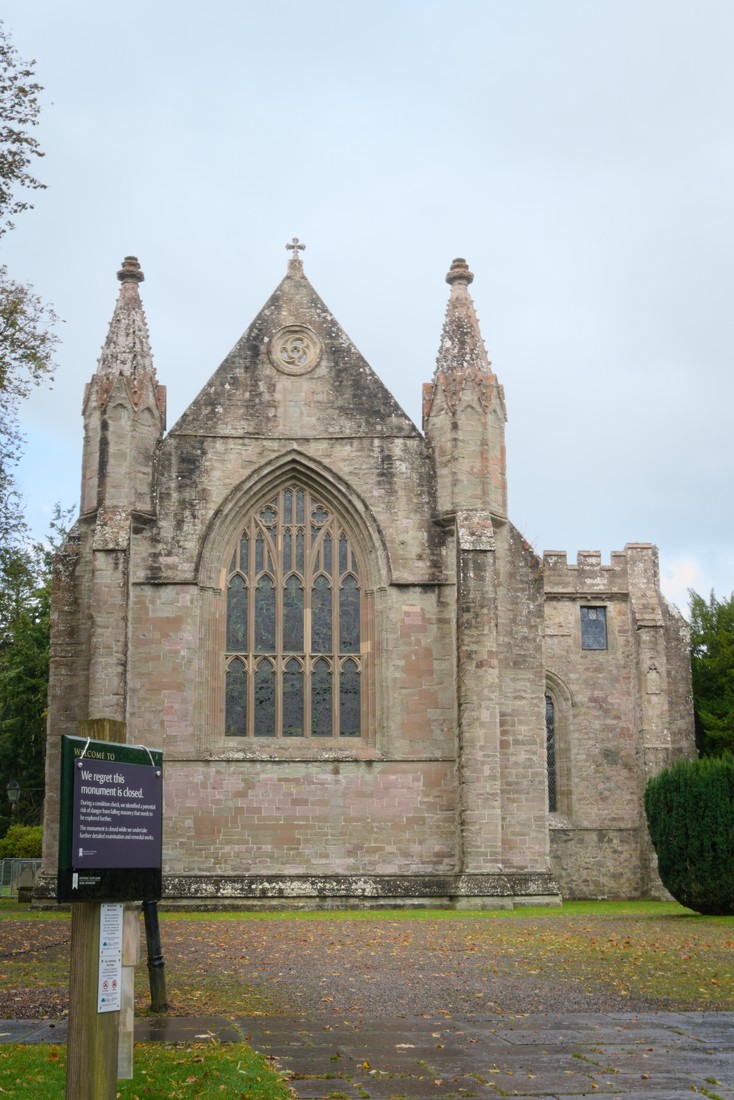
Dunkeld Cathedral
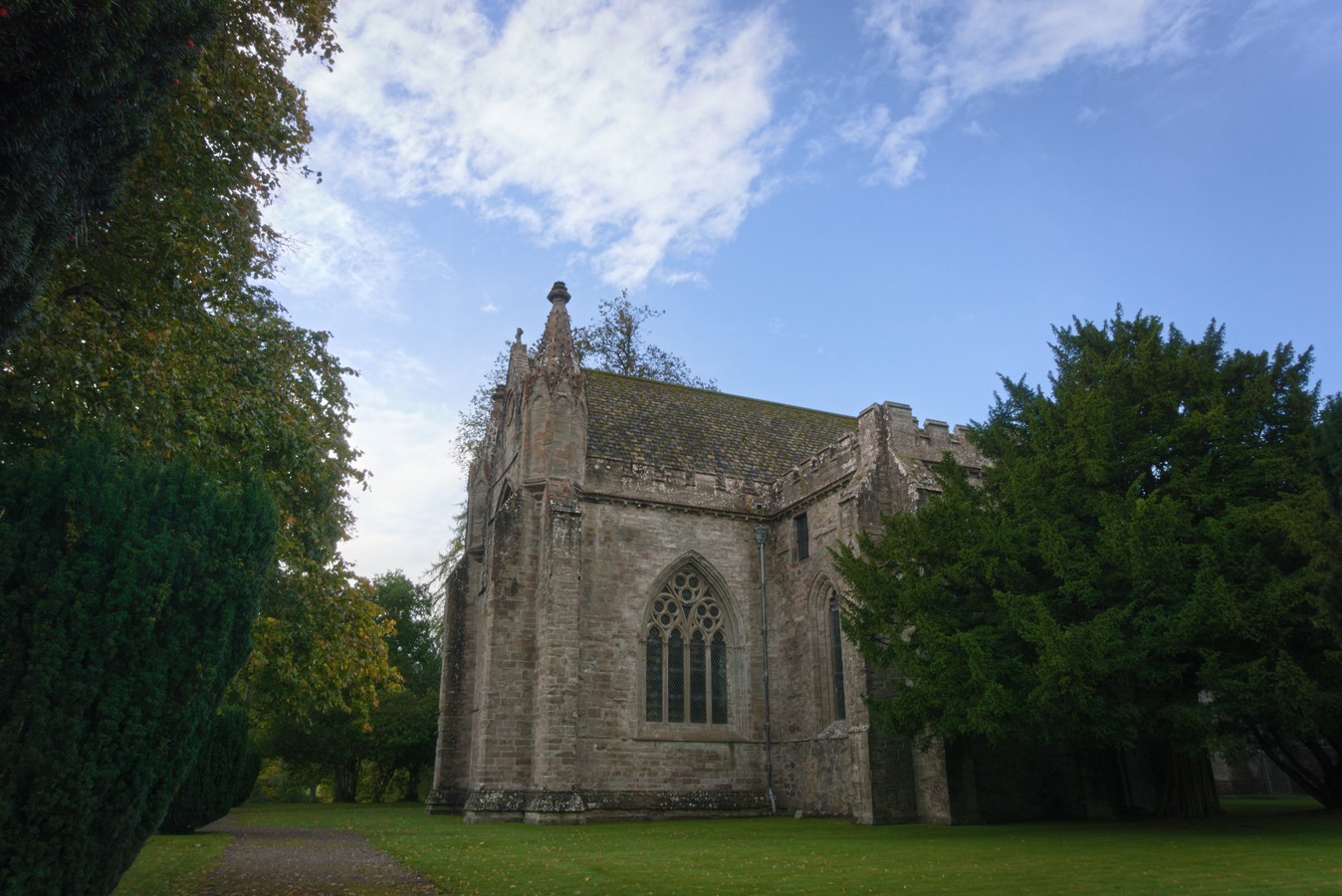
The famous Dunkeld Cathedral is also a very old building.
During our visit, the imposing Dunkeld Cathedral was, unfortunately, closed for renovations. Since our visit, and although the renovations are still ongoing, part of the interior is now open to the public. There is, however, a section that is in ruins and remains closed.
Since we couldn’t go inside the cathedral, we still listened to the audio tour available (here) and imagined what the interior must look like. With that in mind, here’s a brief summary of what you can expect.
Where the cathedral now stands, there was an earlier building dating from 729. This building was gradually expanded and renovated until, during the 13th century, construction began on the current cathedral. The building combines Norman and Gothic architectural styles.
Among the highlights are the pipe organ (from 1908) and the large stained-glass window. Also worth noting are the monument to the 42nd Royal Highlanders (The Black Watch), an infantry regiment of the British Army, and the monuments to the Battle of Dunkeld.
Also inside is the tomb of Alexander Stewart, Earl of Buchan, known as the “Wolf of Badenoch.” Alexander was the son of a Scottish king, and is still considered one of Scotland’s most cruel figures.
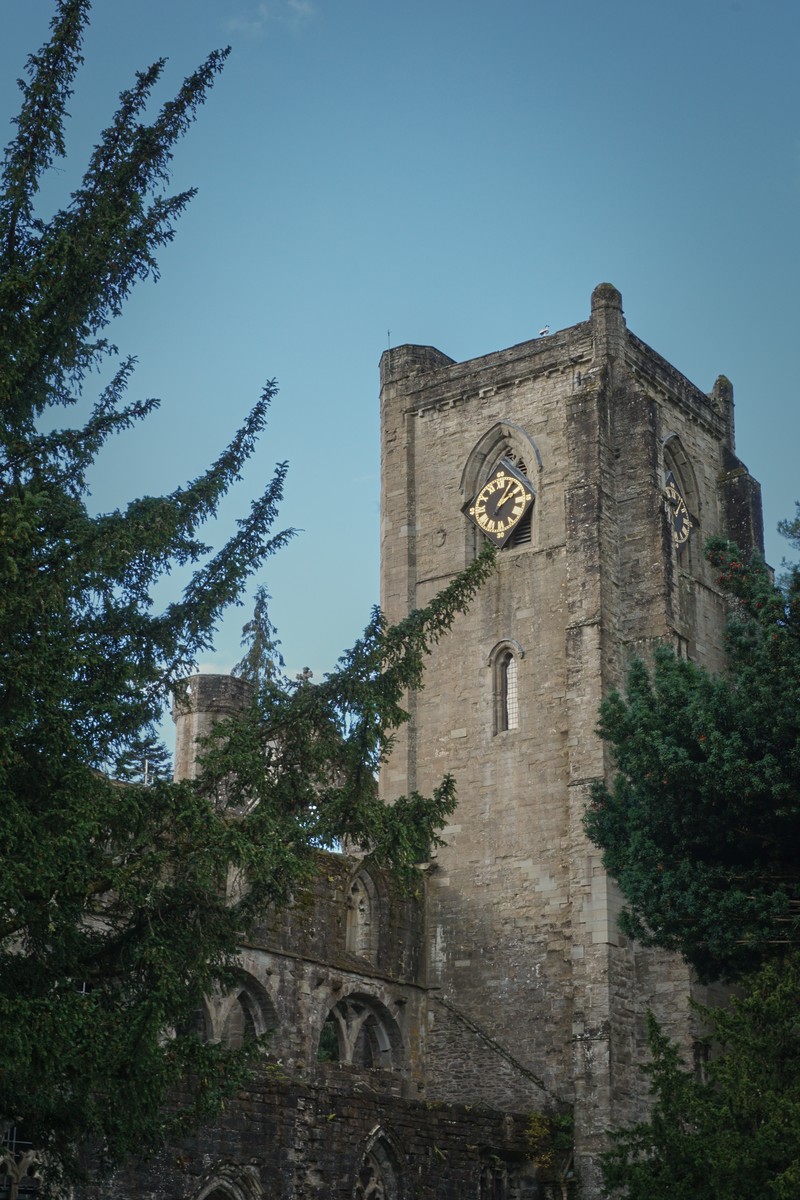
Leaving the cathedral, we explored the tiny little streets that wind between the houses and serve as shortcuts for getting to know the beautiful town of Dunkeld. After exploring Atholl Street and its shops once again, we boarded the bus and headed toward the Highlands.