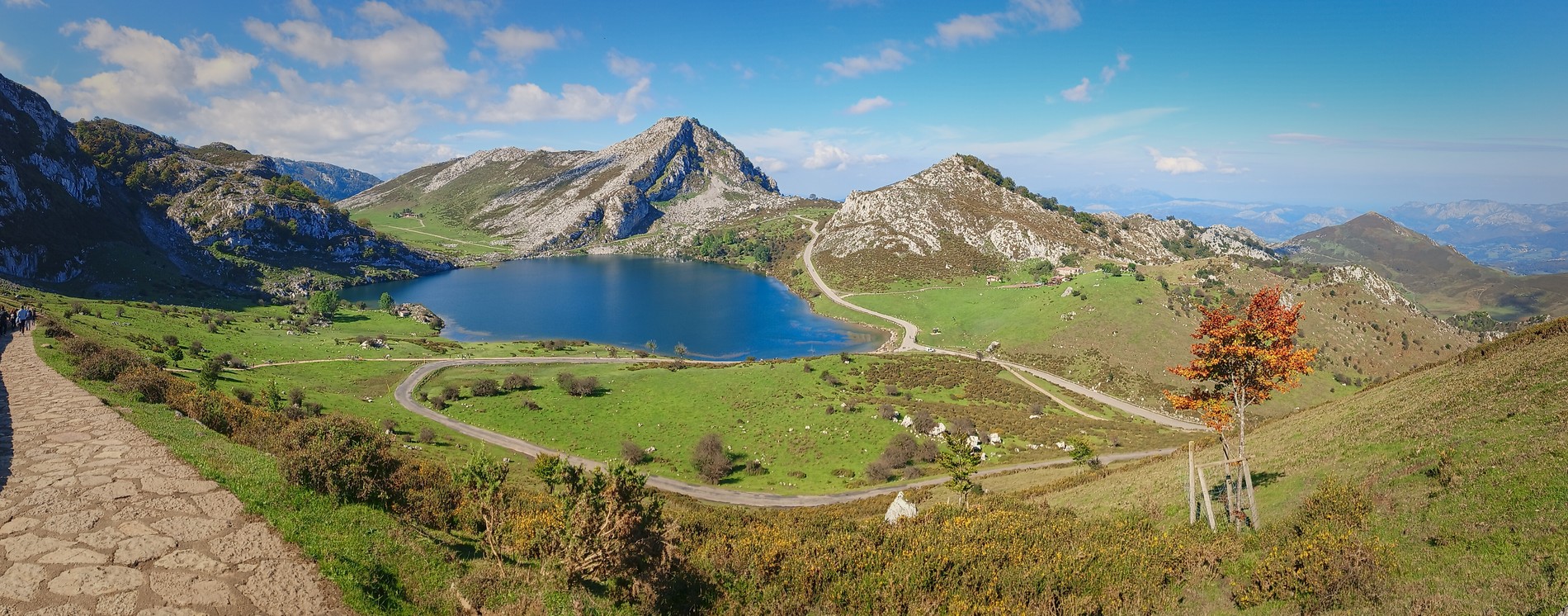
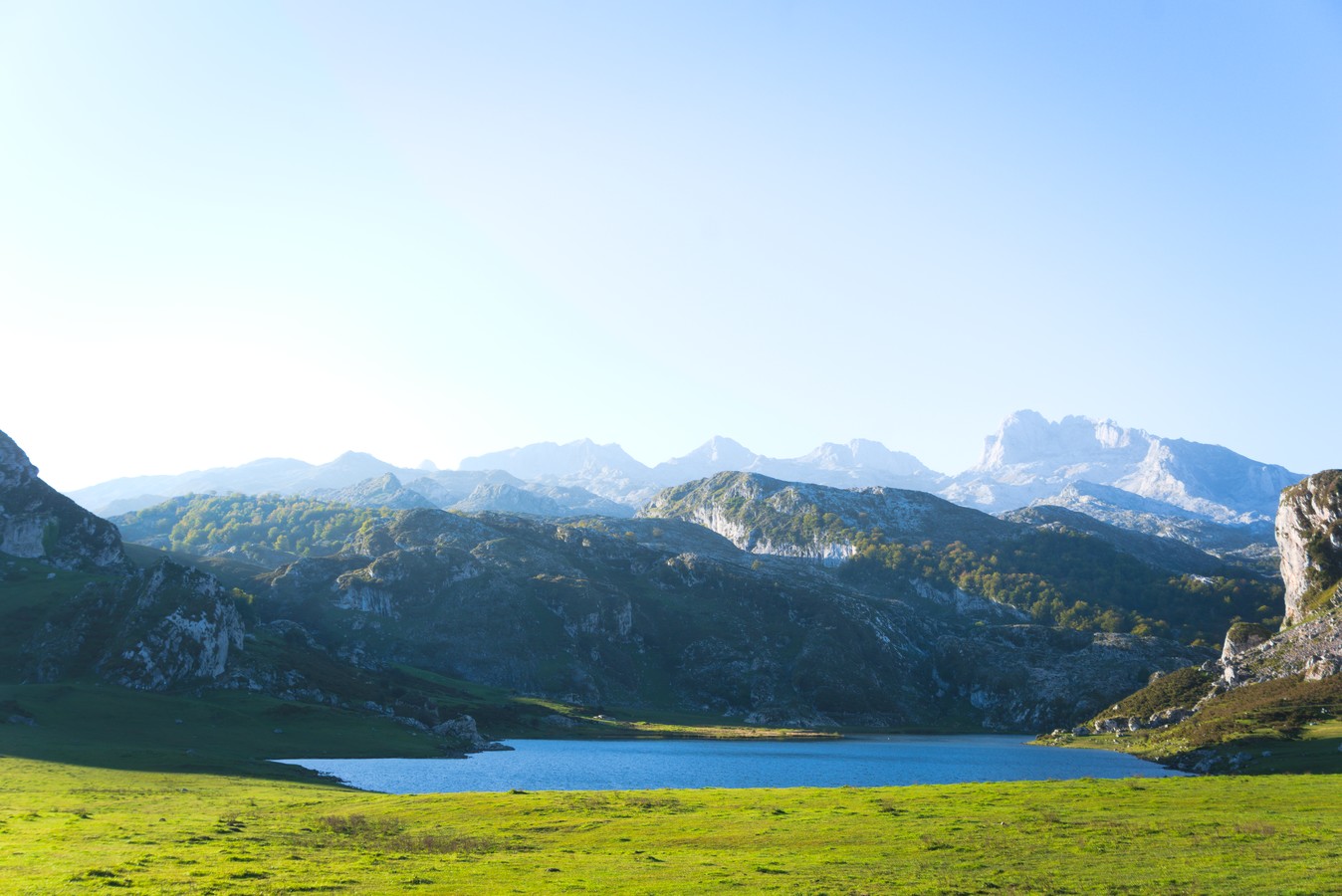
The Covadonga Lakes, in the Europa Peaks National Park, has easily become one of our all-time favourite destinations.
Not only is a visit to these lakes a must for anyone exploring the region, but we’d even risk saying that this region is worth visiting just for this marvel alone!
Here, to really take in the beauty and tranquillity of the area, we recommend a walk (PR-PNPE 2), which is well worth the effort.
The Covadonga Lakes
There are three lakes in Covadonga: Enol, Ercida and Bricial. However, Lake Bricial is seasonal and is only visible during periods of heavy rainfall or when the snow melts.
Therefore, the best-known lakes are Lake Enol and Lake Ercida, which are situated at an altitude of over 1,000 metres above mean sea level and are of glacial origin.
Lake Enol is situated at an altitude of 1,070 metres and covers an impressive area of 12 hectares. It reaches a depth of 23 metres. Lake Ercina, on the other hand, is situated at an altitude of almost 40 metres higher and is smaller, covering 8 hectares.
Every year, on 8 September, a celebration takes place by these lakes. The celebration involves divers, who retrieve from Lake Enol a statue of the Virgin of Covadonga (La Santina), which was submerged several metres deep in 1972. If you are curious about this celebration, you will find some photographs here.
Beyond the Lakes
Although the main attraction is undoubtedly its lakes, there are other points of interest here:
– Pedro Pidal Visitor Centre, next to the Buferrera car park, where the coaches stop. This centre is divided into several sections, including one dedicated to Pedro Pidal – 1st Marquis of Villaviciosa, who was, amongst other things, one of the people responsible for the creation of the Europa Peaks National Park and the first person to reach the summit of the famous Naranjo de Bulnes. There is also, of course, plenty of information about the Europa Peaks.
Please note that the centre only opens at 10.00 am, so if you arrive earlier (as we did), it will be closed. At present (2024), admission is free.
– Prince of Asturias Viewpoint. If you come from the car park and start climbing, passing the Pedro Pidal Visitor Centre, you will come to a path leading up to the Prince of Asturias Viewpoint. This viewpoint offers a slightly different perspective, as it faces away from the lakes, allowing visitors to take in the landscape of the Polje de Comeya. This is a plain formed by glacial waters, which is currently used for grazing livestock.
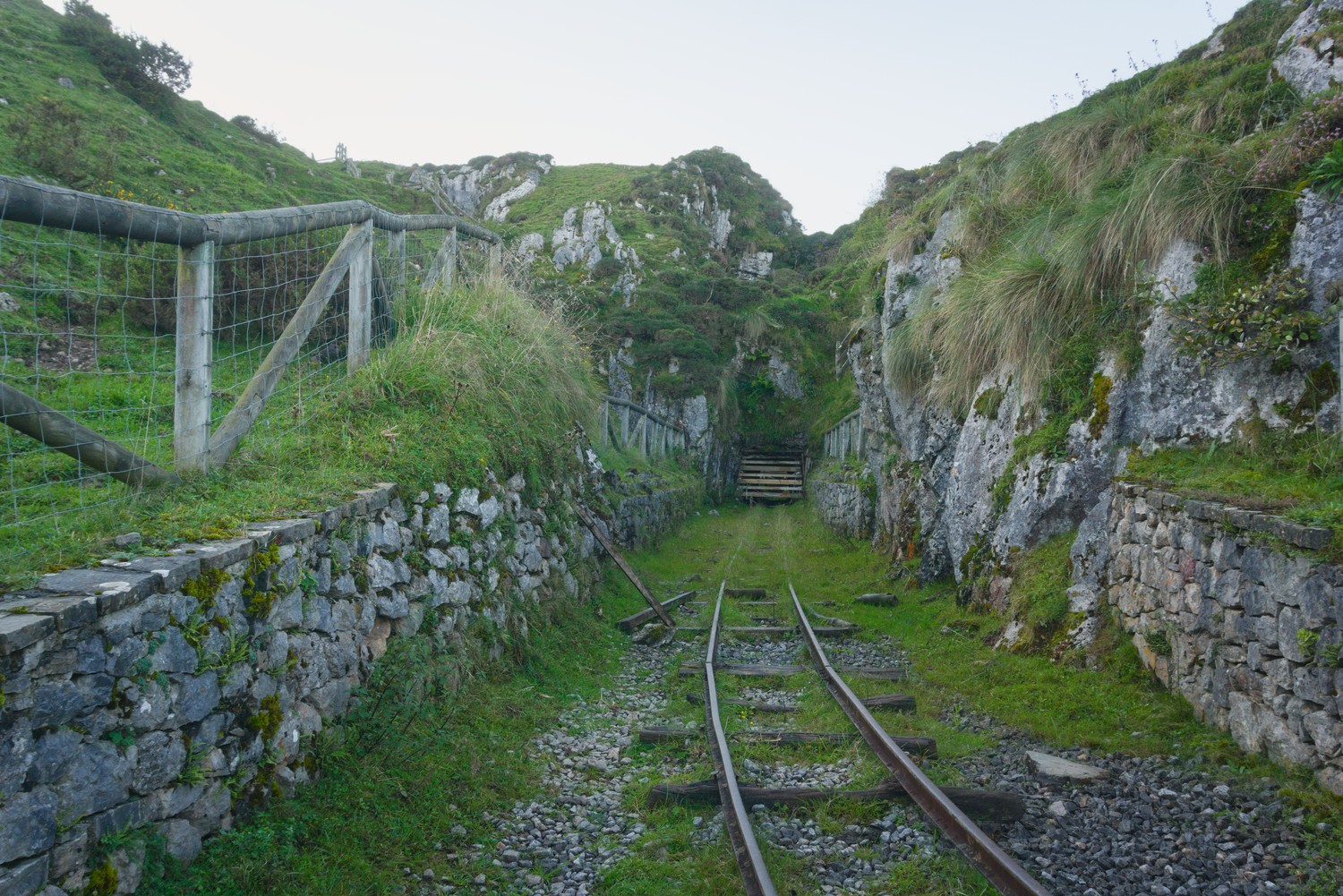
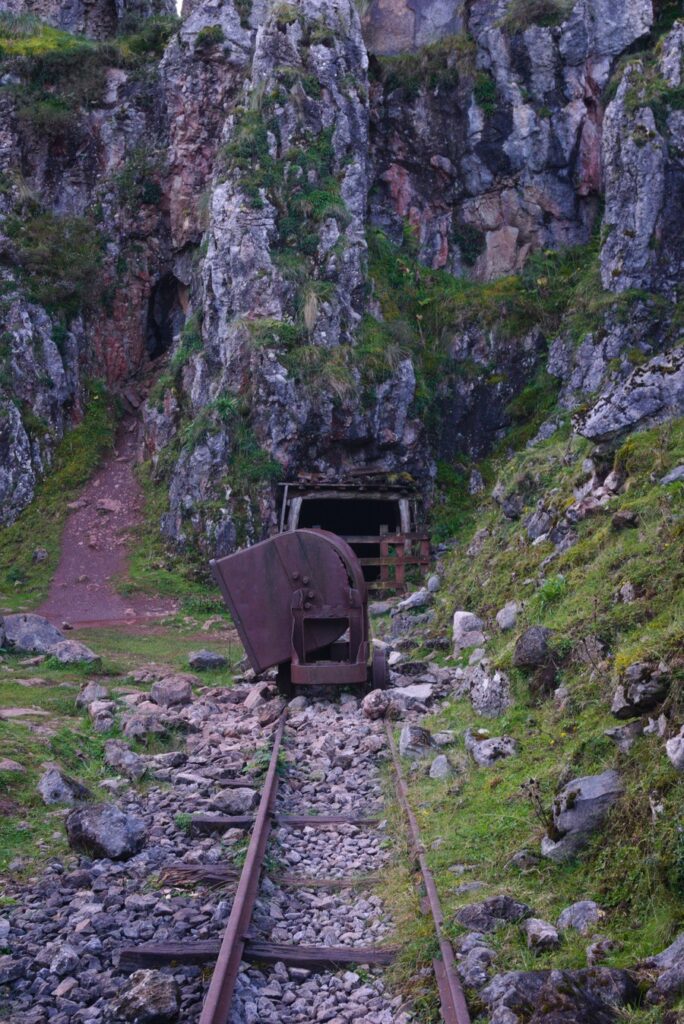
– Buferrera Mines. Continuing on towards the lakes, you will come across the Buferrera Mines, which were used for the extraction of iron and manganese. These mines operated from the mid-19th century onwards, having been sold on several occasions and experiencing periods when extraction ceased, until their permanent closure in 1979. In this area there is also a sculpture paying tribute to this profession, called ‘Homenaje al Minero’.
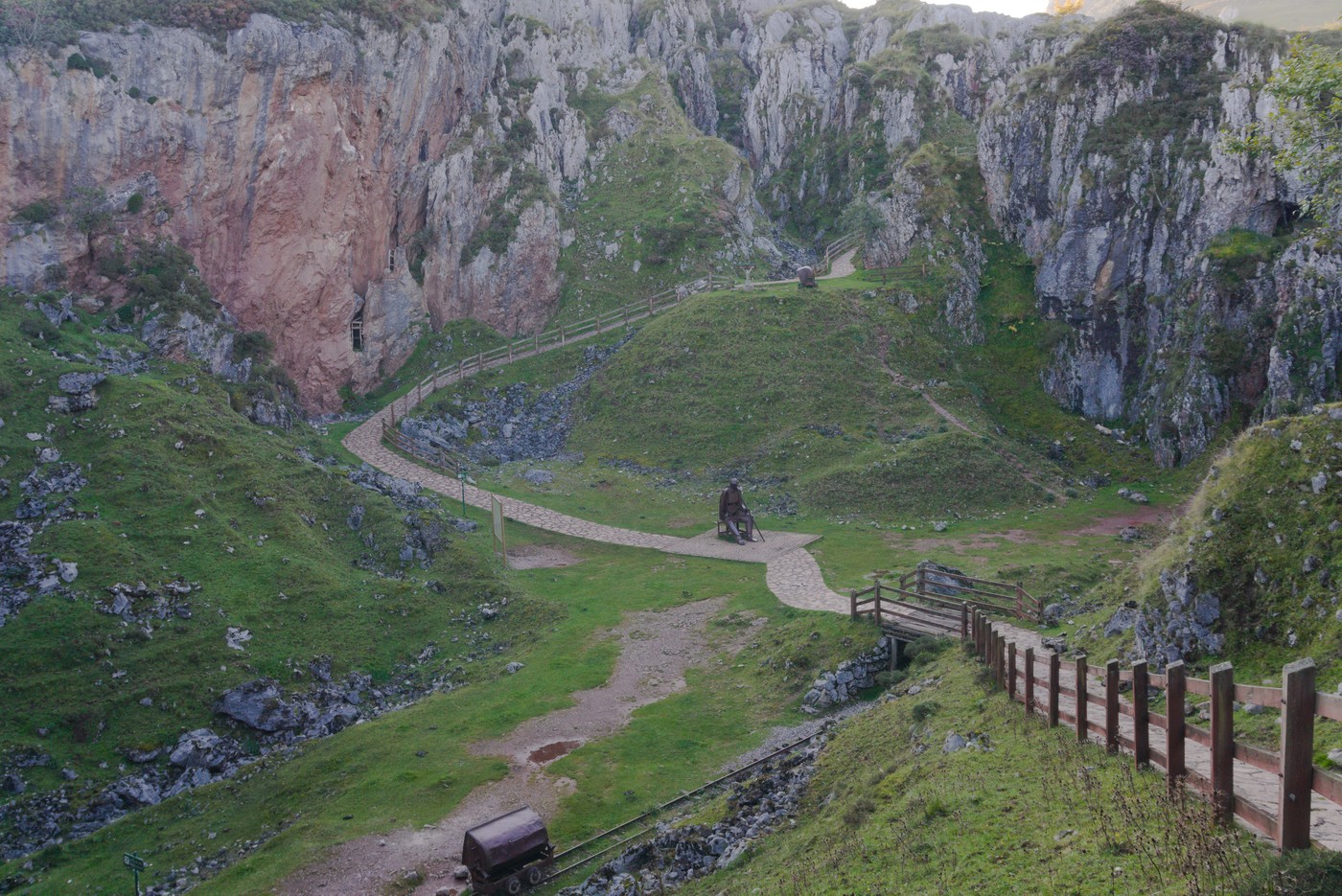
The Buferrera mines stand as a testament to 200 years of mining history in the region
– Entrelagos Viewpoint. As its name suggests (in spanish), this viewpoint is situated in the area separating the two lakes. It therefore offers a view of both Lake Enol and Lake Ercida at the same time.
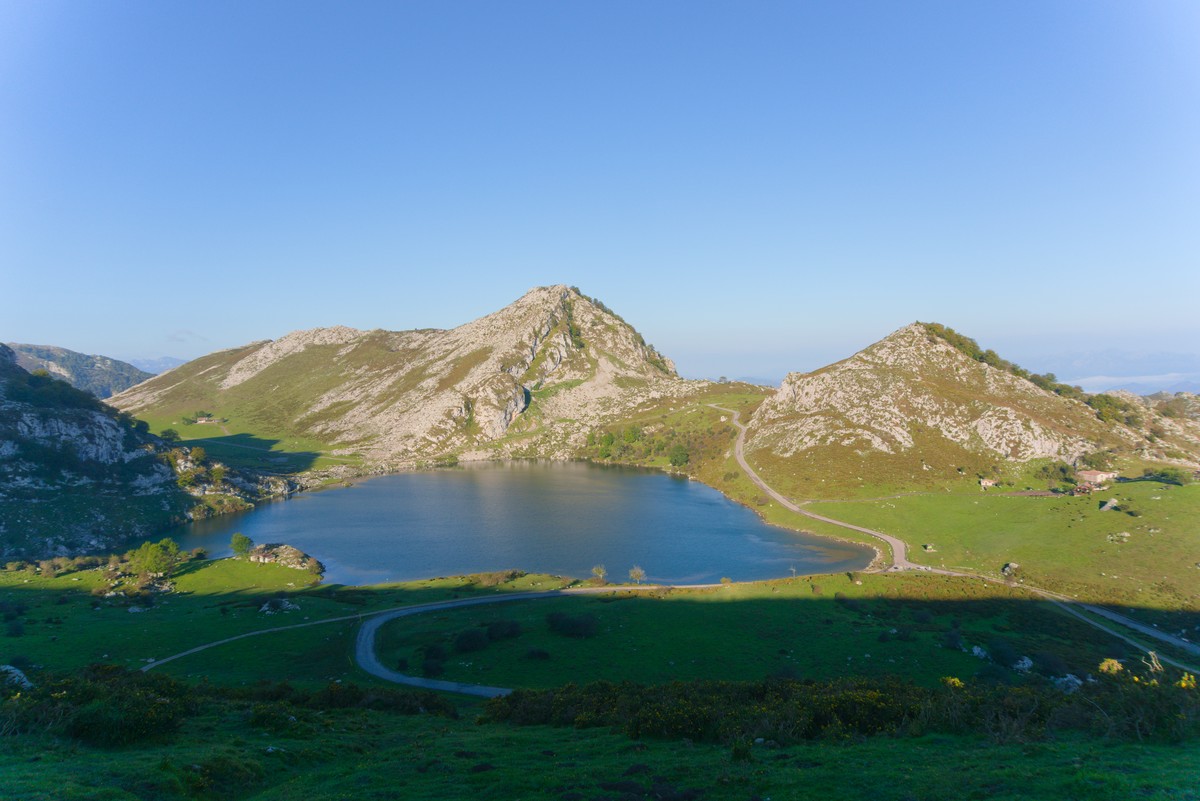
– Princeess Viewpoint. Continuing on from the previous viewpoint towards Lake Enol, you will come to the Princess Viewpoint. This is dedicated to Leonor, Princess of Asturias, heir to the Spanish throne. The viewpoint was inaugurated on the centenary of the park in which it is situated, offering views of Lake Enol and, in the background, the incredible Picos de Europa.
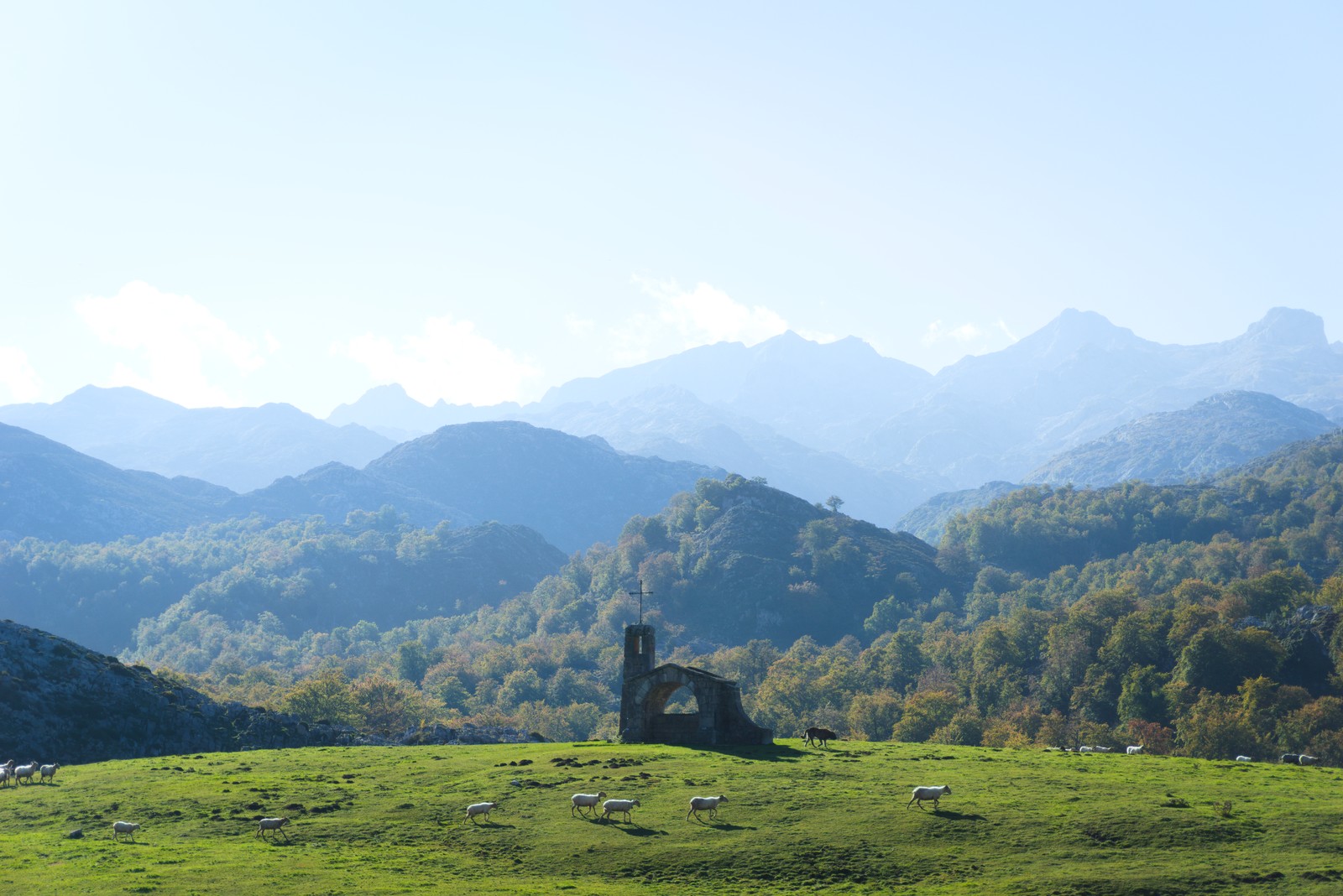
– El Buen Pastor Chapel. If you head past Lake Enol and walk towards the Peaks landscape, you’ll come across this beautiful chapel. For those tackling the PR-PNPE 2 trail, this is one of the points along the route.
Visiting this chapel is an incredible experience, particularly as it is surrounded by sheep and sheepdogs, which seem to belong perfectly to the landscape.
For those who wish to spend the whole day at the Covadonga Lakes or pop in at mealtimes, there are also two restaurants: Merendero de los Lagos and Maria Rosa.
How to get to the Covadonga Lakes and Access Restrictions
Depending on the time of year, getting to the Covadonga Lakes may not be as straightforward as simply driving there.
There are two car parks for private cars on arrival at the lakes: one next to Lake Ercida, with around 60 spaces, and another, larger one, near the Pedro Pidal Visitor Centre.
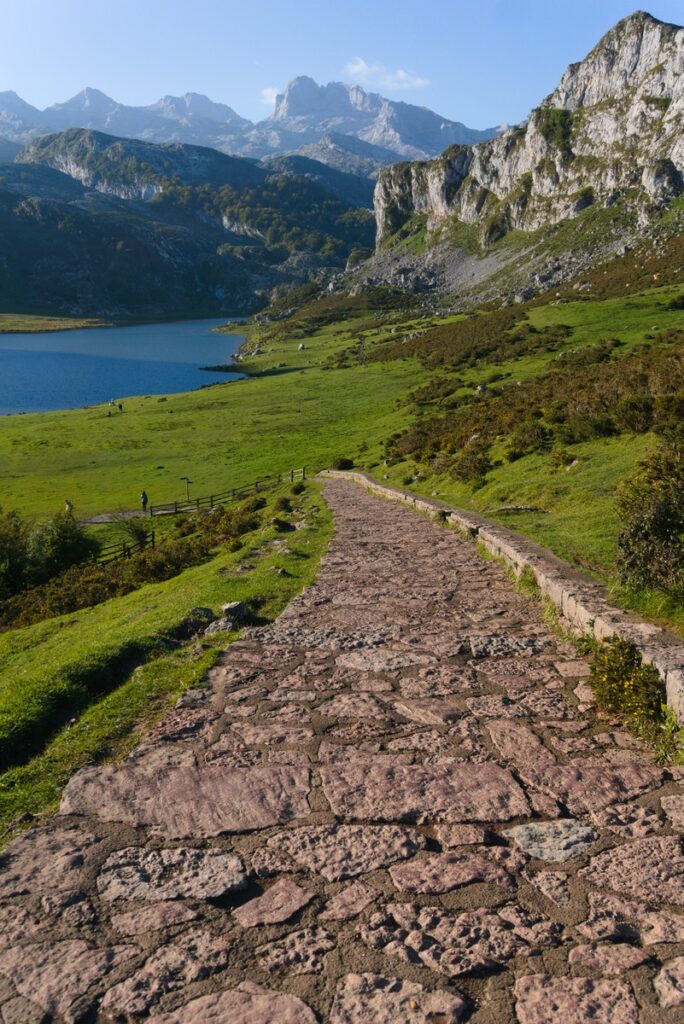
However, the access to the lakes is restricted during the peak months, where access is prohibited. It is best to check this on the the official Asturias Tourism website (here) the days you plan to visit. But be prepared for it to be closed on most days between June and October.
If you are visiting on one of the restricted-access days, you will need to book a bus journey. To do this, you should first choose which car park is most convenient for you (you can check the map via the link above):
- P1 – Cangas de Onís Bus Station
- P2 – El Bosque car park
- P3 – Muñigu car park
- P4 – El Repelao car park
Please note that some car parks close at certain times of the year and that buses will follow different routes.
We also recommend that you buy your ticket online and in advance, as they often sell out. When you buy your ticket, you will need to specify your return time, although you can choose to travel on a bus at a different time, provided there are seats available.
Private vehicles are not permitted to access the Covadonga Lakes during the high season; use of the bus service is mandatory.
The bus ticket costs €9 per adult for a return journey (in 2024) and can be purchased online (here).
In our case, we chose to catch the bus from P1 (where there are far more seats) at 8 am, the first journey of the day. This was undoubtedly the right choice. On the one hand, we were able to watch the sunrise over the European Peaks and, on the other, we got to enjoy the lakes with far fewer people around. Our return journey was scheduled for 1.05 pm, but we ended up catching the bus earlier (12.05 pm), as we had time to spare, even after the walk.
To get back earlier, we had to join a queue with everyone else who wanted to return but had a ticket for a different time. We waited there for about 15 minutes until everyone whose return journey was scheduled for that time had boarded. Then the queue began to board in order of arrival (regardless of the return time), until the bus was full.
On the way back, the bus stops at the entrance to the Shrine of Our Lady of Covadonga, and you can choose to get off and catch a bus later. That’s what we did: we got off, had a look around, and then returned to the bus stop. Within minutes, a bus arrived (marked ‘P1’ on the windscreen) which took us back to the car park – there are always people arriving from the Lakes and getting off at this stop, so there are usually spaces available at any time.
PR-PNPE 2 Trail: Covadonga Lakes Route
For those who enjoy a walk and getting away from the crowds, we recommend the PR-PNPE 2 trail.
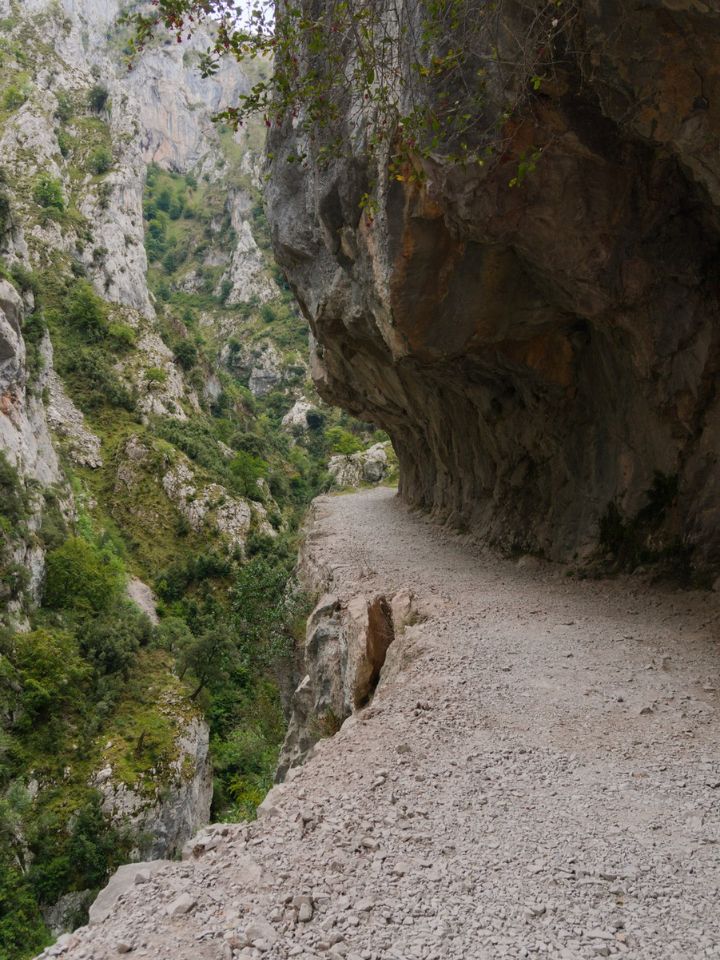
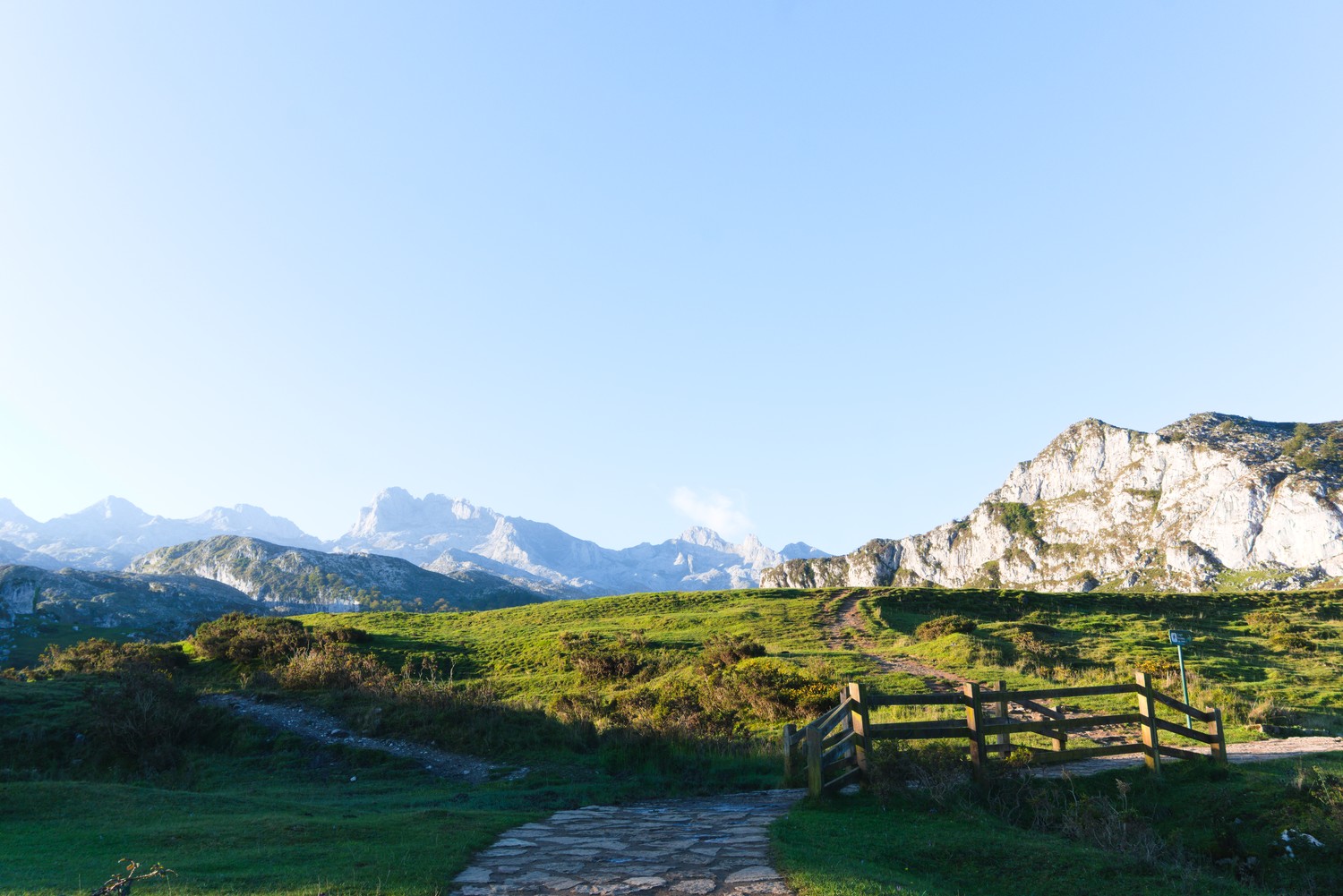
The trail is circular and is around 5–6 km long. Despite its location, the trail does not involve any significant changes in altitude, so it is relatively easy. There are, however, a few sections of uneven terrain, so you will need to wear comfortable, non-slip shoes. You can view the trail map here. Although the trail is signposted, there are some sections where the markings are not easy to spot, so you’ll need to pay attention.
Setting off from the car park, we head towards the Pedro Pidal Visitor Centre and, from there, continue towards the Buferrera Mines. After the mines, you’ll see signs for a shorter version of the trail (around 3 km). However, we’ll take the longer route to Lake Ercina.
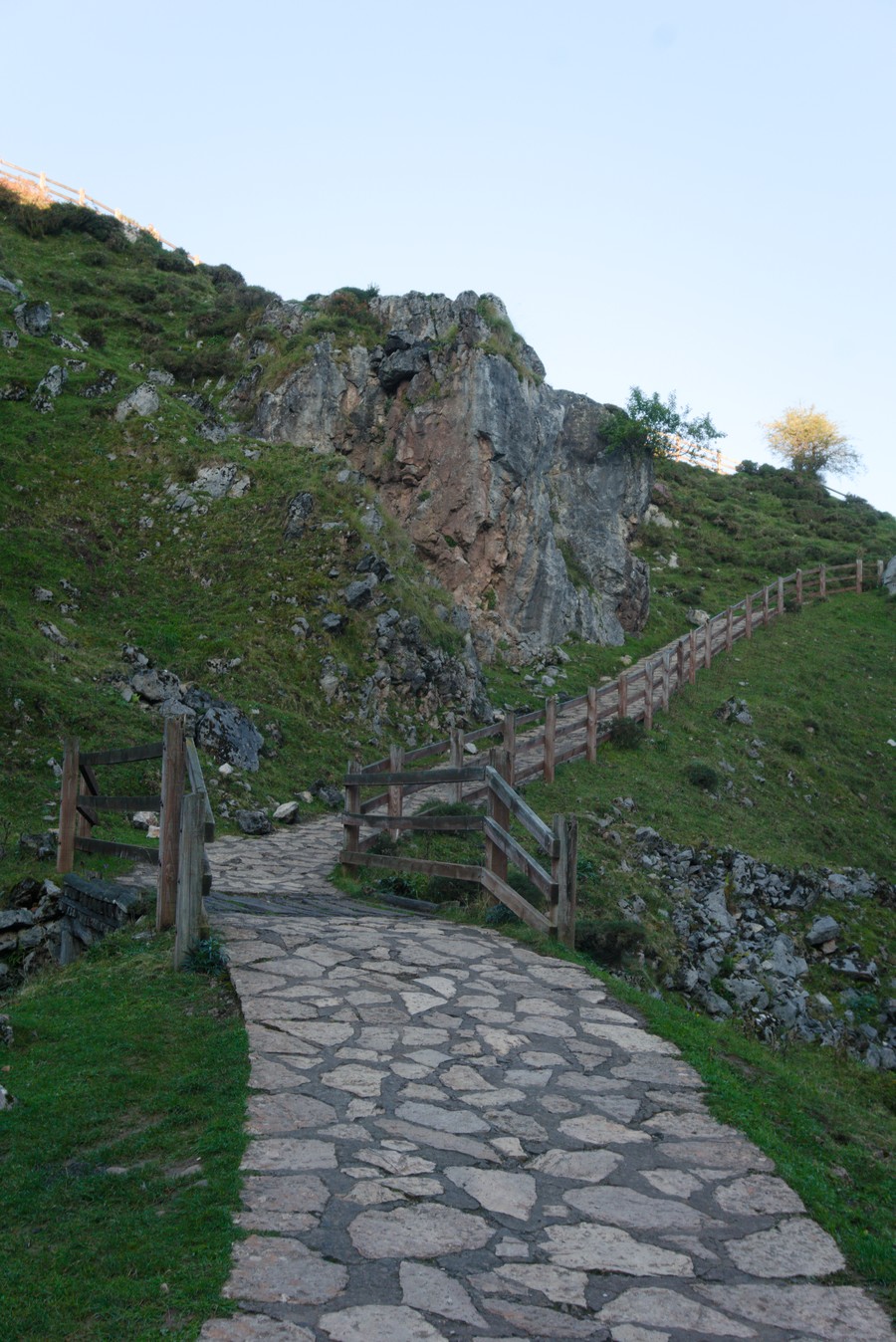
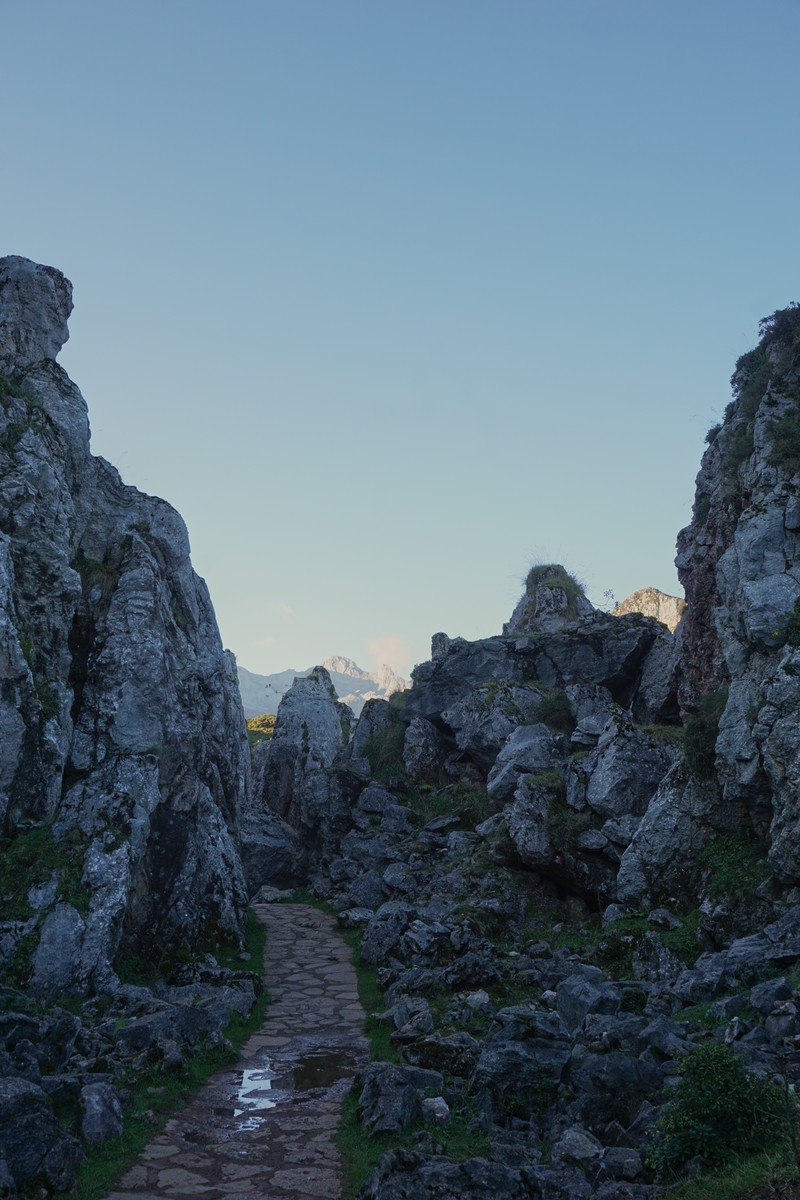
The PR-PNPE 2 trail takes us past the main sights of the Covadonga Lakes
At Lake Ercina, we couldn’t work out where the path went, so we ended up heading towards Lake Enol. There, we joined the other end of the path and walked the route in the opposite direction to what we had originally planned.
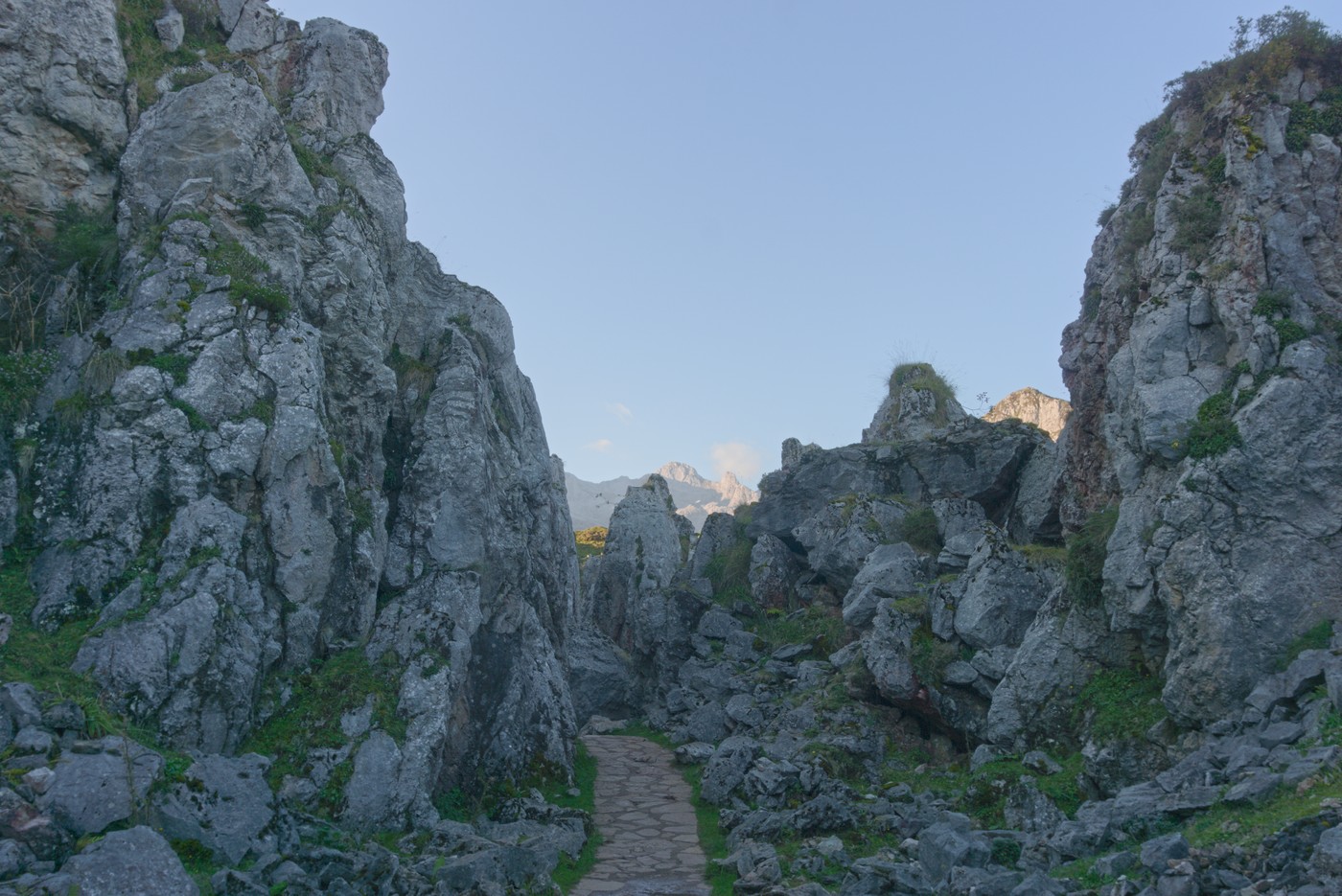
However, strange as it may seem, the path literally runs alongside Lake Ercina. When you’re facing the lake, keep to the right and walk alongside it. Here you’ll have to climb over some rocks (which aren’t much fun to climb down in the opposite direction).
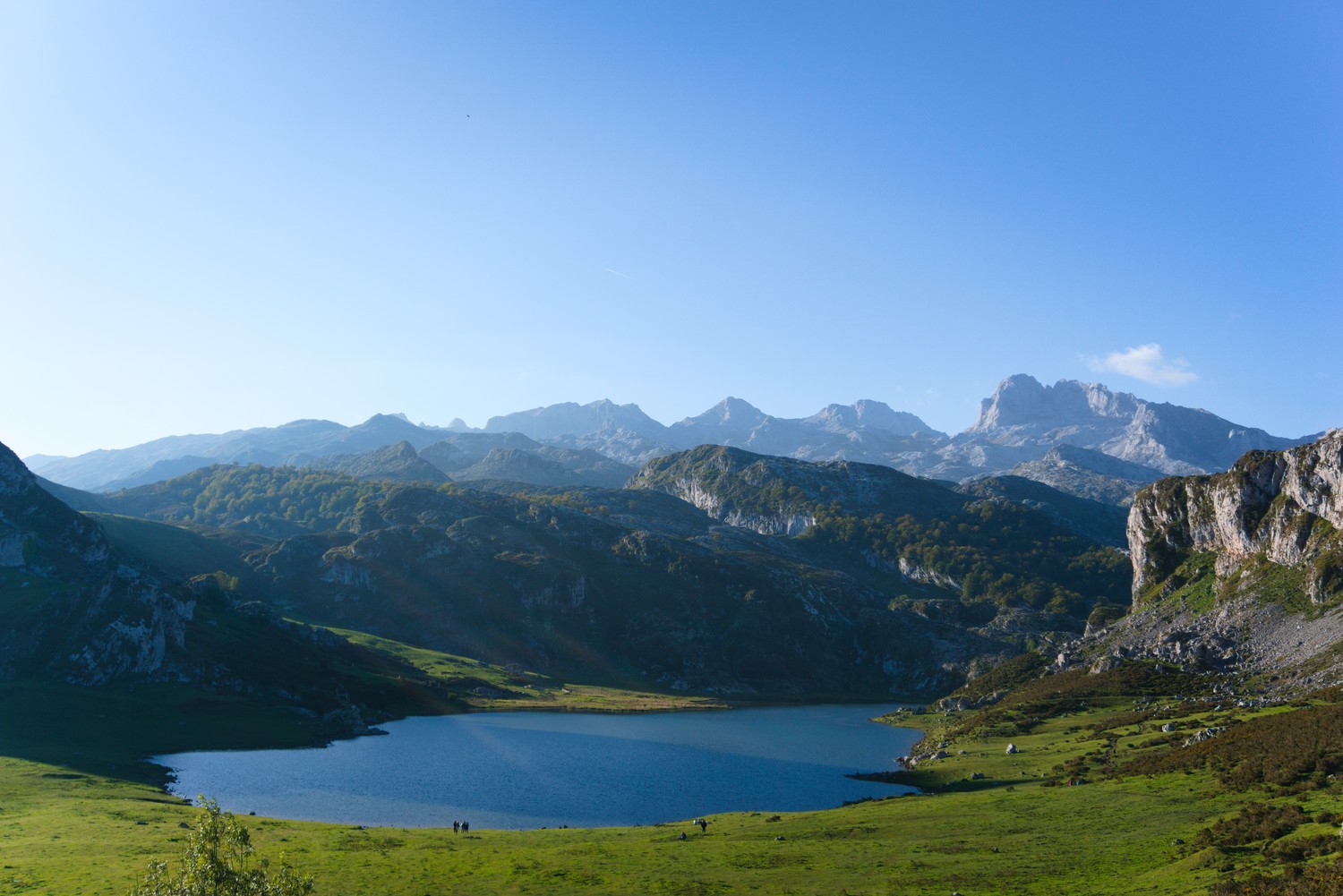
From here, you will walk around the Pico del Mosquital, passing through an area with denser vegetation. This is also the section where the terrain is most unpredictable. Along the way, be prepared to encounter various animals, particularly cows, which are a key feature of the Europa Peaks landscape.
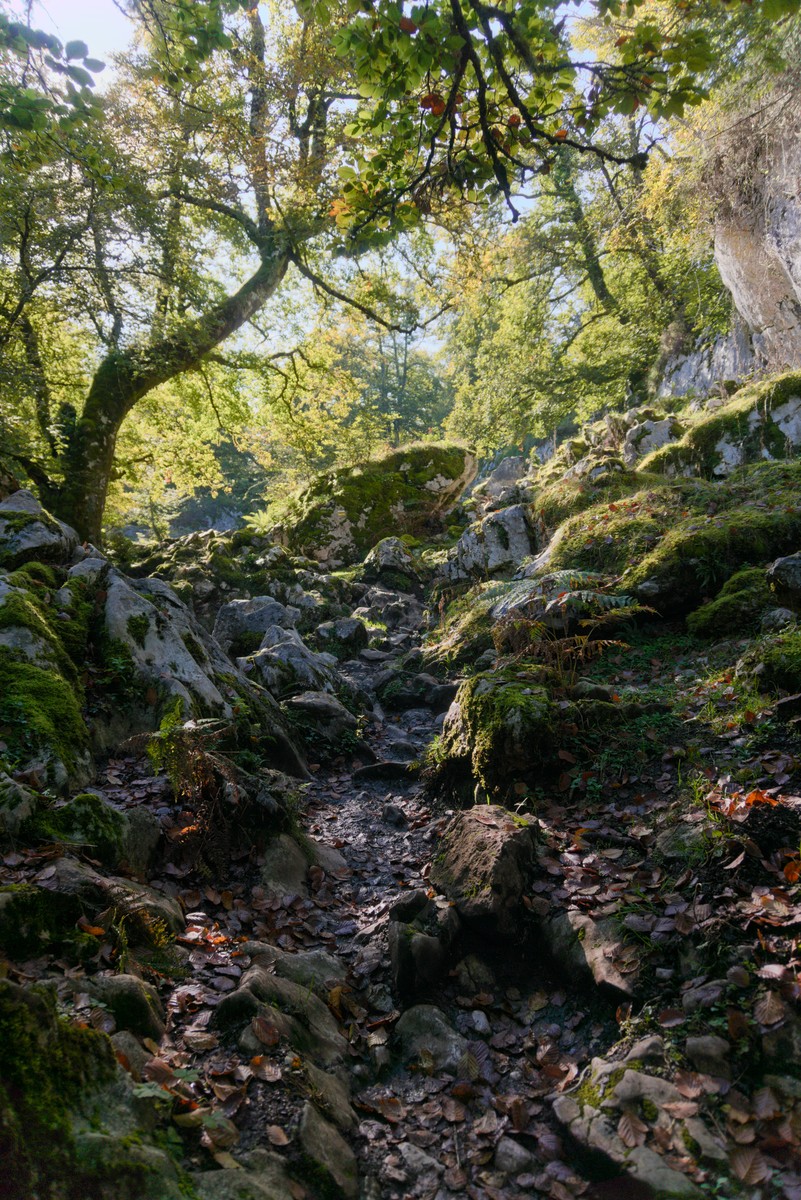
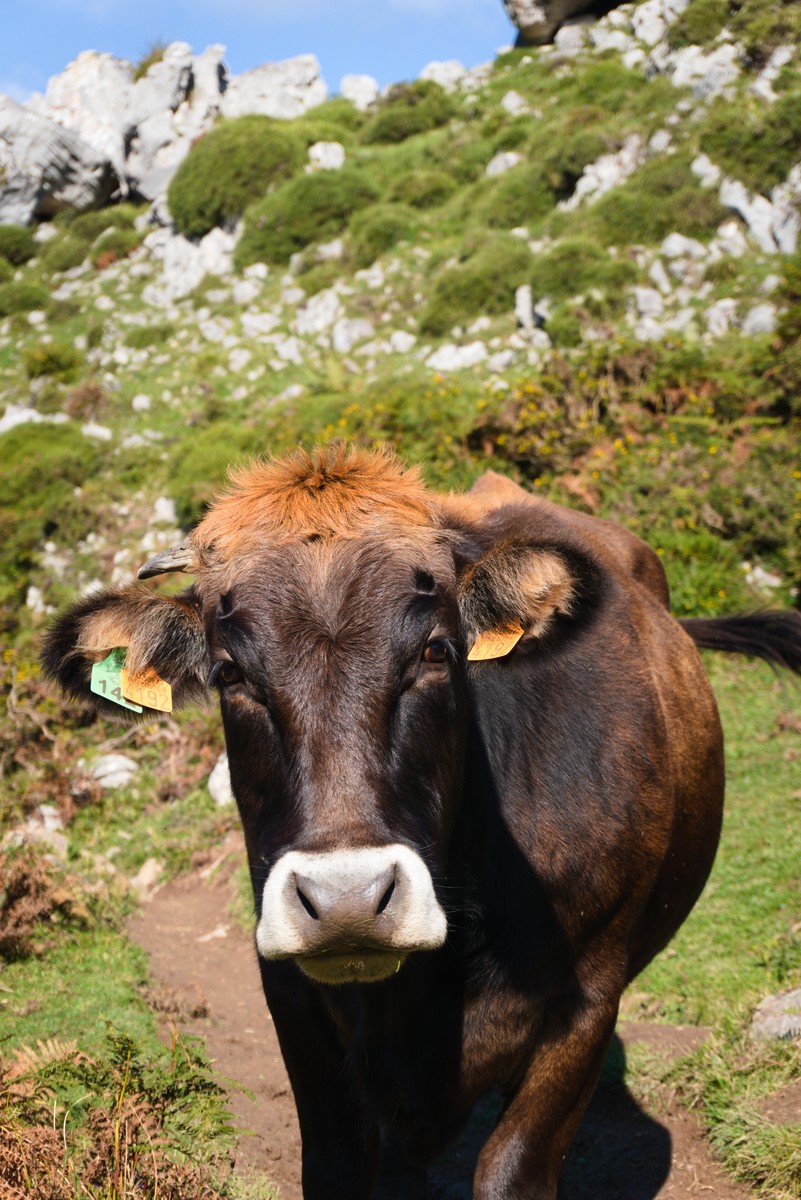
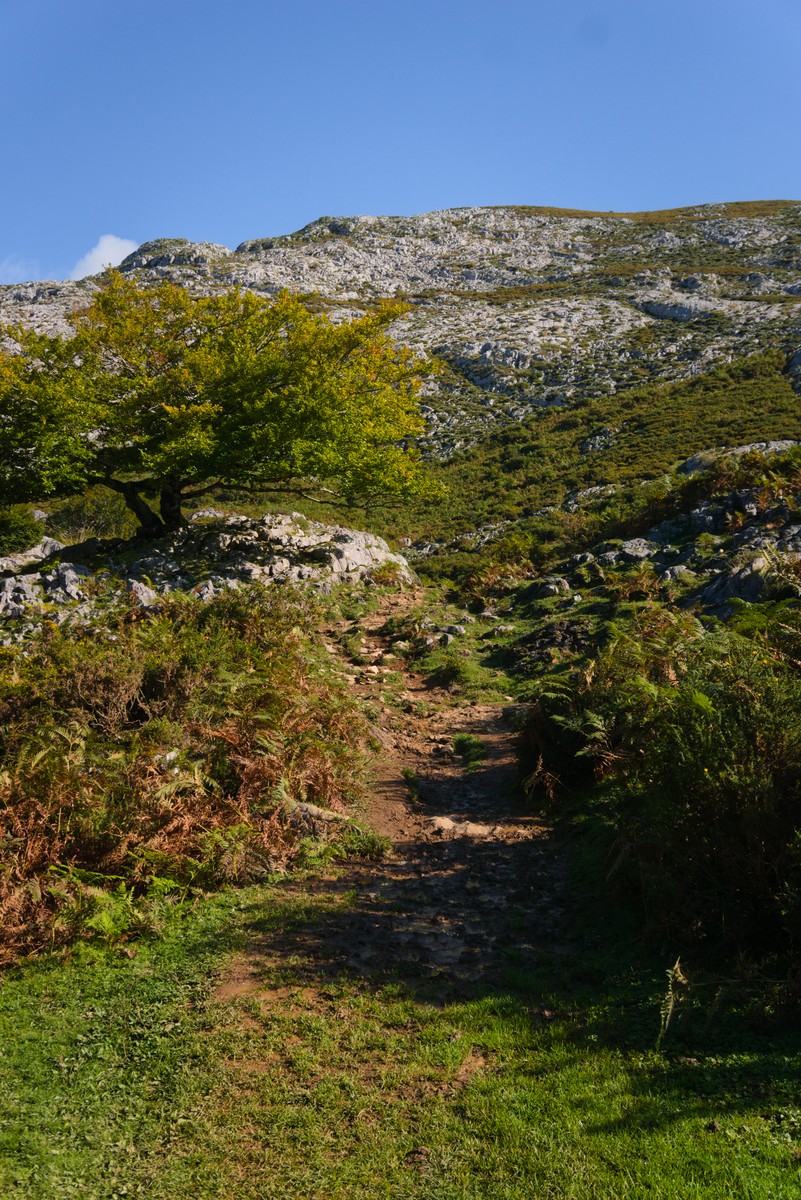
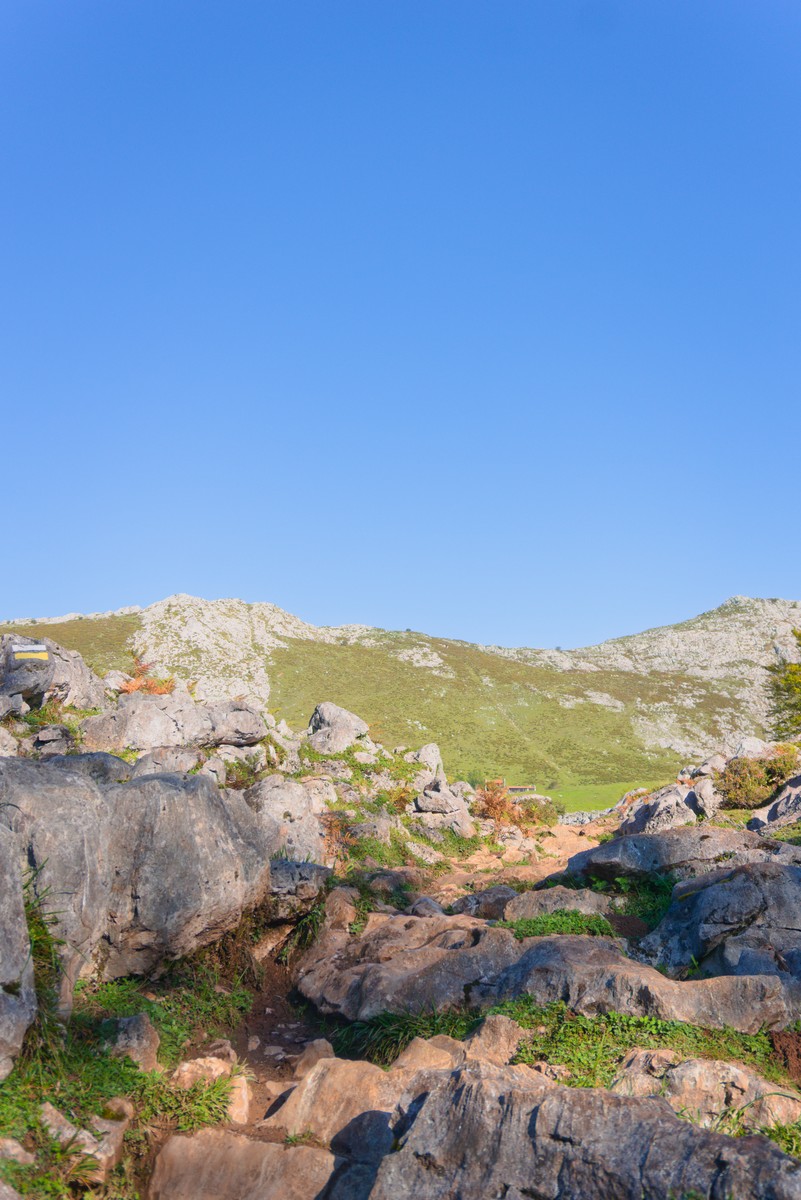
The path opens out once more, heading towards Lake Enol, and you will pass the 'Pastores' House Refuge (on the left) and the Chapel of El Buen Pastor (on the right). Between these two points, hundreds of sheep, tended by half a dozen sheepdogs, complete the scene.
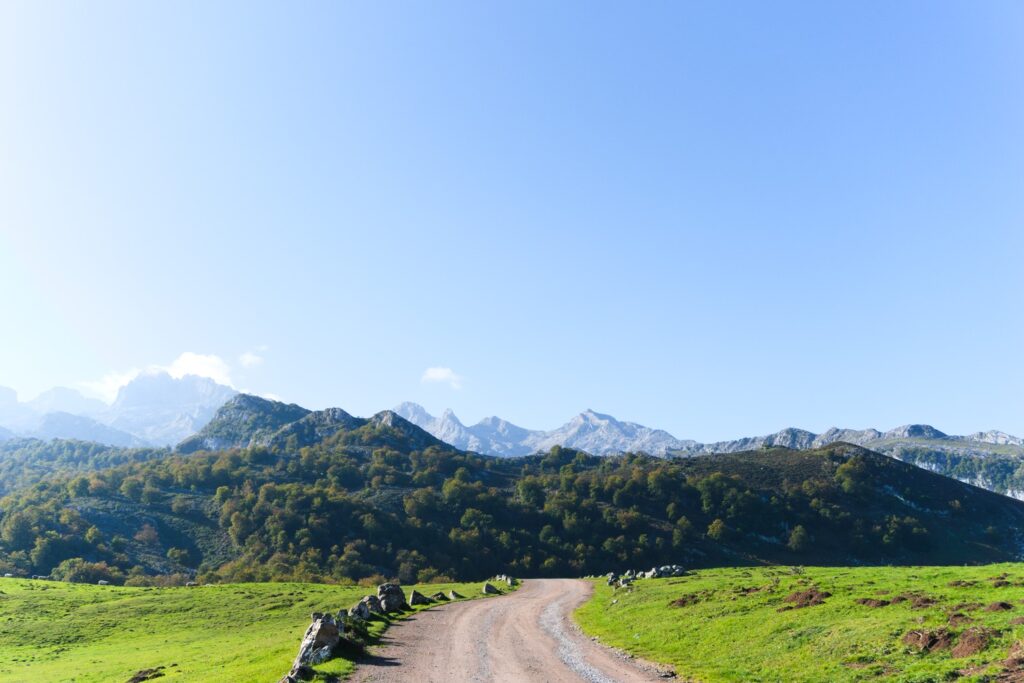
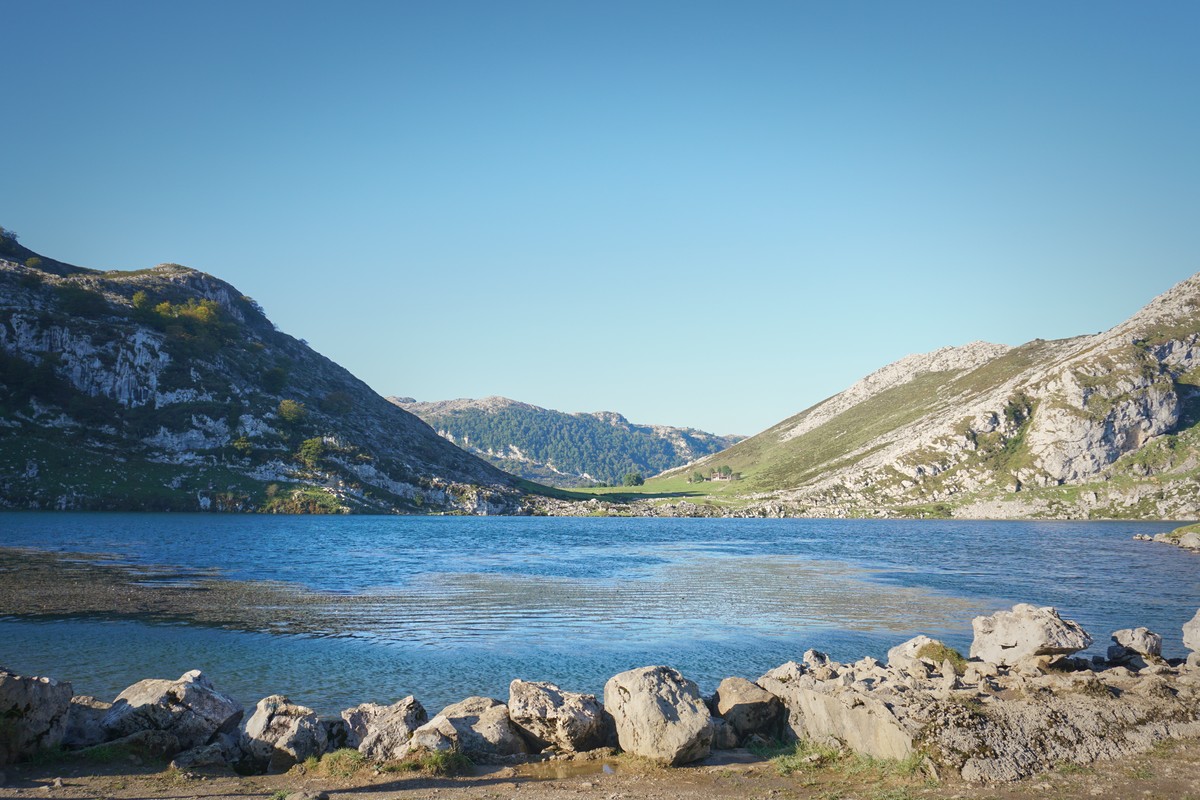
On reaching the shore of Lake Enol, we veered off the road a little and followed a path closer to the water. Here we joined the road that took us back to our starting point, the Buferrera car park.
In our case, once the walk was over, we marvelled once again at the beauty of the European Peaks and caught the bus to the Sanctuary of Our Lady of Covadonga, to continue exploring what has become one of our all-time favourite destinations.