A Mata Nacional do Buçaco (ou Bussaco, sendo ambas as escritas corretas) consiste numa área com 105 hectares. Esta é composta por uma grande variedade de fauna e flora e localiza-se na Mealhada, no limite entre os distritos de Aveiro e Coimbra. A entry (surrounded by a wall) is free if done on foot. For access by car, you need to pay €5/car.
Being a large area, we leave here a few tips to make the best use of this destination. Additionally, you can purchase a map at the tourist station for the symbolic price of 0.50€ (em dezembro de 2020). You can also consult the map made available online by Mata do Bussaco Foundation (here), mas com menor detalhe comparativamente ao disponível na loja.
Palácio Hotel do Buçaco e Convento de Santa Cruz
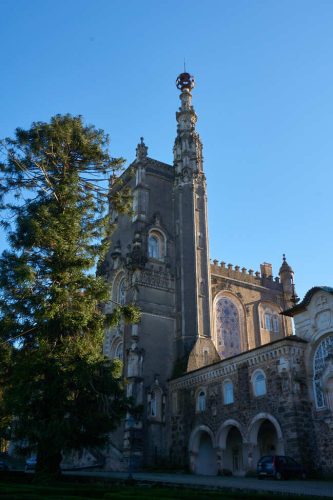
The Hotel Palace of Buçaco, whose construction began in 1888, was completed a few years later, destined for Queen D. Maria I. Currently converted into a Hotel, this construction immediately captures the eyes of those who arrive here.
Around it, there are several staircases and, on one side, tile panels with moments alluding to the discoveries and the Battle of Buçaco.
To visit its interior, they need to stay there, and can do so through several platforms.
Next to the Hotel we find the Convent of Santa Cruz, linked to the religious practices of the Discalced Carmelites. Appearing to be a small building due to its funneled entrance, its interior convinces by its majesty, opening into wide spaces.
Apesar de ser de acesso gratuito, o Convento tem um horário de funcionamento, coincidente com o do posto turístico em frente. Dito isto, tenham horário em atenção na vossa visita. Aqui podem ainda optar por uma visita guiada (paga).
No seu redor encontramos um maravilhoso jardim, extremamente bem cuidado. Este enquadra o hotel na paisagem, criando quase que uma entrada na parte mais densa da Mata do Buçaco.
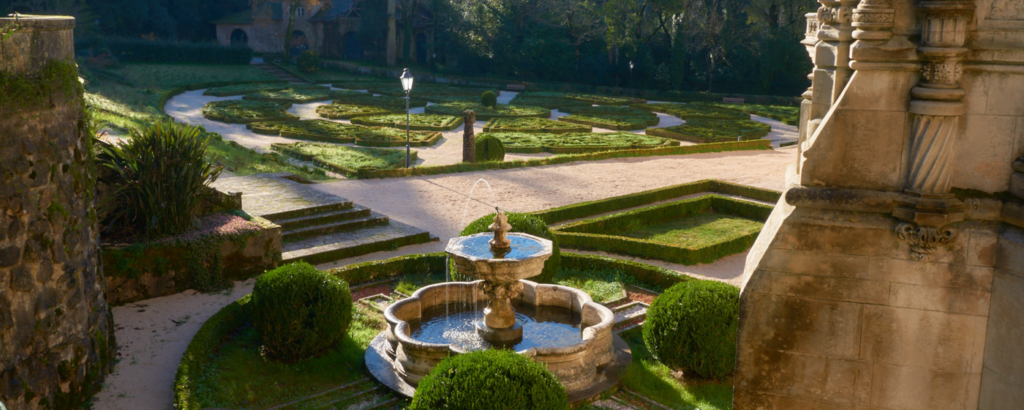
Cold Fountain
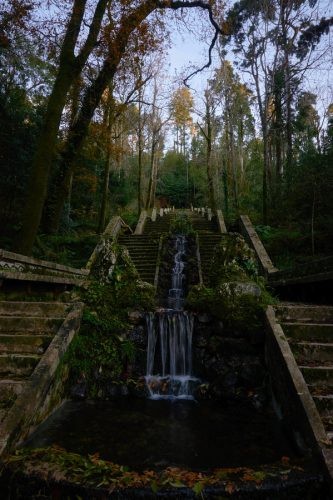
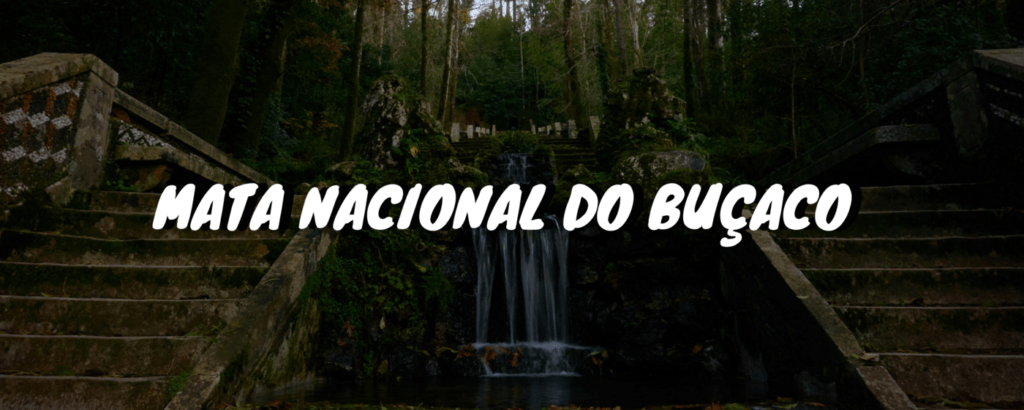
One of the main attractions of this destination: the Cold Fountain. This consists of a fountain that joins two distinct water lines of Buçaco, creating a cascade effect through a long staircase.
The Cold Fountain Lakeat the bottom of the staircase was a later addition, resulting from a reconstruction of this part of the forest. Here we recommend that you take a walk and get to know the fauna and flora of this area, such as Vale dos Fetos.
To get here you can do the route by car, staying very close to the Palace. On the access road to the central part of the forest, there will be a roadblock (with signs) leading to an area where you can leave your car. From there it is only a few meters walk to the top of the stairs.
Tenham em atenção que, como o nome indica, esta zona é muito fria devido à água e à vegetação densa. Assim sendo, recomendamos que, mesmo na altura de Verão, se façam acompanhar de um casaco.
High Cross
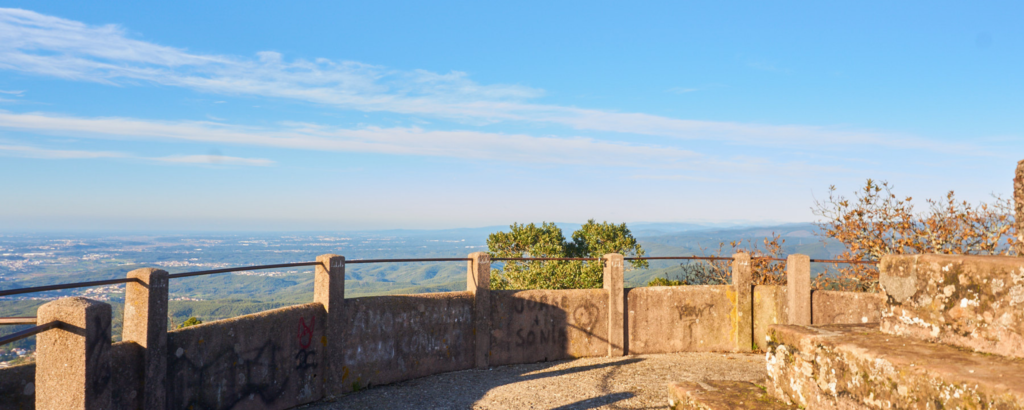
The High Cross is, in our opinion, one of the places not to be missed in Buçaco. Being the highest point of Serra do Buçaco (547 meters high), this represents the final stop on the Via Crucis.
É também neste miradouro que temos uma paisagem de cortar a respiração. Conseguimos ver desde o Oceano Atlântico, à Serra do Caramulo e à Serra da Estrela.
Este miradouro é acessível através de estradas, em bom estado de conservação, onde podem passar carros ou, como nós optámos por fazer, a pé. O acesso a pé é feito pela chamada de Floresta Relíquia, a parte mais densa e antiga desta Mata, sendo a nossa recomendação seguinte.
Trilhos e Adernal no Buçaco
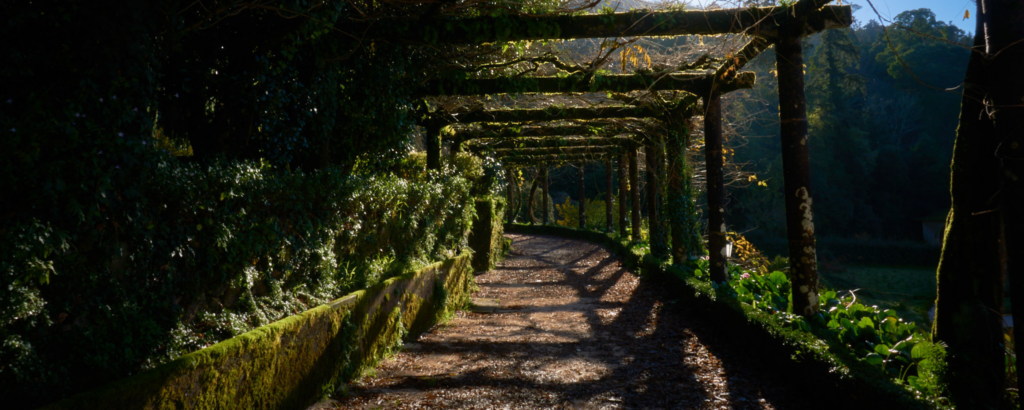
The National Forest of Buçaco has a total of 4 rails : the Water Trail (which focuses more on the Fonte Fria region), the Relic Forest Trail (which goes from the Hotel Palace to the High Cross and from there to the Gates of Coimbra), the Military Trail (which goes to the Military Museum, outside the wall of the Forest), and the Via Sacra Trail (recreating the route taken by the friars who lived here).
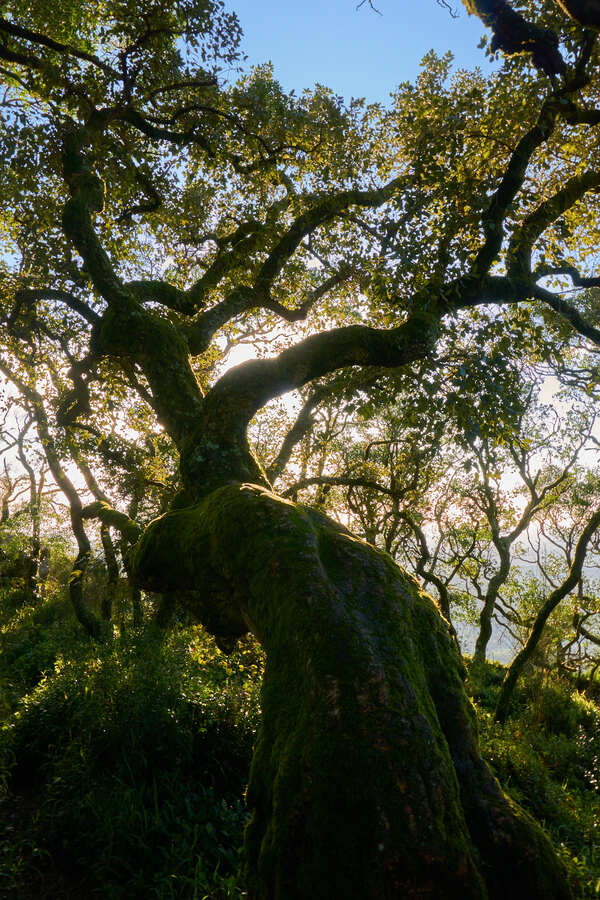
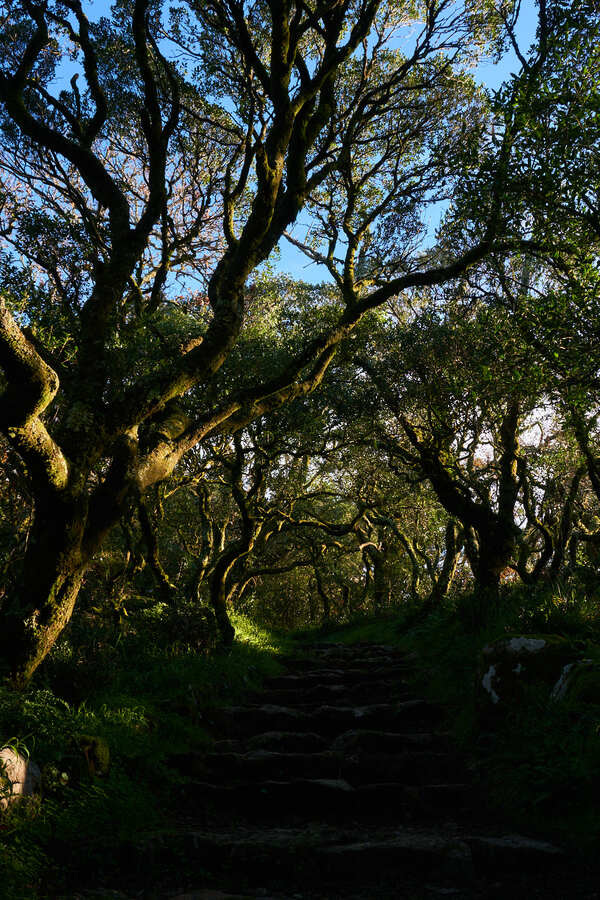
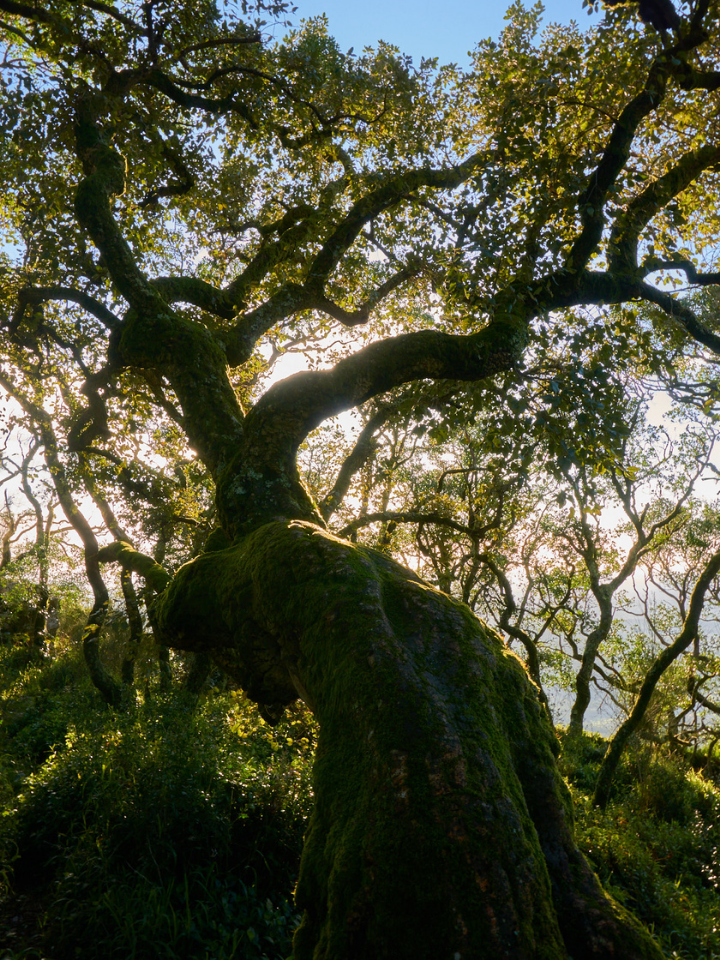
As we mentioned before, you can choose to buy a map with the indication of the trails in the tourist/information office, costing 0.5€. In this space, the route that was recommended to us was Relic ForestThis is because it allows us to get to know the farthest and most beautiful part of the forest: the 'adernal', one of the most primitive and dense parts of this area.